What Is an Under Sink Water Dispenser? A Fast Answer
An under sink water dispenser is a compact appliance installed beneath your kitchen sink that provides filtered water on demand through a dedicated faucet. It’s a space-saving solution that delivers clean water without cluttering your countertop.
Many homeowners find these systems helpful because they improve water taste and save valuable counter space. We found that most models include multi-stage filters to reduce contaminants, ensuring your drinking water is both fresh and safe.
- An under sink water dispenser is a device installed under your sink for filtered water.
- It typically includes a separate faucet and advanced filtration for better taste.
- Installation is straightforward and keeps your kitchen organized.
- These units can offer cold, hot, or room temperature water options.
Understanding the Under Sink Water Dispenser
An under sink water dispenser is a filtration system that sits beneath your kitchen counter. It connects to your existing plumbing and sends filtered water up to a small, dedicated faucet. You get clean, great-tasting water without a bulky pitcher or countertop machine in the way.
Think of it like a quiet helper hiding under your sink. It does its job without making a fuss. Many households in the U.S. use them because they combine convenience with better water quality. According to the CDC, proper water filtration can reduce harmful contaminants such as lead, chlorine, and cysts (CDC). That makes these systems a practical choice for families who care about what they drink every day.
So what exactly is it, and how does it work? Let’s break it down in plain terms.
How an Under Sink Water Dispenser Works
The concept is simple. You install the unit under your sink, connect it to your water supply line, and attach a separate faucet on the countertop. When you turn on that faucet, water flows through one or more filters before reaching your glass. That’s it. No complicated technology, just smart plumbing and filtration working together.
Core Components You Get
Most systems come with a few key parts. Understanding them helps you shop with confidence and makes installation less intimidating.
The Dedicated Faucet
This is the part you actually see and use. It sits next to your main kitchen faucet, usually in a small hole drilled into the countertop or sink. Some models use a single spout that blends with your existing faucet. Others offer a sleek, standalone design. Either way, it gives you a separate tap for filtered water, so you’re not mixing it with your regular tap water.
The Filtration Unit
Hidden under your sink, this is the heart of the system. It holds one or more filter cartridges. Water passes through these cartridges, which trap impurities like sediment, chlorine, and heavy metals. The number of stages varies by model. Some have two or three, while advanced units may go up to five or six stages (EPA).
The Connecting Tubing and Valves
Small plastic or metal tubes carry water from your supply line to the filter and then up to the faucet. Shut-off valves let you turn the system off when you need to change a filter. These parts are usually included in the box and are designed for basic DIY installation.
Filtration Stages Inside
Water doesn’t just pass through one filter and come out clean. It usually goes through several stages. Each stage targets a different type of contaminant. Here’s what you’ll commonly find:
- Sediment pre-filter: Catches dirt, sand, and rust particles.
- Carbon block filter: Removes chlorine, bad taste, and odors.
- Reverse osmosis membrane: Blocks tiny dissolved solids like lead and arsenic.
- Post-filter: Polishes the water before it reaches your glass.
The EPA states that reverse osmosis systems can remove up to 99% of dissolved salts and contaminants (EPA). That’s why many under sink dispensers use this technology as a core part of their design.
Common Types of Under Sink Dispensers
Not all under sink dispensers work the same way. You’ll find a few different types on the market. Picking the right one depends on your budget, your space, and how you like your water.
Here’s a quick comparison to help you decide:
Type What It Does Best For Price Range Hot and Cold Dispenser Delivers both hot and cold filtered water on demand Families who want instant hot water for tea or cooking $150–$400 Room Temperature Dispenser Provides filtered water at room temperature People who prefer simplicity and lower cost $50–$200 Chilled Water Dispenser Cools filtered water using an internal compressor Those who want cold water without ice $200–$500 Reverse Osmosis (RO) Dispenser Uses multiple stages to purify water deeply Households with hard water or high contaminant levels $150–$600 Each type has its strengths. A hot and cold unit is great if you love tea or instant soups. A reverse osmosis model is ideal if your tap water has a strong taste or you’re worried about heavy metals. The key is matching the system to your lifestyle.
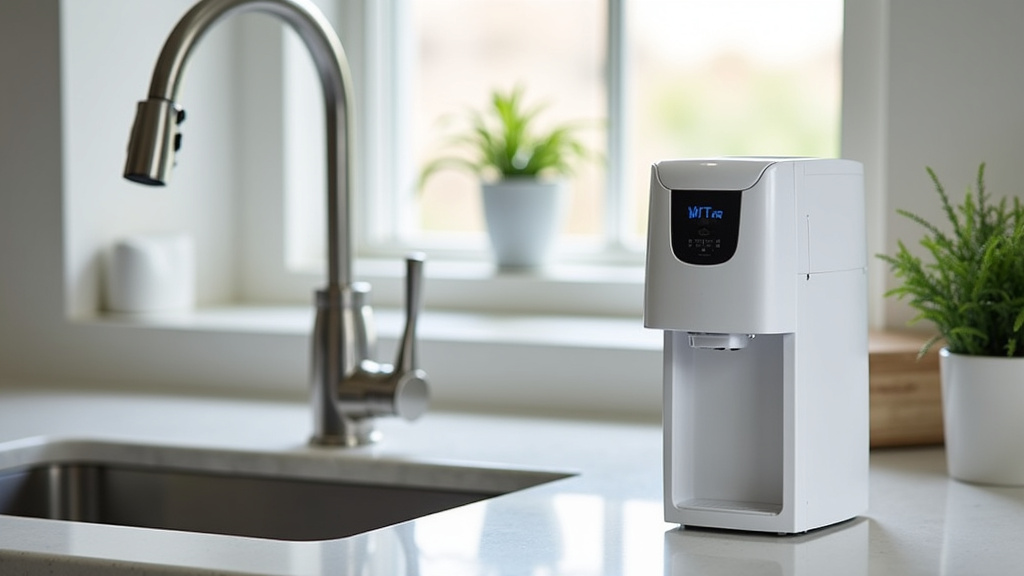
Key Benefits for Your Kitchen
Why would you add another device to your kitchen? Because the rewards are real and practical. Let’s look at what you gain.
Space savings are a big one. A countertop water filter or pitcher takes up room. An under sink dispenser stays hidden, leaving your counter clear and clean. Your kitchen looks tidier, and you have more room for prep work.
Better-tasting water is another perk. Tap water often carries a chlorine taste from municipal treatment. A good filter removes that, along with other unpleasant flavors. You’ll notice the difference right away when you pour a glass. It’s the kind of upgrade you didn’t know you needed until you try it.
Convenience matters too. Instead of filling a pitcher or waiting for a jug to cool, you just turn a faucet. That’s especially helpful during busy mornings when you’re juggling breakfast and getting kids ready for school. You’ll save time without even thinking about it.
Cost efficiency is worth mentioning as well. A single under sink system can replace dozens of plastic water bottles each year. Over time, the cost per gallon of filtered water drops well below what you’d spend on bottled water. That’s good for your wallet and for the environment.
And there’s a health angle too. The Mayo Clinic notes that drinking clean water supports hydration, digestion, and overall well-being (Mayo Clinic). While an under sink dispenser isn’t a medical device, it gives you a reliable source of cleaner water at home.
Conclusion
An under sink water dispenser is a simple, effective way to get clean, great-tasting water without cluttering your kitchen. It saves space, improves taste, and offers convenience right from a dedicated faucet. We covered how it works, the common types, and the real benefits you gain. The best part is that it fits neatly under your sink, working quietly in the background. If you’re thinking about better water at home, this is a straightforward solution worth considering. Your next step could be to check your local water quality report and see if an under sink system is right for you.
Frequently Asked Questions
Can I install an under sink water dispenser myself?
Yes, many models are designed for DIY installation. You’ll need basic tools and some plumbing knowledge, but the process is usually straightforward. If you’re unsure, a plumber can handle it in about an hour.
How often do I need to change the filters?
Most filters should be replaced every 6 to 12 months, depending on your water usage and the model. Some systems have indicators to remind you when it’s time. Following the manufacturer’s schedule keeps your water tasting fresh and clean.
Is an under sink dispenser safe for all types of tap water?
It works with most municipal water supplies. However, if your water is from a private well, you should get it tested first. The dispenser will improve taste and remove common contaminants, but very high levels may need additional treatment.
Does it waste water or increase my water bill?
Standard filters don’t waste water, but reverse osmosis systems may produce some wastewater during the filtration process. The amount is usually small and won’t significantly impact your bill. You can check the product specifications for details on water efficiency.
How does it compare to a countertop water filter?
An under sink dispenser saves counter space and looks cleaner. It’s also often more powerful, with advanced filtration stages. Countertop filters are easier to install but can be bulkier. Your choice depends on your kitchen layout and filtration needs.