Water Bottles & Tumblers: The Complete Buying Guide
The best type of reusable water bottle depends on your routine: choose plastic for low weight, stainless steel for insulation, glass for a clean taste, and a tumbler for cup-style sipping.
On this page (12 sections)
- What are the main types of reusable water bottles?
- Which reusable bottle material should you choose?
- What types of water bottle lids are available?
- How do you choose the right bottle size?
- What makes a bottle good for exercise and travel?
- Are reusable tumblers different from water bottles?
- What type of water bottle is safest for daily use?
- How do you choose a reusable bottle for children, seniors, or groups?
- How should you clean and maintain a reusable water bottle?
- How do you compare reusable water bottles before buying?
- Explore water bottles & tumblers by topic
- What should you buy if you are still unsure?
The best type of reusable water bottle depends on your routine: choose plastic for low weight, stainless steel for insulation, glass for a clean taste, and a tumbler for cup-style sipping.
A bottle that suits a commute may be a poor choice for a hiking pack or a child's school bag. The way you carry it changes what matters most each day.
Start with how you carry, drink, clean, and store it, then compare materials and lids. A lid that opens quickly at a desk may feel fiddly on a train, while a simple screw cap may suit a bag better.
Think about where the bottle will live between uses. A backpack side pocket, a car cup holder, a gym locker, and a work bag place different demands on size, shape, and sealing.
Weight matters more when the bottle is full and carried for long periods. Insulation matters when you want cold water to stay cold for hours, but it can add bulk if you usually finish a bottle within an hour.
Taste matters to some people more than temperature. Glass and stainless steel can suit those who prefer a neutral surface, while plastic may suit those who value low weight and impact resistance.
Cleaning is often the deciding factor after a few weeks. A wide opening or removable parts can be simpler to keep fresh than a narrow bottle with hidden bends.
This guide explains the main types of reusable water bottles, how their features affect daily use, and which designs suit common needs. It also covers lids, sizes, care, and trade offs in real routines.
For a quick material comparison, see our guide to the best reusable water bottle plastic. That comparison can help if low weight is your first priority.
Choose the bottle you will carry, open, drink from, wash, and dry without extra effort on an ordinary day.
What are the main types of reusable water bottles?
The main types of reusable water bottles are plastic, stainless steel, glass, aluminum, collapsible, filtered, insulated, and tumbler-style bottles. Each type solves a different problem involving weight, temperature, taste, durability, or portability.
Plastic usually wins on low weight and easy handling, while stainless steel often wins on durability and insulation. Glass can suit a clean taste and a clear view of the water level.
Aluminum can be light for its strength, but the inner lining and care guidance need a close check. Collapsible bottles save space when empty, yet they can feel less steady when full.
Filtered bottles aim to improve taste or reduce some impurities, though the filter itself will need replacement over time. Insulated bottles help drinks stay cold or hot for longer, at some cost in weight and width.
Tumbler style designs suit cup style sipping at a desk or in a vehicle. Their wider shape can feel stable, but it may limit how they fit in a bag or a cup holder.
No single type suits every routine. The right choice depends on how you carry the bottle, how you drink, and how you plan to clean it.
| Bottle type | Main strength | Main trade-off |
|---|---|---|
| Plastic | Light weight and often affordable | Can retain odors or show wear |
| Stainless steel | Durable and useful for insulation | Heavier than thin plastic |
| Glass | Clean taste and easy visual checking | Can break if dropped |
| Aluminum | Light metal construction | Often needs an inner lining |
| Collapsible | Packs down when empty | Less rigid during use |
| Filtered | Can improve taste or reduce some impurities | Filters need replacement |
| Insulated | Helps keep drinks cold or hot | Usually heavier and wider |
| Tumbler | Comfortable cup-style drinking | May be less secure in a bag |
Material is only one part of the decision. The opening, cap, seal, base diameter, and cleaning method can make a larger difference to daily convenience.
Which reusable bottle material should you choose?
Choose stainless steel for insulation and durability, plastic for the lowest weight, and glass when taste and visibility matter most. Aluminum can be useful for weight savings, but check the lining and care instructions before use.
Plastic reusable water bottles
Plastic bottles are often the easiest option for school, travel, and exercise because they are light and less likely to break when dropped. BPA-free plastic is a useful starting point, but you should still check whether the bottle is intended for hot drinks, dishwashers, or long-term outdoor use.
Plastic can be transparent, colored, squeezable, or rigid. A clear design makes it easier to see the remaining water, while a soft sports bottle can be easier to squeeze during movement.
The best clear reusable water bottle can suit anyone who wants to check the water level without opening the lid. If you want a lighter bottle for a day bag, compare the best lightweight water bottles.
Stainless steel reusable water bottles
Stainless steel is a strong choice when you want a bottle that can handle daily carrying and support double-wall insulation. It is commonly used in insulated bottles, but steel bottles can also be single-wall and lighter.
Check the capacity and base shape before buying. A wide insulated bottle may not fit a standard car cup holder, even if its height looks similar to other bottles.
The Takeya Actives has a 24 fl oz capacity, stainless steel construction, insulated spout lid, leakproof design, and dishwasher-safe care. Its title also specifies cold retention for up to 24 hours, a carrying loop, and a base designed to fit most cup holders.
For a larger steel bottle, the best 64 oz water bottles guide can help you compare high-capacity options.
Glass reusable water bottles
Glass bottles appeal to people who want a visible water level and a neutral drinking surface. The main concern is breakage, so check whether the bottle has a protective sleeve or another feature that suits the way you carry it.
Glass is also less forgiving in a crowded backpack or a setting where bottles fall often. It may be better for a desk, kitchen, or careful commute than for rough outdoor use.
Compare the best glass drinking water bottles if taste and visibility are more important to you than impact resistance.
Aluminum reusable water bottles
Aluminum bottles can be light and easy to carry, but the interior lining matters because bare aluminum is not the usual choice for everyday drinks. Check the manufacturer's instructions for compatible liquids, washing, and temperature.
A metal bottle's weight is not determined by material alone. Capacity, wall thickness, insulation, lid hardware, and accessories can change how it feels in a bag.
Collapsible reusable water bottles
Collapsible bottles are useful when storage space matters more than a rigid shape. They can work for travel, events, and occasional use, but the flexible body may be less convenient to fill, clean, or place in a bag.
Look for a wide enough opening and a base that remains stable when full. If you expect to use the bottle every day, compare its handling when empty as well as when filled.
What types of water bottle lids are available?
The main types of water bottle lids are screw caps, spout lids, straw lids, flip tops, push-button lids, and wide-mouth caps. Choose based on whether you need one-handed drinking, fast flow, spill control, or easy cleaning.
Screw caps
A screw cap is simple and often creates a secure closure with few moving parts. It can suit bags and travel when the seal is intact and the cap is tightened correctly.
The Blockhütte bottle uses a screw cap and has a 1000 ml capacity, stainless steel construction, double-wall insulation, and a wide mouth. Its listed contents include a cotton bag, replacement silicone seal, stainless steel bottle, trekking karabiner, and cleaning brush.
A screw cap may take two hands to open, so it is less convenient than a straw or push-button lid during a workout.
Spout lids
A spout lid gives you a directed drinking stream without requiring a wide opening at your mouth. It can suit gym sessions, commuting, and quick drinks during activity.
The Takeya Actives uses an insulated spout lid with a carrying loop. Its 24 fl oz capacity and stated cup-holder fit make it a practical middle ground between a compact bottle and a large hydration container.
Compare the best leakproof water bottles if your bottle will travel inside a work bag. Leak resistance depends on the full lid and seal, not just the bottle body.
Straw lids
Straw lids let you drink while holding the bottle upright. They can be useful at a desk, in a car organizer, or during exercise, but the straw adds another part to clean and inspect.
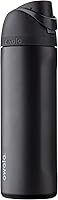
The Owala FreeSip 24 oz has a built-in straw, a wide opening, a push-button lid with lock, and double-wall stainless steel insulation. For cleaning details, see Owala bottle dishwasher safety.
Its FreeSip spout supports sipping upright through the straw or tilting the bottle to drink through the spout opening.
The Owala FreeSip 32 oz uses the same two-way FreeSip drinking design, with a 32 fl oz capacity and a glossy Very, Very Dark finish. Its title and data specify a stainless steel body, push-button lid with lock, double-wall insulation, and a wide opening.
Read the best water bottle with straw guide if upright drinking is your main priority. If a straw wears out, compare the best Owala water bottle straw replacement options.
Push-button and flip lids
Push-button lids can make opening easier with one hand, while a lock helps prevent accidental opening. A protective cover may also keep the mouthpiece cleaner between drinks.
Flip lids vary widely. Some expose a spout, some connect to a straw, and some open a broad drinking area.
Check the hinge, lock, seal, and cleaning access before choosing one.
Wide-mouth lids
Wide-mouth bottles are easier to fill with ice and can be simpler to clean because you can see farther into the container. The trade-off is that a broad opening may pour faster and can feel less controlled while walking.
Compare the best wide mouth water bottle plastic guide for lighter options. For broader material choices, see the best wide mouth water bottles.
How do you choose the right bottle size?
Choose bottle size by the amount you normally drink between refills and the space available in your bag, desk, or vehicle. Small bottles favor portability, while 32 oz and larger bottles reduce refill stops but add weight and bulk.
A 12 to 20 oz bottle can suit short trips, children, and smaller bags. A 24 oz bottle is a common middle size for work, commuting, and gym use.
A 32 oz bottle can work for longer outings, but its width and full weight deserve attention. The 32 oz Owala FreeSip is specifically described as unsuitable for standard automotive cupholders, so plan to secure it in an organizer, door pocket, or bag.
For larger capacity, compare the best 32 oz water bottles and best 64 oz water bottles. If you need a compact option, the best small reusable water bottles guide is a better starting point.
What makes a bottle good for exercise and travel?
A bottle for exercise or travel should match your grip, lid, bag, and temperature needs. Look for a secure closure, a carry loop or handle, a shape that fits your storage space, and a cleaning routine you will actually follow.
A spout or straw can make drinking easier during movement. A screw cap can be simpler when leak resistance and fewer parts matter most.
A carrying handle helps when the bottle is too wide or heavy to hold comfortably. Compare the best water bottles with carry handles if portability is a deciding factor.
Insulation is useful for people who want cold drinks over several hours. Compare the best insulated water bottles when temperature retention matters more than the lowest possible weight.
For a bottle that stays separate from your bag, an insulated holder can add another carrying option. See the best insulated water bottle holders for that use.
Are reusable tumblers different from water bottles?
Tumblers are different because they usually have a cup-style shape, a wider body, and a lid designed for sipping while the container stays upright. Choose a tumbler for desk, car, and casual daily drinking; choose a bottle when you need a tighter seal for carrying.
Tumblers may include handles, straws, sliding covers, or large capacities. Their broad bases can feel stable on a desk, but their width may limit cup-holder fit.
Compare the best insulated tumbler with handle if carrying comfort matters. Brand-focused guides can also help if you are comparing the best Stanley insulated tumbler, best insulated tumblers Yeti, best Hydro Flask water bottle, or best Contigo water bottles.
If you are choosing a gift, the best insulated tumbler for boss guide focuses on a polished, practical use case. For a specific Stanley model, read the Stanley Quencher H2.0 review.
What type of water bottle is safest for daily use?
The safest type of reusable water bottle is one that is made for your intended drink, remains intact, and can be cleaned fully. Material alone does not make a bottle safe if the lid, seal, straw, or interior stays damp and dirty.
Check these points before buying:
- Confirm whether the bottle is intended for hot drinks or cold drinks.
- Follow the care instructions for the bottle and lid.
- Inspect seals, hinges, straws, and threads for trapped residue.
- Replace damaged parts instead of continuing to use a cracked or warped bottle.
- Avoid leaving drinks in the bottle longer than your routine and care instructions support.
- Let washable parts dry fully after cleaning.
Some bottles are dishwasher safe, while others require hand washing. The Owala data specifies a dishwasher-safe lid and hand washing for the cup, while the Takeya Actives is described as dishwasher safe.
The best dishwasher safe water bottles guide can help if machine cleaning is a key requirement. Also compare the best water bottle replacement lid options when the bottle body is still useful but the cap or seal is worn.
How do you choose a reusable bottle for children, seniors, or groups?
Choose a bottle for children or seniors by prioritizing grip, opening effort, weight, leak control, and cleaning access. For groups, capacity and consistency often matter more than specialized features.
Kids may do better with a lighter bottle, a simple lid, and a size they can carry when full. See the best reusable water bottles for kids for age-focused options.
Seniors may prefer a comfortable handle, a lid that opens without excessive force, and a drinking opening that does not require tipping a heavy bottle. Compare the best water bottles for seniors for those needs.
For a larger household, school, office, or event, buying several matching bottles can simplify storage and replacement. The best reusable water bottle bulk guide can help you compare group-use options.
Measurements can also support a hydration routine, especially when you want to track how much you have poured. Compare the best reusable water bottles with measurements if marked volume is important.
How should you clean and maintain a reusable water bottle?
Clean the bottle, lid, seal, straw, and other removable parts according to their care instructions. The lid usually needs as much attention as the bottle body because moisture and residue can collect around threads, valves, and mouthpieces.
Rinse the bottle soon after use, especially after flavored drinks. Quick rinsing can stop residue from drying and becoming harder to remove later.
Dry parts help prevent stale smells and keep the next drink tasting clean. Leaving a bottle closed while damp can trap moisture inside the cap and around the seal.
Use a brush that reaches the base and corners, then allow every part to dry before reassembly. A brush can reach places that shaking with water alone may miss.
Check the mouthpiece and spout area each time you wash the lid. A quick look for trapped residue can show whether a part needs more than a simple rinse.
A wide opening makes it easier to inspect the inside and add ice. Narrow openings may need a bottle brush, while straw lids need a thin brush or removable parts.
Take straws and seals apart only if the care instructions allow it. Forced removal can damage soft parts and make a good bottle harder to seal later.
Do not assume dishwasher safe care applies to every component. Check the bottle and lid separately, and follow the brand's temperature and placement instructions.
If a bottle is listed as dishwasher safe, place parts so water can reach the inside surfaces. Crowded parts can shield each other and leave residue behind.
Let the bottle air dry with the lid off or set beside it. Inspect threads, hinges, and gaskets after washing and drying, as cracks or warping can affect leak resistance.
Replace a worn seal or straw when the bottle body is still sound. Store the bottle dry when not in use, as a dry interior stays cleaner than one that remains sealed and damp.
How do you compare reusable water bottles before buying?
Compare reusable water bottles in this order: purpose, material, lid, capacity, fit, cleaning, and replacement parts. This keeps attractive features from distracting you from the way you will actually use the bottle.
First, define the main setting. A desk bottle has different needs from a hiking bottle, a school bottle, or a vehicle bottle.
Next, decide whether temperature retention matters. If you mostly drink water within an hour, insulation may add weight without much benefit.
Then check the lid and opening. A straw can improve upright sipping, while a wide mouth helps with ice and cleaning.
A screw cap may be easier to maintain, but a push-button lid can be quicker to open.
Measure the places where the bottle will live. Check backpack pockets, vehicle cup holders, refrigerator shelves, and bicycle or gym storage before ordering.
Finally, consider maintenance. A bottle that is difficult to disassemble may not be the right choice if you need frequent cleaning.
Explore water bottles & tumblers by topic
Use these topic guides when you want to narrow the search by audience, material, or a special feature. Each guide can help you compare options before you return to the main types covered here.
- Best Reusable Water Bottles
- Best Reusable Water Bottles for Men
- Best Plastic-Free Water Bottles
- Best Brita Filter Water Bottles
Start with the general guide if you are still comparing materials and lid styles. Move to a focused guide when one need becomes clear, such as low weight, a plastic free build, or filtered water.
A focused guide can save time because it filters out designs that do not suit the task. It can also make differences in capacity, opening size, and care easier to spot side by side.
Return to this guide after reading a focused list and check the core points again. Confirm that the size fits your bag, the lid suits your drinking style, and the cleaning method fits your routine.
What should you buy if you are still unsure?
Choose the Takeya Actives if you want a 24 fl oz insulated stainless steel bottle with a spout lid, carrying loop, leakproof design, and stated cup-holder fit. Choose the 24 oz Owala FreeSip if upright sipping, a built-in straw, and a push-button lid matter most.
The Takeya suits people who drink on the move and want a quick spout style drink without a wide opening at the mouth. Its carrying loop can help when the bottle is carried by hand between a bag and a desk.
The 24 oz Owala FreeSip suits people who prefer to sip while keeping the bottle upright. Its push-button lid with lock can help protect the mouthpiece and reduce accidental opening in a bag.
Choose the 32 oz Owala FreeSip if you want more capacity and two drinking methods, while remembering that it is not intended for standard automotive cupholders. Its extra capacity can help on longer days, but the wider shape needs a plan for transport.
For the 32 oz model, consider a cup holder organizer, a door pocket, or a bag during travel. That small change in how you carry it can make the larger size easier to live with each day.
Choose the Blockhütte if you want a 1000 ml wide-mouth bottle with a screw cap and included cleaning and carrying accessories. The wide mouth can help with filling, ice, and cleaning, while the screw cap keeps the design simple.
The Blockhütte list includes a cotton bag, a replacement silicone seal, a trekking karabiner, and a cleaning brush. Those extras can help with carry and care, though you should still check that the size suits your bag and shelf space.
For the broader question of types of reusable water bottles, match the bottle to your carrying space, drinking style, temperature needs, and cleaning routine. Then check the lid, seal, and replacement parts before you commit.
If you drink mostly at a desk, upright sipping may matter more than a spout. If you carry the bottle in a packed bag, leak resistance and a secure lock may matter more than extra capacity.
Check the base diameter and height against your cup holder, bag pocket, and refrigerator shelf. A bottle that you can rinse, brush, and dry without effort is more likely to stay in daily use.
Frequently asked questions
What type of reusable water bottle is safest?
The safest choice depends on the material, condition, and care routine. Stainless steel, glass, and BPA-free plastic can all suit daily use when the bottle is intact, cleaned as directed, and used for the liquids it supports.
Check the lid, seals, and temperature guidance before buying.
What are the main types of reusable water bottles?
The main types are plastic, stainless steel, glass, aluminum, collapsible, insulated bottles, filtered bottles, and tumblers. They differ in weight, insulation, durability, taste, cleaning needs, lid style, and capacity.
Your daily routine usually matters more than the material alone.
What type of water bottle lid is best?
The best lid depends on how you drink. Straw lids suit upright sipping, spout lids work well for quick drinks during activity, screw caps offer a simple seal, and push-button lids can protect the mouthpiece while adding one-hand access.
Leak resistance and cleaning access matter as much as drinking speed.
How do I choose a reusable water bottle?
Choose a reusable water bottle by matching its material, capacity, lid, insulation, shape, and cleaning method to your routine. Check whether it fits your bag or cup holder, whether the opening accepts ice, and whether the bottle and lid can be cleaned without leaving hidden moisture.