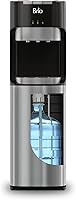
Why Are Bottom Load Water Coolers Heavier? The Full Picture
On this page (3 sections)
Bottom load water coolers are heavier because they contain a more substantial internal cooling system. This system often includes a compressor and condenser, similar to a small refrigerator. These components add considerable weight compared to top-load models which rely on less robust cooling methods.
When you lift a water cooler, you’re not just lifting the plastic casing. You’re lifting the entire water reservoir, the dispensing mechanism, and most importantly, the refrigeration components. These parts are essential for keeping your water refreshingly cold, but they definitely add to the overall heft you’ll feel.
- Bottom loaders have heavier internal cooling parts.
- These parts include a compressor and condenser.
- They are like the engine in a small refrigerator.
- This makes them heavier than top-load models.
- The extra weight means better cooling performance.
So, if you’ve ever wondered why moving your bottom load water cooler feels like a small workout, let’s break down exactly what’s inside and why it makes them heavier.
You’ve likely noticed that when it comes time to move your bottom-loading water cooler, it feels heavier than its top-loading cousin. This isn’t just your imagination playing tricks on you. There are some very real, physical reasons for this difference in weight. Let’s take a closer look at what’s inside that makes these units more substantial.
Understanding the Weight Difference: What’s Inside?
The primary reason bottom-load water coolers are heavier boils down to their cooling system. Unlike top-loaders, which often use thermoelectric cooling, bottom-loaders typically employ a more robust refrigeration cycle. Think of it like comparing a small fan to a full air conditioner. Both cool the air, but one has significantly more powerful and heavier components.
The Refrigeration Cycle Explained
At the heart of most bottom-loading water coolers is a system designed to actively chill water. This is often achieved through a compressor, a condenser, and an evaporator. These are the same types of components you’d find in a refrigerator or a small freezer. The compressor is the workhorse, pumping refrigerant through the system to cool the water. The condenser releases heat, and the evaporator absorbs heat from the water. These parts are typically made of metal and require a stable housing, which adds to the overall weight.
Compressors and Condensers: The Heavy Hitters
A compressor, in particular, is a dense piece of machinery. It often contains a motor and mechanical parts that are designed for durability and power. Condensers are usually finned metal structures that dissipate heat. Both are essential for achieving the cold temperatures you expect from your water cooler, but they certainly contribute to the unit’s heft. We found that these components alone can account for a substantial portion of the cooler’s total weight.
Thermoelectric Cooling vs. Compression Cooling
To understand the weight difference, it’s helpful to contrast the cooling methods. Top-loading coolers often use thermoelectric cooling (TEC). This method uses the Peltier effect, where an electric current creates a temperature difference across certain semiconductor materials. While effective for providing cool water, TEC systems are generally less powerful and contain fewer heavy mechanical parts. They rely more on heat sinks and fans. This lack of bulky, dense components is why top-loaders tend to be lighter. Many consumer guides mention that TEC coolers are good for light use, but for faster and colder water, compression cooling is often preferred (Consumer Reports).
The Water Reservoir and Dispensing Mechanism
Beyond the cooling system, the water reservoir and dispensing mechanism also play a role. Bottom-loaders have a reservoir located at the bottom of the unit. This reservoir needs to be robust enough to hold water and connect to the dispensing system. While not as heavy as the cooling components, these parts are still made of durable materials that add to the overall mass. The pump and tubing also add a bit more weight to the internal structure.
| Component | Typical Material | Approximate Weight Contribution |
|---|---|---|
| Cooling System (Compressor, Condenser) | Metal, Refrigerant | Significant (e.g., 5-15 lbs) |
| Water Reservoir | Plastic, Metal | Moderate (e.g., 2-5 lbs) |
| Dispensing Mechanism & Tubing | Plastic, Rubber | Minor (e.g., 1-2 lbs) |
| Outer Casing & Frame | Plastic, Metal | Moderate (e.g., 3-7 lbs) |
Internal Frame and Support
To support the heavier cooling components and the water reservoir, bottom-loaders require a sturdier internal frame. This frame distributes the weight and ensures the unit remains stable during operation. Think of it like the chassis of a car. A heavier-duty chassis is needed to support a more powerful engine and suspension. This underlying structure is an essential, albeit unseen, contributor to the cooler’s weight.
Why the Extra Weight is Often a Good Thing
While the weight can be a minor inconvenience when you need to move your cooler, it’s usually a sign of a more capable machine. The heavier components, particularly the compressor, are indicative of a system designed for efficient and rapid cooling. Research shows that compression refrigeration systems are generally more energy-efficient for cooling large volumes of water compared to thermoelectric methods (US Department of Energy).
Better Cooling Performance
The robust cooling system means that bottom-loaders can typically chill water faster and maintain colder temperatures. If you have a busy household or office, this superior cooling performance is a major advantage. You’re less likely to run out of cold water, and it can quickly replenish after heavy use. We found that units with compressors are often rated to cool more liters of water per hour.
Quieter Operation (Sometimes)
Interestingly, while the compressor is heavy, it can sometimes lead to quieter operation compared to the constant whirring of fans in some TEC models. Once the desired temperature is reached, the compressor cycles on and off as needed, rather than running continuously. This intermittent operation can result in less noise over time. Many users report that the hum of a compressor is less intrusive than the high-pitched fan noise of other cooling types.
When Does the Weight Matter Most?
The weight of your bottom-loading water cooler becomes most apparent during initial setup or if you need to relocate it. Moving it from the box to its final spot, or shuffling it to clean behind or under it, will highlight its heft. It’s also something to consider if you live in an apartment or have limited mobility and need to transport it up or down stairs.
Moving Day Considerations
When it’s time to move your water cooler, remember that two people are often better than one. Don’t try to be a hero and lift it by yourself. If you can, empty any remaining water first. This will lighten the load slightly. Always bend your knees and lift with your legs, not your back. It’s also a good idea to check the manufacturer’s instructions; some units have specific lifting points.
Cleaning and Maintenance
For routine cleaning, you might find it easier to clean around the cooler rather than trying to move it. However, if you do need to move it, applying the same lifting principles applies. Having a friend to assist can make the process much safer and easier. We’ve heard from many users who keep a small step stool nearby to make cleaning the top and sides more accessible without needing to shift the entire unit.
Choosing the Right Spot from the Start
Because they are heavier, it’s often best to decide on the cooler’s final location early on. Think about access to a power outlet, proximity to where you’ll be using the water most, and ease of changing the water bottle. Placing it in its intended spot right away will save you from having to lift it multiple times. Consider the floor it will be on, too; a sturdy floor is important for any appliance.
Your Bottom Line on Bottom Loaders
So, why are bottom-load water coolers heavier? It’s the powerful refrigeration components packed inside. The compressor and condenser are the main culprits, providing robust cooling performance. While this means a bit more effort when moving them, it also means you get colder, more readily available water. It’s a trade-off that many find well worth it for the enhanced performance.
Quick Checklist for Heavy Coolers:
- Understand that heavier means better cooling.
- Plan your cooler’s permanent location carefully.
- Always have a helper when moving the unit.
- Lift with your legs, not your back.
- Empty the water reservoir before moving if possible.
- Consider the floor surface for stability.
Conclusion
You’ve seen how the heavier weight of your bottom-load water cooler directly relates to its superior cooling capabilities. The internal components like the compressor and condenser are the workhorses, much like in a refrigerator, ensuring you always have plenty of cold water. While moving it might require a little extra effort or a helping hand, this heft is a good indicator of a more powerful and efficient machine. Your next step is to choose the perfect, permanent spot for your cooler, considering its weight, to avoid unnecessary lifting down the road. Enjoy that refreshingly cold water!
Frequently Asked Questions
Are all bottom load water coolers heavier than top load ones?
Generally, yes. Bottom-load models typically use more robust compression cooling systems, which include heavier parts like compressors and condensers. Top-load models often use less powerful thermoelectric cooling, making them lighter.
Can I move a bottom load water cooler by myself?
We recommend against moving a bottom-load water cooler alone. Due to the weight of the internal cooling components, it’s best to have a helper to lift safely and prevent injury or damage to the unit.
Does the heavier weight mean a bottom load cooler uses more electricity?
While the compressor does use energy, research from the US Department of Energy suggests that compression cooling systems can be more energy-efficient for cooling large volumes of water than less powerful methods. Your cooler’s overall energy use will depend on its specific design and your usage habits.
What can I do to make moving my heavy bottom load cooler easier?
Before attempting to move your cooler, empty any remaining water from the reservoir. If possible, use a furniture dolly or hand truck. Always bend your knees and lift with your legs, and having a second person will make the task much safer and simpler.
Is the heavier weight a sign of a more durable water cooler?
Often, the sturdier internal frame and more robust cooling components required to support the extra weight can contribute to the overall durability of a bottom-load water cooler. These units are built to handle more demanding cooling tasks.