Faucet Water Filter vs Pitcher: Which Fits Your Kitchen? (November 2026)
Choose a faucet filter for water on demand at the sink, or a pitcher for a simple, portable option. A faucet water filter vs pitcher comparison comes down to installation, how much filtered water you need at once, and whether you want to refill a container.
On this page (6 sections)
Choose a faucet water filter for filtered water at the sink, or a pitcher if you want a portable option without installation. In a faucet water filter vs pitcher comparison, the best fit depends on kitchen space, water use and how much setup you're willing to handle.
A faucet-mounted filter or under-sink system can make filtered water available when you turn on a dedicated tap or switch the faucet, depending on the model. A pitcher filters a batch that you store in the refrigerator or on the counter.
For a broader overview of options, see our drinking water filter guide. If you already know you want a sink-mounted option, compare the best faucet water filter for kitchen sink picks.

Faucet water filter vs pitcher: which is easier to install?
A pitcher is easier to start using because it needs no sink installation; a faucet filter requires checking your faucet or cabinet setup. The amount of work varies between faucet-mounted models and under-sink systems.
A pitcher simply needs filling and space to stand. A faucet-mounted filter typically attaches at the faucet, so first check whether your faucet style is compatible.
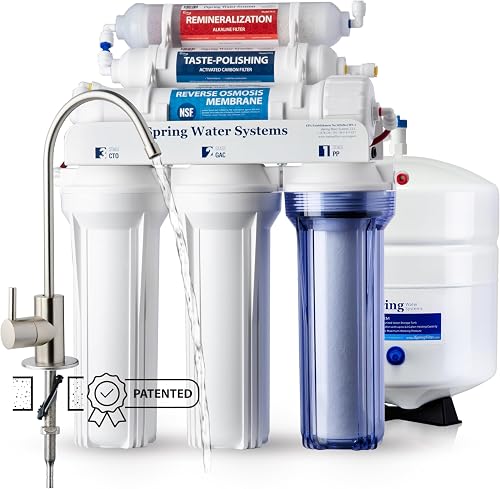
An under-sink system takes more planning. For example, the iSpring RCC7AK-BN is designed for under-sink installation and includes a separate brushed nickel faucet and storage tank.
Its top-mounted fastener is designed to make countertop installation from above. You still need to check the space beneath the sink and confirm that the connections fit your plumbing.
The Waterdrop G3P600 is also an under-sink system, but it requires electricity and holes for its faucet and drain connections. Measure the cabinet and check for a suitable outlet before choosing it.
What if you rent or may move soon?
A pitcher is easier to take with you because it doesn't connect to the sink. It's a practical fit if you can't make permanent changes or don't want to work around a landlord's rules.
A faucet-mounted filter may be removable, but its fit depends on the faucet. An under-sink system requires more installation planning and may be inconvenient if you expect to move soon.
Which option holds or supplies more water?
A pitcher has a clear batch capacity, while faucet and under-sink filters can supply water as you draw it. Think about your biggest daily uses, such as filling bottles, making drinks or cooking.
The Brita Large pitcher holds 10 cups. That's a finite amount, so a household that uses a lot of filtered water may need to refill it and wait for another batch.
An under-sink system with a storage tank keeps filtered water ready at its dedicated faucet. The iSpring system includes a tank, though the product information here doesn't specify its tank volume.
The Waterdrop G3P600 is a tankless system with a stated output of 600 gallons per day. Its display faucet also shows TDS and filter life, but the system needs under-sink electricity.
A faucet-mounted filter can be convenient for repeated glass or bottle fills without preparing a pitcher. Check the specific model's flow rate and filter capacity before treating it as a match for your household's demand.
If you want to understand how sink-mounted options differ, read do faucet water filters really work. That guide can help set expectations about what faucet filters are designed to do.
Which one takes less space in the kitchen?
A pitcher uses visible counter or refrigerator space, while an under-sink system uses cabinet space and a faucet opening. Decide which space is easier for you to spare.
The Brita pitcher is about 10.47 inches tall and is designed to fit on refrigerator shelves. Measure the shelf height and depth, especially if your refrigerator is already crowded.
A faucet-mounted filter keeps a pitcher off the counter, but it adds hardware at the sink. That may matter if you have a pull-down faucet, limited clearance or a small sink.
Under-sink systems keep their main components out of sight. The iSpring system includes a storage tank, and the Waterdrop is tankless, so their cabinet layouts differ.
The Waterdrop system measures 18.12 x 5.67 x 17.72 inches. Measure your usable cabinet area and account for plumbing, stored items and room to replace filters.
Our best countertop water filters guide covers another option if you want a filter system that sits outside the cabinet. Compare its footprint with your counter space before deciding.
What maintenance does each option need?
Both options need timely filter changes, but pitchers also need regular refilling and faucet systems may involve more involved replacement access. Check the recommended capacity and schedule for the exact filter type.
Brita's Standard filter is intended for 40 gallons or about 2 months; its Longlast filter is intended for 120 gallons or about 6 months. The PUR replacement filters are designed for up to 40 gallons or about 2 months of regular use.
The PUR four-pack offers replacements for compatible PUR pitchers and dispensers. Its LockFit design helps the cartridge lock into those systems.
Under-sink systems can have several filter stages and different replacement intervals. The iSpring system lists replacement sets for 6 months, 1 year, 2 years and 3 years, depending on the set.
The Waterdrop display faucet tracks filter life, and its filters are designed to be replaced by twisting them into place. That can make routine changes easier, though you still need to keep replacement filters on hand.
For more detail on one common schedule, read how long a Brita water filter lasts. If you're comparing two faucet brands, see Brita vs PUR faucet filter.
Which option fits your water and sink?
Choose based on the contaminants you want reduced and the filter's documented claims, not on the format alone. Filter certifications and reduction claims vary by model and cartridge.
The Brita pitcher is described as reducing chlorine taste and odor, mercury, copper, zinc and cadmium. PUR pitcher filters are IAPMO certified to reduce chlorine, mercury, copper and zinc when paired with compatible PUR systems.
The iSpring RCC7AK-BN is NSF/ANSI 58 certified as a full reverse osmosis system. The Waterdrop G3P600 is certified against NSF/ANSI 58 for TDS reduction, NSF/ANSI 372 for lead-free material and NSF 42 for chlorine, taste and odor reduction.
These claims describe different systems and measures. If you have a specific water concern, check the exact filter's certification and reduction information, and consult local water quality information for your supply.
For model-specific options, browse best PUR faucet water filter and our Aquagear water filter pitcher reviews. Compare each model's stated uses and replacement needs with your own water and kitchen.
Which should you choose for your kitchen?
Pick a pitcher for simple setup and portability; choose a faucet filter for convenient sink access, after checking fit and filter needs. An under-sink system suits you when you want a dedicated filtered-water faucet and can plan around cabinet space and installation.
Choose a pitcher if you can make room in the refrigerator or on the counter and don't mind refilling it. Choose a faucet-mounted filter if the faucet is compatible and you want water available at the sink without storing a filled container.
Choose an under-sink system if you want a separate faucet and have the space, access and power its installation requires. Compare the replacement schedule and documented filtration claims before you settle on a model.
Frequently asked questions
Is a faucet water filter better than a pitcher?
A faucet filter is more convenient when you want filtered water directly at the sink, while a pitcher is easier to set up and move. Choose by how much water you use, whether you can install a filter, and whether you have room to store a filled pitcher.
Does a pitcher filter need to be installed?
No, a pitcher filter is freestanding and doesn't attach to the sink. Fill its reservoir as directed, then leave time for water to pass through the cartridge before pouring.
How often do pitcher filters need replacing?
It depends on the filter. The Brita Standard filter is intended for 40 gallons or about 2 months, while the Brita Longlast filter is intended for 120 gallons or about 6 months; PUR pitcher filters are designed for up to 40 gallons or about 2 months.
Can a faucet filter provide enough water for a family?
It can suit a household that fills glasses and bottles at the sink throughout the day, but check the exact model's flow and replacement schedule. A pitcher holds a finite batch, so larger households may need to refill it more often.
Do under-sink filters need electricity?
Some do and some don't. The iSpring RCC7AK-BN operates without electricity, while the Waterdrop G3P600 requires under-sink electricity, so check power access before choosing an under-sink system.


