Drinking Water Filters: The Complete Buying Guide
The right drinking water filter depends on what you want to reduce, how much water you use and where you can install it. Check your water quality, match it to a certified filter, then compare installation, flow and replacement needs.
On this page (8 sections)
- What should a drinking water filter remove?
- Which type of drinking water filter fits your home?
- What installation choice works for your household?
- How do you compare filter capacity and upkeep?
- How is a water softener different from a filter?
- Which details matter before you buy?
- Explore drinking water filters by topic
- How do you choose the right drinking water filter?
The right drinking water filter depends on what you want to reduce, how much filtered water your household uses and where you can install a system. Start with a water report or test, match the concern to a filter's certified claims, then compare setup and replacement needs.
A filter is a treatment choice, not a universal upgrade. A pitcher, refrigerator cartridge and whole-house system serve different purposes, so first decide whether you need filtered water at one tap, for drinking throughout the home or at every fixture.
If you're narrowing down options, our best water filters for home guide compares home-use choices. This guide explains how the main types differ and what to check before you buy.
What should a drinking water filter remove?
Choose a filter based on the specific contaminant or taste issue you want to address. No single filter type removes everything, and a general claim about filtration does not show whether a model fits your water.
Start with your local utility's water quality report if you use municipal water. If you have a private well, arrange a water test through a qualified lab, especially if you notice a change in taste, color or odor.
Then check whether the filter's performance claims match the concern. Certifications to NSF/ANSI standards can help you compare independently tested reduction claims; check the exact model and the standard's scope.
Our guide to what water filters remove explains common targets and how to read those claims.
A filter that improves taste may not address a health-related contaminant. Use water test results and the filter's certified claims together rather than choosing by broad labels like “purifying.”
How do you match a drinking water filter to your water?
A drinking water filter for home use should be matched to your test results, not a guess about your neighborhood. Use the report to identify the target, then look for a filter with a certified reduction claim for it.
For municipal water, note the contaminants and treatment details in the annual report. For a well, test for the issues relevant to the property's location and well construction; a lab or local health authority can help you select the right panel.
Keep the report handy while comparing models. If a product's claim does not name your concern or a relevant certification, ask the manufacturer for the exact performance data before relying on it.
Which type of drinking water filter fits your home?
Choose the system that fits your water use, installation limits and maintenance routine. A small filter near the sink may suit one or two people, while a larger system can serve more points of use.
| Filter type | Where it treats water | Common fit | What to check |
|---|---|---|---|
| Pitcher | Water poured into the reservoir | Renters, small households, low setup effort | Capacity, refill frequency, cartridge cost |
| Faucet mount | A kitchen faucet outlet | Convenient sink-side filtering | Faucet compatibility, flow and switching |
| Refrigerator cartridge | Refrigerator dispenser or ice line | Existing compatible refrigerator | Exact model match and replacement interval |
| Countertop | A unit beside the sink | Renters who want more capacity than a pitcher | Counter space, connection and storage |
| Under-sink | A dedicated tap or connected faucet | Frequent drinking and cooking use | Cabinet room, plumbing and filter changes |
| Reverse osmosis | Dedicated drinking-water tap | Buyers seeking a multi-stage point-of-use system | Install, drain connection, storage and parts |
| Whole-house | Main water line | Treatment needs throughout the home | Water test, flow rate, sizing and professional setup |
Are pitcher filters enough for everyday drinking water?
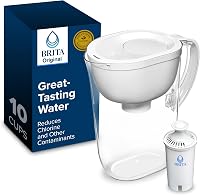
A pitcher filter can work when you need a modest volume and a simple setup. It needs no plumbing connection, but you must refill it and replace its cartridge on schedule.
Compare the reservoir size with how much your household drinks and cooks with filtered water. A small pitcher can become inconvenient if several people refill bottles throughout the day.
For less setup, compare our best water filter pitcher guide. If the pitcher needs to fit in a refrigerator, see the best water filter pitcher for refrigerator options.
Should you choose a faucet or countertop water filter?
Choose a faucet mount when you want filtered water at the sink with little counter use. A countertop model can offer a larger unit beside the sink, but it takes worktop space and may need a faucet connection.
Check compatibility before buying either type. Faucet filters may not fit pull-down or specialty faucets, and countertop systems can differ in how they connect and dispense.
Compare best faucet water filters for kitchen sinks if you want a compact attachment. For a separate unit beside the sink, review the best countertop water filter guide.
When does an under-sink system make sense?
An under-sink filter makes sense when you use filtered water often and can dedicate cabinet space to it. Many systems feed a separate drinking-water faucet, while some connect to an existing fixture.
Measure the cabinet and check nearby plumbing, electrical outlets and stored items. Replacing cartridges may require access under the sink, so leave room to work.
Our best under sink water filters guide compares this setup. If you want the filtered water to come from a dedicated fixture, see best filtered drinking water faucets.
Is reverse osmosis a fit for your drinking water?
Reverse osmosis may suit you if its treatment claims match your water concern and you have room for the system. It often involves more parts and setup than a pitcher or faucet filter.
Check the system's target contaminants, certifications, storage arrangement and replacement schedule. Some setups connect to a drain, and replacement parts add to long-term upkeep.
Read what reverse osmosis water is before comparing equipment. Then use our best reverse osmosis systems guide to explore options.
When should you consider a whole-house filter?
A whole-house system treats water where it enters the home, so it can serve multiple fixtures. It is a larger decision than adding a drinking-water filter at one tap because sizing depends on the home's water and flow needs.
A water test should guide the treatment method. Check the system's rated flow, installation requirements, filter changes and whether the concern actually needs treatment at every fixture.
For planning, read how to choose a whole house water filter. If your home uses a private well, the best well water filter system guide can help you compare well-focused options.
What installation choice works for your household?
The best installation is the one you can fit, maintain and use without disrupting your routine. Renters and people who move often may prefer portable options, while homeowners can consider a dedicated faucet or a main-line system.
Check the product's connection type and measure the installation area before buying. For a rental, get approval before altering plumbing; a pitcher or compatible faucet attachment may avoid permanent changes.
Apartments can bring tight cabinets, limited counter space and rules about plumbing. Use our best drinking water filter for apartment guide to compare setups for smaller homes.
For a filtered source that also dispenses chilled or hot water, a dispenser may fit your routine. First, learn what a water dispenser system is and compare best water coolers with filters.
How do you compare filter capacity and upkeep?
Compare the replacement schedule, cartridge availability and routine effort before choosing a system. A low-maintenance design on paper can still be inconvenient if you forget to order a specialty cartridge or cannot reach it easily.
Look for the model's rated capacity and replacement interval, then estimate how often your household will reach that limit. A time-based schedule may also apply even if you use less water.
Use the exact replacement part number when ordering. Our guide to best water filter replacement cartridges covers replacement choices, and the best refrigerator water filter cartridges guide focuses on refrigerator models.
What do refrigerator filters offer?
A refrigerator filter can be a straightforward choice if your appliance already has a compatible dispenser or ice maker. The main buying task is matching the filter to the refrigerator's exact model and replacing it on schedule.
The everydrop by Whirlpool Ice & Water Refrigerator filter is designed for select Whirlpool, Maytag, KitchenAid, Amana and JennAir refrigerators. Its maker says it is certified to NSF standards 42, 53 and 401 and recommends replacement every 6 months or 200 gallons.
The GE XWFE™ Refrigerator Water Filter is designed for select GE, GE Profile, Café and Monogram refrigerators. GE says it reduces 70 or more impurities and gives it a 6-month replacement interval.
Check the refrigerator model number and the filter designation before ordering. The best GE refrigerator water filters, best refrigerator water filter for LG and best water filters for Whirlpool refrigerators guides narrow the search by brand.
You can also compare best Frigidaire refrigerator water filters if your appliance is from that brand. A filter that fits one refrigerator family may not fit another.
How is a water softener different from a filter?
A water softener targets hardness minerals, while a drinking water filter treats water according to its specific filtration method and certified reduction claims. The two devices address different needs, though one home may use both.
Hardness often shows up as scale buildup or soap that does not lather easily. A water test can confirm whether calcium and magnesium are the concern.
The Aquasure Harmony Series is a whole-house softener rated for 48,000 grains. Aquasure describes it for homes with 3 to 4 bathrooms and says its pre-filter targets sediment, carbon-related concerns and other listed contaminants.
The Morton Clean and Protect Water Softener Salt is designed for use in a compatible brine tank. Its maker says the pellets help prevent buildup and maintain softener efficiency.
A softener's salt is not a substitute for a drinking-water filter cartridge. Compare the treatment goals in our water softener vs water filter guide before deciding which equipment your home needs.
Which details matter before you buy?
Check compatibility, certification, capacity and maintenance against your own water and space. These details matter more than a broad claim that a system makes water “clean.”
Use this checklist:
- Identify the water concern with a report or test.
- Confirm the filter's certified reduction claim covers that concern.
- Check the exact faucet, refrigerator or plumbing compatibility.
- Measure the counter, cabinet or installation area.
- Compare flow and capacity with your household's water use.
- Find the correct replacement cartridge and its schedule.
- Consider whether installation needs tools, a plumber or landlord approval.
A portable system may be easier to move but require more frequent refills. A fixed system can make filtered water convenient, yet it needs a suitable installation point and accessible replacement parts.
If you need portable treatment away from home, compare the best gravity water filter for home use or the best water filters for camping for trips. Outdoor use requires checking that the filter is intended for the specific water source and conditions.
Commercial kitchens and shared workplaces have different demand and installation needs. See best commercial water filtration systems if you are choosing equipment for a business.
Explore drinking water filters by topic
- Best Tankless Reverse Osmosis Systems
- Best Reverse Osmosis System Replacement Parts
- Best Reverse Osmosis Replacement Tanks
- How to Choose a Water Filter Pitcher with Less Plastic
- Best Brita Water Filters
- Best PUR Water Filter Pitchers
How do you choose the right drinking water filter?
Choose a drinking water filter that addresses a confirmed water concern and fits your installation and replacement routine. Start with a water report or test, verify the filter's certified claims, then compare capacity and ongoing parts.
Pick a pitcher or faucet filter for a simple point-of-use setup, a refrigerator cartridge for a compatible appliance, or an under-sink system when you want a dedicated filtered tap. Consider reverse osmosis or whole-house treatment only when the water concern and household setup support that choice.
For another home-focused comparison, start with best activated carbon water filters if the target and filter claims fit. If a gift search brought you here, our best insulated tumblers for boss gifts guide covers drinkware rather than water treatment.
Frequently asked questions
How do I choose a drinking water filter for home?
Start with a water report or test, then choose a filter certified to reduce the contaminants you want to address. Match its capacity and installation to your household, and check the cost and schedule for replacement filters.
A filter that does not target your concern may not solve it.
Which type of water filter is easiest to install?
A pitcher or refrigerator filter usually avoids plumbing changes, while a faucet attachment may connect at the sink. Under-sink and whole-house systems can require more space and plumbing work.
Check the installation instructions and your fixture or refrigerator model before buying.
Do water filters remove hard water minerals?
Most drinking water filters target particular contaminants or taste issues, while a water softener uses ion exchange to address hardness minerals such as calcium and magnesium. Choose based on the problem you have.
A water test can help distinguish hardness from other water concerns.
How often should I replace a drinking water filter?
Follow the replacement interval and capacity for the exact filter model. Refrigerator filters in this guide call for replacement every 6 months, or every 200 gallons for the everydrop model.
A missed replacement can affect the filter's intended performance, so track the schedule.
Is reverse osmosis the right filter for every home?
Reverse osmosis can suit households seeking a dedicated drinking-water treatment system, but it is not the only option. Compare the contaminants addressed, installation needs, water use and ongoing replacement parts.
Review the system's certification and instructions against your water report before choosing.