ZeroWater vs Brita: Which Water Filter Should You Choose? (November 2026)
Choose ZeroWater if you want a pitcher designed to reduce dissolved solids; choose Brita if you want familiar pitcher and dispenser options. Compare the exact filter claims, replacement schedule and capacity before deciding.
On this page (8 sections)
- ZeroWater vs Brita: what is the main difference?
- Which water filter should you choose for your household?
- How do the pitcher choices compare?
- What should you know about filter maintenance?
- How do the filter claims compare?
- Which one is easier to fit into daily use?
- Are there options beyond a pitcher?
- Which filter is the better fit for your needs?
Choose ZeroWater if you want a pitcher designed to reduce dissolved solids; choose Brita if you want familiar pitcher and dispenser options. In this ZeroWater vs Brita comparison, match the filter's claims and replacement schedule to your water, taste and refill habits.
A filter's brand name alone doesn't tell you which contaminants it reduces or how often you'll replace it. Compare the exact filter and pitcher model, then weigh the practical differences in capacity and upkeep.
If you want a wider overview of filter types and their uses, start with our drinking water filter guide.


ZeroWater vs Brita: what is the main difference?
The main difference is the specific filtration approach and the models each brand offers. Your best choice depends on what you want reduced, how the water tastes to you and how much filtered water you use.
ZeroWater is known for pitchers that focus on dissolved solids, while Brita offers several pitcher and dispenser formats. Those broad descriptions are a starting point, not a guarantee that every model reduces the same substances.
Read the exact filter's reduction claims and certification details. A filter that targets a concern you have is more useful than choosing based on a general claim about either brand.
Does a TDS reading show which filter is better?
A total dissolved solids reading measures the amount of dissolved material in water, but it doesn't identify every substance in that total. A lower reading alone does not prove that water is safer or that a filter addresses a specific concern.
Use the reading as one piece of information, not a complete water-quality test. Check your local water information and the exact filter documentation when you need to know about specific contaminants.
Which water filter should you choose for your household?
Choose by your water concerns, serving needs and willingness to change filters. A compact pitcher works for a smaller household, while a large dispenser can reduce the number of refills.
Consider how many people use filtered water each day and where the pitcher will sit. A large unit can be inconvenient if refrigerator shelves are tight, and a small pitcher may need frequent refilling during busy times.
If pitcher shape and capacity are your main concern, compare options in our guide to the best water filter pitcher.
When does ZeroWater make sense?
Consider ZeroWater if the brand's specific reduction claims match what you want from a filter. Check the filter's instructions for replacement timing and any maintenance steps before you buy.
Don't choose by a TDS number alone. Check whether the exact filter is designed for the substances you care about and whether its upkeep fits your routine.
When does Brita make sense?
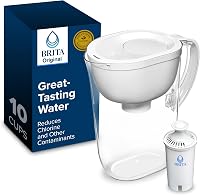
Brita can suit you if you want a familiar pitcher or a larger dispenser with a spigot. The Brita XL UltraMax holds 27 cups and uses a BritaPlus filter, which is specified for replacement every 40 gallons or about 2 months.
For a closer look at a different Brita filter, see our Brita Elite water filter review. Compare its specific claims with the filter you are considering rather than assuming all Brita filters are interchangeable.
How do the pitcher choices compare?
The Brita XL offers more capacity, while a smaller pitcher can be easier to fit in a refrigerator. The best fit depends on your available space and how much water you use between refills.
The Brita XL UltraMax holds 27 cups and has a dispensing spigot. It can sit on most countertops or in the fridge, but measure your intended space before choosing a large dispenser.
The Amazon Basics pitcher holds 10 cups and is designed to fit refrigerator shelves. It is compatible with Brita filters and standard replacements, though you should confirm the exact filter compatibility before buying a replacement.
If you're comparing brands beyond these two, our PUR vs Brita vs ZeroWater guide covers another common choice. For a focused look at pitcher formats, see Brita vs PUR water filter pitchers.
What should you know about filter maintenance?
Follow the replacement timing for the exact filter you use. Capacity and water use affect how soon a filter reaches its stated limit.
The BritaPlus filter in the UltraMax is specified for 40 gallons or about 2 months. The Amazon Basics pitcher filter is specified for up to 40 gallons, and the pitcher includes an electronic reminder to help track changes.
Replacement timing for ZeroWater depends on the exact filter and your water. Follow its instructions and watch for any change in taste or flow that the brand identifies as a reason to replace it.
Using a filter past its stated life can undermine the purpose of following its reduction claims. Keep a note of the replacement date or use the pitcher reminder if your model has one.
How do the filter claims compare?
Compare claims for the same contaminants and the same certification standard. Broad phrases such as “reduces contaminants” are less useful than a clear list of substances and the relevant certification.
The BritaPlus filter is certified by WQA to NSF/ANSI standards and is described as reducing chlorine, mercury, cadmium, copper and zinc. Brita also says it helps retain minerals and electrolytes naturally present in water; those minerals may not be present in every water supply.
The Amazon Basics pitcher filter is WQA certified against NSF 42, 53, 401 and 372 to reduce 9 contaminants, including chlorine taste and odor, zinc, copper, cadmium, mercury, benzene, atenolol, linuron and trimethoprim. Those details apply to that filter, not to every replacement that may fit the pitcher.
Certification and reduction claims are tied to specific models. Review the documentation for the ZeroWater filter you are considering and compare it directly with the claims for the Brita model.
Which one is easier to fit into daily use?
Choose the pitcher you can fill, store and clean without disrupting your routine. A filter that fits your kitchen and gets replaced on schedule is easier to keep using.
A 10-cup pitcher may suit a smaller fridge or one or two people. A 27-cup dispenser can help serve more people between refills, but it needs more room and may be heavier to move when full.
Consider who will refill it and whether the dispenser's spigot is easy to reach. If you want a different way to keep drinking water available at home, see why choose a bottom load water dispenser.
Are there options beyond a pitcher?
A pitcher is convenient for small batches, while other filter formats may suit higher daily use or a different setup. Compare installation, filter changes and counter space before switching formats.
Under-sink and countertop systems can provide filtered water without storing a pitcher in the fridge, but they have different setup and replacement needs. To compare treatment options, see reverse osmosis vs water softener.
A dispenser can also meet a serving need without filtering water, so keep those purposes separate.
For example, the Waterdrop G3P800 filter replacement guide covers upkeep for a different type of system. If your main comparison is between two familiar pitcher brands, our Brita vs PUR guide can help narrow that choice.
Which filter is the better fit for your needs?
Pick ZeroWater if its exact filter claims fit your water concerns; pick Brita if its pitcher format and replacement routine suit your household. Before buying, check the model's stated reduction claims, filter life and dimensions.
For a larger ready-to-serve reservoir, the Brita XL 27-cup dispenser is the clear format choice among the pitchers here. For a compact refrigerator pitcher compatible with Brita filters, the Amazon Basics 10-cup option is another practical choice.
Make the final decision by matching a specific filter to your needs rather than relying on the brand name alone. The right ZeroWater vs Brita choice is the one whose claims, upkeep and capacity fit how you actually use filtered water.
Frequently asked questions
Is ZeroWater better than Brita?
Neither brand is better for every household. ZeroWater is often considered by shoppers focused on dissolved solids, while Brita offers familiar pitcher and dispenser formats.
Compare the exact model's reduction claims, filter life and capacity, then choose based on your water and how often you want to refill or replace filters.
Does ZeroWater remove more than Brita?
That depends on the specific filters and contaminants you are comparing. Brand-level claims aren't interchangeable, so check the reduction claims and certification details for each exact model.
If a particular contaminant matters to you, use the filter's documentation and relevant water-quality information to guide your choice.
How often do ZeroWater and Brita filters need changing?
Replacement timing varies by filter and water use. The BritaPlus filter in the 27-cup UltraMax is specified for 40 gallons or about 2 months, while the Amazon Basics pitcher filter is specified for up to 40 gallons.
Check the instructions for the exact ZeroWater filter you are considering.
Can you use Brita filters in a ZeroWater pitcher?
Don't assume filters from different brands fit or perform the same. The Amazon Basics 10-cup pitcher is described as compatible with Brita filters and standard replacements, but that compatibility does not apply to ZeroWater pitchers.
Check the exact pitcher and filter instructions before buying replacements.
Which Brita pitcher size should you choose?
Choose a compact pitcher if refrigerator shelf space and easy handling matter most; choose a larger dispenser if you want more water ready at once. The Brita UltraMax holds 27 cups and has a spigot, while the Amazon Basics pitcher holds 10 cups.
Measure your shelf or counter before choosing.