How to Choose a 5 Gallon Glass Water Dispenser
Choose a 5 gallon glass water dispenser by checking filled weight, support strength and tap clearance first. Then confirm the container fits the stand, the spigot clears your glass or pitcher, and the setup is practical to refill and clean.
On this page (9 sections)
- What should you check in a 5 gallon glass water dispenser?
- How heavy is a full 5 gallon glass dispenser?
- Does a 5 gallon glass water dispenser need a stand?
- How much room does the tap need?
- Where should you place a large glass water dispenser?
- Is glass practical for a 5 gallon dispenser?
- What alternatives should you compare?
- How do you choose between a glass jug and reusable bottles?
- What is the final checklist for choosing a 5 gallon glass water dispenser?
A 5 gallon glass water dispenser needs stable support rated for its filled weight, plus enough room beneath the tap for your usual cup or pitcher. Measure the base, stand, counter space and tap height before choosing a container.
Five US gallons of water alone weigh about 41.7 lb. The empty container adds weight, so moving a full glass jug can be difficult; plan where it will sit before filling it.
This guide focuses on a large glass container with a tap, whether it rests on a counter or a stand. If you are comparing other non-electric options, our guide to the best non electric water dispenser covers related dispenser styles.
What should you check in a 5 gallon glass water dispenser?
Check filled weight, support and clearance as one setup. A jug that fits the shelf may still be too heavy for it, and a tap that fits beneath a cabinet may not leave room for your pitcher.
Start with the container maker's empty weight and dimensions. Add the weight of 5 gallons of water, then compare the total with the stand or surface's stated capacity.
If that capacity is not clear, ask the manufacturer before filling the container.
Measure the footprint where the jug will rest, including any rim or base that projects beyond the main glass body. The stand should support the base evenly and sit level without rocking.
Finally, measure from the surface to the tap outlet. This is the usable filling height, and it should clear your tallest everyday vessel with enough room to slide it in and out.
How heavy is a full 5 gallon glass dispenser?
A full setup weighs more than 41 lb, because that is roughly the weight of the water alone. The glass container, tap and any fitted hardware increase the total.
That weight matters most when you fill or move the dispenser. A large glass jug can be hard to lift, and carrying it while full combines weight with the risk of dropping or striking the glass.
Plan to fill it near its final location if the container can be filled there safely. Keep the path clear and avoid lifting a full jug onto a high shelf or narrow stand.
Before buying, look for the empty container weight and a clear support limit. If either is missing, do not assume that a decorative stand or an ordinary shelf can handle the full load.
How should you estimate filled weight?
Use the container's empty weight plus about 41.7 lb for the water. Include a little extra for the tap and other parts if they are not already included in the empty weight.
For example, if an empty dispenser weighs 8 lb, its filled weight will be about 50 lb before counting any separate hardware. That is an estimate, so use the container maker's figures when available.
Check whether a stand's capacity refers to a static, evenly spread load. A full dispenser can shift during use, and a narrow base or uneven floor can make a setup less stable even when the stated weight seems sufficient.
Does a 5 gallon glass water dispenser need a stand?
A stand helps when it raises the tap to a comfortable filling height and supports the full container securely. It is optional if your counter already provides enough clearance and is suitable for the load.
A stand's height changes how easily you can fill a cup, but it also raises the center of the loaded setup. Choose a stable base with a top that fits the container's footprint, and keep the dispenser away from table edges or busy walkways.
For ceramic options, compare ceramic water dispensers with stands.
If you want a stand, check its top width and depth against the jug's base, not just the glass body's widest point. A container should sit flat and centered without overhanging in a way that could make it tip.
A simple countertop arrangement can work well if the surface is level, sturdy and close to the place where you use the water. Compare countertop water coolers for powered alternatives.
Avoid placing a heavy filled glass jug on an unstable cart or a shelf that flexes.
What should you measure before choosing a stand?
Measure the base diameter or width and depth, then compare those figures with the stand's usable top. Also verify the stand's stated load limit against the filled container weight.
Check the stand's footprint on the floor or counter. A narrow frame may leave little margin for a large jug, while a broader base can be easier to position away from edges.
If the dispenser will be near a wall, measure the space needed to reach the tap and lift off the lid or refill opening. Leave room to clean around the stand and to catch drips.
How much room does the tap need?
The tap needs enough clearance for your tallest cup or pitcher, and enough space for your hand to operate it. Measure the gap from the counter or shelf to the spout rather than relying on the container's total height.
Try your usual glass and pitcher at the intended spot. The vessel should slide beneath the spout without tilting, and you should be able to remove it without bumping the tap or the container.
Check the tap handle's movement too. A side-mounted handle can need extra space at the side, while the vessel itself may block access if the dispenser sits close to a wall or backsplash.
A small drip tray can catch stray drops, but it does not replace enough room to position a cup. If the tap is too close to the surface, the setup may only work with short glasses.
Where should you place a large glass water dispenser?
Place it on a level, sturdy surface close to where you pour water. The filled setup is heavy, so choose its final location before adding water.
Keep it away from table edges, narrow shelves and areas where people may brush against it. A place with room around the tap also makes it easier to use and wipe up spills.
Think about access for refilling and cleaning. You may need to remove the lid, reach the opening or detach the tap, depending on the design; make sure there is room to do those tasks safely.
If children or pets share the space, consider whether they can reach or bump the dispenser. If a pet needs a dedicated drinking spot, compare water dispensers with pet bowls.
A heavy glass vessel can spill or break if knocked over, so a stable and low traffic location matters.
Is glass practical for a 5 gallon dispenser?
Glass can be practical if you want to see the water level and can manage the weight safely. Its main trade-off at this size is that it is heavy when full and can break if dropped or hit.
A clear container makes the remaining water visible at a glance. That can help you plan a refill, although a view of the water does not tell you when the container or tap needs cleaning.
Consider the full routine: bringing the container home, filling it, placing it, dispensing water and washing it. If you expect to lift it often, a smaller glass dispenser may be easier to handle.
See our guide to a 3 gallon glass water dispenser for a smaller capacity.
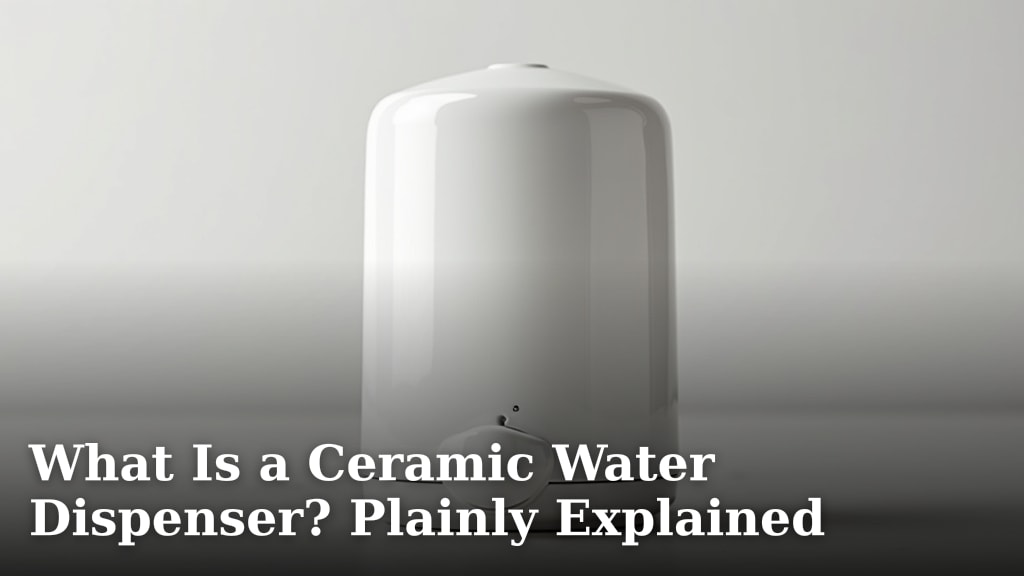
For another non-electric style, learn what a ceramic water dispenser is. Ceramic dispensers have different support and visibility trade-offs from a clear glass container.
What alternatives should you compare?
Compare alternatives if handling a full glass container is the main concern. Hot and cold water coolers can hold a 5 gallon bottle inside a lower cabinet or above the dispenser.
A bottled electric cooler may hold a 5 gallon bottle in a lower cabinet, while a top-loading model places the bottle above the dispenser.
The products below are electric alternatives, not glass dispensers. They may suit you if you want a powered cooler with a 5 gallon bottle rather than a standalone glass jug.
Some 5-gallon dispensers also include a single-serve brewer; compare 5-gallon water dispensers with K-Cup brewers.
The Avalon has hot, cold and room temperature settings, plus a nightlight and an empty-bottle indicator. Its listed dimensions are 12 in deep, 13 in wide and 41 in high, so check the floor space and outlet location before choosing it.
The Brio provides hot, cold and room-temperature water, with a UV self-cleaning feature and a child safety lock for hot water. It measures 15.6 in deep, 12.2 in wide and 41.4 in high.
The Frigidaire has separate hot and cold settings and a child safety lock on the hot water dispenser. At 11 in deep, 11.5 in wide and 36 in high, it is shorter than the two bottom-loading alternatives above.
A stand-alone electric cooler has different space, power and bottle-handling needs from a glass jug. Read what a stand alone water cooler is if you are comparing those formats.
A bottom-loading cooler keeps the bottle lower in the cabinet, which can reduce the lifting involved in replacing it. Our guide explains why choose a bottom load water dispenser, and you can compare another material in the stainless steel water dispenser 5 gallon guide.
How do you choose between a glass jug and reusable bottles?
Choose the glass jug if you want one larger container in a fixed pouring spot. Reusable bottles and tumblers suit carrying water with you and can be easier to handle one at a time.
A 5 gallon jug reduces how often you refill a small vessel, but its weight makes setup and movement a bigger task. Bottles give you smaller amounts to fill and carry, though they need more frequent refilling.
Think about where you drink most often. A glass dispenser works best when you have a stable place for it, while a bottle is easier to take between rooms or away from home.
Our reusable water bottles and tumblers guide explains how to compare portable options.
What is the final checklist for choosing a 5 gallon glass water dispenser?
Choose a dispenser only after the filled weight, base fit and tap clearance all work at the intended location. These checks help you avoid a container that fits on paper but is awkward or unsafe to use.
- Confirm the empty container weight and estimate the total with about 41.7 lb of water.
- Check that the stand or surface supports the full setup and sits level.
- Match the stand's usable top to the container's actual base.
- Measure tap height against your tallest glass or pitcher.
- Leave space to reach the handle, refill opening and cleaning areas.
- Pick a final location with room around it and away from edges or busy paths.
Pick a 5 gallon glass dispenser if you have a stable spot and can manage its filled weight. Choose a smaller container if lifting and cleaning a large glass jug would be difficult.
Frequently asked questions
How heavy is a 5 gallon glass water dispenser when full?
The filled weight depends on the empty glass container, the water and any stand or hardware. Water alone weighs about 41.7 lb per 5 US gallons, so the container adds to that total.
Check the maker's weight guidance and choose support rated for the full setup.
Does a 5 gallon glass water dispenser need a stand?
A stand is useful when it raises the tap enough to fit your usual glass or pitcher beneath it. Check that the stand is designed for the container's base and filled weight, and place it on a level surface that will not wobble.
How much clearance should a glass water dispenser tap have?
Leave enough vertical room for the tallest cup or pitcher you plan to fill, with space to move it under the spout. Also check that the tap handle can open fully and that the container or stand does not block your hand.
Is glass better than a plastic water container?
Glass gives you a clear view of the water level and avoids the plastic container itself, but a large glass jug is heavy and can break if dropped or struck. Choose based on your ability to lift, place and clean it safely, along with the space and support available.
Can I use a 5 gallon bottle with a ceramic dispenser?
Some ceramic dispensers are designed to sit under a large bottle, but check the dispenser's fit and support requirements before buying. Our guide to best ceramic water dispensers for 5 gallon bottles explains what to check for that style.