How to Choose a Hot and Cold Water Dispenser with Ice
Choose by function first: a true hot and cold water dispenser with ice maker must provide the temperatures you need, enough ice for your routine, and cleaning access you can manage. Then check bottle fit, reservoir size, and countertop or floor space.
On this page (7 sections)
- Does a hot and cold water dispenser with ice maker need all three temperatures?
- How much ice output do you need?
- How should you compare shared reservoir capacity?
- Which cleaning features matter most?
- How much space does each type need?
- Which product fits your water and ice routine?
- What is the simplest buying rule?
A hot and cold water dispenser with ice maker should match your temperature needs, daily ice use, water source, and cleaning routine. Start by deciding whether you need one compact cold-water-and-ice appliance or a full-size cooler that also provides hot water.
Think about who will use it each day and what drinks matter most. A home that makes tea at dawn and iced drinks through the afternoon has different needs from a small office that mainly refills bottles and serves guests.
The water source matters as much as the features on the front panel. Some appliances use a refillable reservoir on the countertop, while others accept a large bottle stored low in the cabinet.
That choice affects refill effort, placement, and how often you check the water level.
The main trade-off is shared capacity. A unit that draws from one reservoir must divide available water between drinking and ice.
A busy day may bring earlier refills than an average day would suggest, so plan refills around your busiest routine, not a quiet week.
Cleaning access should be part of the first decision, not an afterthought. An appliance that is hard to empty, wipe, or reach around the back may fall out of a regular routine even when it looks easy in photos.
Look for clear access to the reservoir and drip tray.
Placement also shapes the right pick from the start. A countertop machine suits a compact kitchen or break area, while a freestanding cooler suits a hallway, office corner, or utility space with room for airflow and bottle changes.
Check the power outlet location, the route for bringing in bottles, and whether the drip tray can be reached without moving furniture. A compact unit saves space but may not provide hot water or large bottle storage, while a full-size cooler gives more capacity and temperature choice but takes more room.
If you want a broad starting point, compare the best water dispensers with ice makers before narrowing the choice. Then match the shortlist against your space, your water source, and the routine you can keep up with.
Does a hot and cold water dispenser with ice maker need all three temperatures?
A true hot and cold water dispenser should give you hot and cold water, while some models add room-temperature water as a third setting. Do not assume an ice maker provides hot water, because many compact 2-in-1 units dispense cold water only.
Temperature choice shapes daily use. Hot water supports tea, coffee, and instant meals, while cold water supports plain drinking and chilled drinks.
Room-temperature water gives a simple middle option for a glass of water.
The Avalon A4BLWTRCLR provides hot, cold, and room water through 3 temperature settings. Its heating power is 420W and its cooling power is 100W, with a lower temperature rating of 8.3 °C.
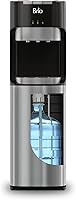
The Brio Bottom Loading Water Cooler Dispenser also provides hot, cold, and room-temperature water through 3 settings. Its upper temperature rating is 198 °F.
The Northair works differently. It dispenses chilled drinking water and makes ice, but its listed functions do not include a hot-water setting.
It suits a routine built around cold drinks in homes, offices, kitchens, apartments, break rooms, and RVs.
Three settings make a full-size cooler more flexible across the day. Morning drinks can use hot water, midday drinking can use cold water, and room-temperature water stays ready for anyone who prefers it plain.
Safety matters too. The Brio uses a two-step child-safety lock on the hot-water spout.
The Avalon instead adds daily visibility. Its built-in nightlight makes the spouts easier to see at night, and its empty-bottle indicator lights up when the bottle needs replacing.
Both are freestanding and bottom loading, so the bottle sits low instead of being lifted onto the top. Follow the manual for reservoirs, spouts, and the drip tray.
For the cooling side, read What Is a Cold Water Dispenser? What Really Happens.
For the heating side, see What Is a Hot Water Dispenser? A Helpful Guide.
How much ice output do you need?
Choose ice output by your busiest normal day, not by the number printed beside the word “daily.” A listed daily output describes production over time, while the ice basket and water reservoir determine how much is ready at once.
The Northair 2-in-1 Ice Maker & Water Dispenser is rated for 26 lb of ice production per day. It makes bullet-shaped ice and dispenses chilled water from a compact countertop appliance.
Ice output needs a calm, practical look before you trust a headline number. Daily production and storage are different things, and both shape whether a machine feels generous or short on a busy day.
The Northair 2-in-1 Ice Maker & Water Dispenser is rated for 26 lb of ice production per day. It makes bullet-shaped ice, a smooth rounded style that works well for iced coffee, soda, juice, and cocktails.
Its capacity is 3.5 liters, which reflects the countertop scale. That is a refillable reservoir setup rather than a large-bottle system, so refill planning stays part of the routine.
Daily output describes production over time, not the amount ready in one moment. A home serving drinks all afternoon may still need to plan around how quickly ice is made and how much is held at once.
This output can suit small gatherings and steady everyday use. It fits busy kitchens, offices, family gatherings, and daily use where fresh ice is needed without a separate appliance.
Bullet ice also works well in the glass. It chills drinks and looks neat in sodas and iced coffee, which matters when you serve guests.
A 5 gallon water dispenser ice maker arrangement may suit a home that already uses large refillable bottles, but confirm how the ice function receives water. Some designs use a smaller internal reservoir rather than connecting directly to the bottle.
That water route matters for refill timing. If ice and drinking water draw from the same supply, a heavy ice day can shorten how long the water lasts.
For a dedicated countertop option, compare the best countertop ice makers with water dispensers. That route keeps ice and chilled water in one compact machine.
Choose a freestanding model instead if you need hot water, larger bottle handling, or stable floor placement. A countertop unit saves floor space, but it does not replace a full-size cooler with three temperatures.
Set-up is usually simple, with attention to outlet access and counter space. Care includes the self-cleaning function and following the manual for the reservoir and ice area.
How should you compare shared reservoir capacity?
Compare the water source and refill pattern before comparing cabinet size. A larger bottle or reservoir gives you more time between refills, but it does not guarantee more ice storage or faster ice production.
The Avalon A4BLWTRCLR has a 5 gallon capacity and accepts 3 to 5 gallon water bottles through a bottom-loading design. The bottle is not included, so the water source is something you plan separately.
The Brio Bottom Loading Water Cooler Dispenser fits 3 or 5 gallon bottles and has a 5 gallon capacity. Its cabinet is built for either size, which gives flexibility if your supplier offers both.
Bottom loading changes the daily routine in a helpful way. You slide the bottle into the cabinet instead of lifting it onto the top, which can reduce spills and awkward bottle flipping.
That design suits homes and offices where lifting a full bottle onto a high spout feels like a chore. It also keeps the water source low and contained, with the cabinet doing the work of storage.
Shared capacity is the key question for any ice combination. If the same water feeds drinking and ice making, busy use will draw the level down faster than a quiet day.
A 5 gallon water dispenser with ice maker may sound like one complete solution, but inspect how much of the stored water remains available for drinking after ice production. If your household uses frequent ice, plan refills around both jobs.
Bottle fit also affects care and placement. A 3 gallon bottle may be easier to handle and replace, while a 5 gallon bottle gives longer stretches between changes when space allows.
Both coolers are freestanding, so floor placement needs a little thought. Leave access to the cabinet door, the power cord, and the drip tray so bottle changes do not turn into a furniture-moving task.
The Avalon adds a nightlight and an empty-bottle indicator that lights up when the bottle needs to be replaced. The Brio uses smart technology that lets you know when the bottle needs to be replaced.
Those reminders support a simple care routine. Early notice helps you plan a refill before the cooler runs dry during a busy part of the day.
A 5 gallon water dispenser with ice maker may sound like one complete solution, but inspect how much of the stored water remains available for drinking after ice production. If your household uses frequent ice, plan refills around both jobs.
Bottom loading also changes setup. You slide the bottle into the cabinet instead of lifting it onto the top, which can reduce spills and awkward bottle flipping.
Which cleaning features matter most?
The best cleaning setup is the one you can reach and use regularly. Look for clear access to the reservoir, dispensing points, drip tray, and ice-making area, plus a cleaning cycle if the appliance includes one.
Northair includes a self-cleaning function for its 2-in-1 ice maker and cold-water dispenser. That can simplify routine care, but you still need to empty standing water and keep surfaces clean according to the manual.
A self-cleaning cycle helps most when it fits an existing habit. Run it on a set day, then empty and dry the relevant parts so moisture does not sit inside.
A bottom-loading cooler has different care needs from a countertop ice maker. The bottle cabinet, water lines, spouts, drip tray, and hot and cold reservoirs all need attention according to the manual.
The Avalon places extra care emphasis on high-contact areas. Its BioGuard anti-microbial coating treats those areas to prevent bacteria growth, which supports regular cleaning rather than replacing it.
The Brio lists a manual and care guide among its included components. That paperwork matters because restart steps, sanitizing guidance, and reservoir care should follow the manufacturer instructions.
Check whether the drip tray removes easily and whether you can reach the ice basket without moving the whole appliance. Cleaning access matters more than a long feature list because hidden moisture can become hard to manage.
Spouts deserve special attention in daily care. Wipe them, keep them dry, and do not leave drips to sit, since they are touched several times a day and sit close to the water path.
For an ice maker, empty old ice and dry the ice area regularly. Follow the manual for the reservoir and dispensing points so the machine stays fresh between uses.
Bottle cabinets also need a simple routine. Wipe up spills, check for leaks around the bottle area, and keep the cabinet clean so the next bottle sits in a tidy space.
Exterior care is easy to keep up with on these models. The Avalon has a stainless steel cabinet, and the Brio has a stainless-steel accent, so a soft wipe keeps the surface neat.
The Avalon nightlight makes the water spouts clearly visible at night. That helps you notice drips or a full drip tray after hours.
How much space does each type need?
Choose a countertop unit when floor space is limited and you mainly need cold water plus ice. Choose a freestanding cooler when you need bottle capacity, hot water, or all three temperatures.
The Northair measures 8.2 in deep, 15.5 in wide, and 17.3 in high. It uses 115 volts and is designed for countertop use in homes, offices, kitchens, apartments, break rooms, RVs, and gatherings.
That size suits a kitchen bench, a break room counter, or a compact RV galley. It replaces both a countertop ice maker and a separate water dispenser with one compact machine.
The Avalon measures 12 in deep, 13 in wide, and 41 in high. It is a freestanding bottom-loading cooler with a stainless steel and black finish, made for kitchen or office floor space.
The Brio measures 15.6 in deep, 12.2 in wide, and 41.4 in high. It is also freestanding, with a black and stainless steel finish for a home or office station.
Both coolers get their height from the cabinet that holds the bottle below the spouts. Check doorways and turns before delivery day.
Width and depth matter as much as height in small rooms. The Brio is deeper than the Avalon, so it needs more floor depth, while the Avalon is slightly wider and a touch shorter.
Leave room around any appliance for airflow, cord access, bottle changes, and cleaning. A cooler pushed tight into a corner can make the cabinet door, drip tray, and back panel harder to reach.
Measure the route through doors and turns before buying a tall cooler. You also need space to slide the bottle in and out.
Countertop placement has its own checks. Confirm the outlet is within cord reach, the bench can hold the machine steady, and there is enough headroom above it for adding water and cleaning.
The Northair has a simple control panel for daily use. Chilled water comes at the touch of a button, and the self-cleaning function helps reduce routine maintenance.
For the coolers, bottom loading reduces the strain of lifting and helps prevent spills. That trade-off is worth the extra floor space for many homes, especially where bottles change often.
If you need a floor-standing ice-focused appliance, see the best freestanding water dispensers with ice makers guide. It helps you weigh floor space against countertop convenience before you commit.
Which product fits your water and ice routine?
Choose the Northair if your priority is compact ice production and chilled water. Its 3.5 liter capacity, 26 lb daily ice production rating, bullet ice, and self-cleaning function fit a countertop routine.
Choose the Avalon if you want a 5 gallon bottom-loading cooler with hot, cold, and room water. Its 3 temperature settings, nightlight, empty-bottle indicator, and 3 to 5 gallon bottle fit support a full-size hydration station.
Choose the Brio if you want a similar bottom-loading format with 3 temperature settings and a two-step hot-water safety lock. It accepts 3 or 5 gallon bottles and includes a bottle replacement reminder.
The right 5 gallon water dispenser with ice choice depends on whether ice is the main task or an added convenience. A compact ice-and-cold-water unit saves counter space between appliances, while a full-size cooler better suits hot drinks and large bottle storage.
What is the simplest buying rule?
Pick the Northair for countertop ice and chilled water, the Avalon for 5 gallon capacity and three water temperatures, or the Brio for bottom loading with a hot-water safety lock. Before ordering, measure the space, confirm the water source, check cleaning access, and estimate your busiest ice demand.
The Northair is the compact pick for a home, office, kitchen, apartment, break room, or RV. Its 3.5 liter capacity, 26 lb daily ice production rating, bullet ice, and self-cleaning function fit a countertop routine.
Choose the Avalon if you want a 5 gallon bottom-loading cooler with hot, cold, and room water. Its 3 temperature settings, nightlight, empty-bottle indicator, and 3 to 5 gallon bottle fit support a full-size hydration station.
Choose the Brio if you want a similar bottom-loading format with 3 temperature settings and a two-step hot-water safety lock. It accepts 3 or 5 gallon bottles and includes a bottle replacement reminder.
The right 5 gallon water dispenser with ice choice depends on whether ice is the main task or an added convenience. A compact ice-and-cold-water unit saves counter space between appliances, while a full-size cooler better suits hot drinks and large bottle storage.
Order only after the practical checks are done. Measure the counter or floor space, confirm the bottle or reservoir fit, and check that the drip tray and ice area are easy to reach.
For a broader comparison, start with the best hot and cold water dispenser with ice maker options, then choose between countertop convenience and freestanding bottle capacity.
Frequently asked questions
Can one appliance make ice and dispense hot and cold water?
Some appliances combine ice making with cold water dispensing, while others provide hot, cold and room-temperature water without making ice. Check the temperature settings and ice function separately.
A 2-in-1 countertop unit may save space, but it may not replace a full hot and cold water cooler.
Is a 5 gallon water dispenser with ice maker common?
A 5 gallon water dispenser with ice maker is less common than a separate bottom-loading water cooler and countertop ice maker. Check whether the appliance uses a large bottle, an internal reservoir, or a refillable water container.
Shared water capacity affects both dispensing and ice production.
How much ice should a water dispenser ice maker produce?
Choose ice output around your busiest day. A compact unit rated for 26 lb of ice per day can suit drinks and small gatherings, while heavier use may require more storage or a separate ice maker.
Daily output is not the same as the amount held at one time.
What should I clean on a hot and cold water dispenser with ice maker?
Clean the water-contact areas, drip tray, ice area, reservoir and dispensing points according to the manual. Look for removable parts or a self-cleaning function.
Empty standing water, keep the exterior dry, and follow the manufacturer's instructions for sanitizing and restart steps.