9 Best Water Dispensers for Sinks (November 2026)
The best sink water dispensers include the InSinkErator H-HOT150SN-SS Instant Hot Water Dispenser System for near-boiling water, the Avalon B8WHT Countertop Bottleless Water Cooler Dispenser for filtered hot and cold water, and the Brita X-Large 27 Cup Water Dispenser for chilled filtered water.
On this page (4 sections)
The best water dispenser for a sink depends on whether you want hot, cold, filtered, or bottle-fed water. For near-boiling water, choose a faucet-and-tank system; for filtered cold water, use a dedicated faucet with a filter; for convenience without plumbing changes, consider a bottle pump.
A sink dispenser can mean several different things. Some add a small faucet beside the kitchen tap, some connect a cooler to the water line, and others simply pump water from a jug.
Our picks at a glance
-
1
 Best for near-boiling water
InSinkErator H-HOT150SN-SS Instant Hot Water Dispenser System
9.6/10 our score
See it on Amazon -
2
 Best for filtered hot and cold water
Avalon B8WHT Countertop Bottleless Water Cooler Dispenser
9.5/10 our score
See it on Amazon -
3
 Best for chilled filtered water
Brita X-Large 27 Cup Water Dispenser
9.5/10 our score
See it on Amazon
- 4
 Check it
INSINKERATOR HOT250 Instant Hot Water Dispenser System
Best for a swiveling hot-water faucet - 5
 Check it
TDRSUPER Bottle Water Dispenser Pump System Self-Priming
Best for a bottled-water line - 6
 Best for a portable jug pumpCheck it
- 7
 Check it
Dometic GO Hydration Water Faucet
Best for portable water dispensing - 8
 Check it
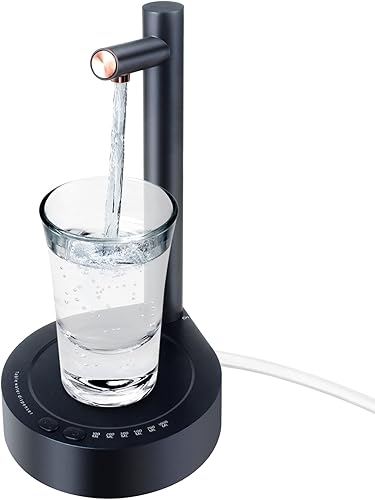
Keweis Desktop Water Bottle Dispenser
Best for measured bottle pumping - 9
 Check it
Westbrass D2031-NL-50 8" Touch-Flo Style Pure Cold
Best for a dedicated cold-water faucet
Which water dispensers for sinks are the best fit?
The best sink-area dispensers here range from dedicated hot-water faucets to portable pumps. Pick the system type first, then compare the faucet, tank, filter, bottle and power requirements.
InSinkErator H-HOT150SN-SS Instant Hot Water Dispenser System: Best for near-boiling water
- 2/3-gallon stainless steel tank
- Up to 60 cups per hour
- Adjustable temperature control
This sink-mounted system pairs a faucet with a 2/3-gallon stainless steel tank. Its adjustable control and near-boiling output suit hot drinks and quick kitchen tasks.
Pros
- Tank and faucet included
- Tool-free tank connections
- Dry-start protection
Cons
- Dispenses hot water only
- Needs an under-sink power outlet
The InSinkErator H-HOT150 pairs a satin nickel faucet with a 2/3-gallon stainless steel tank. It can deliver up to 60 cups per hour of near-boiling water, which suits tea, coffee and quick kitchen tasks.
Its temperature control adjusts, and the system includes tool-free tank connections and dry-start protection. The faucet needs a standard hole between 1-1/4 and 1-1/2 inches, while the tank needs an under-sink outlet.
Choose it if your main goal is hot water at the sink. It does not dispense chilled or filtered water, so pair it with a separate cold-water setup if you need both.
Avalon B8WHT Countertop Bottleless Water Cooler Dispenser: Best for filtered hot and cold water
- Sediment and carbon block filters
- Hot and cold spouts
- 20 ft installation tubing
This bottleless countertop cooler connects to a water line and includes two filter types. It suits kitchens that have room for a separate hot and cold dispenser.
Pros
- Installation kit included
- Replace-filter indicator
- Hot spout has a child safety lock
Cons
- Takes counter space
- Filters need periodic replacement
Avalon's B8WHT is a countertop bottleless cooler with hot and cold spouts. See more water coolers with filters if built-in filtration matters.
Its installation kit includes tubing, an under-sink adapter with shutoff valve, and a dual filter system with sediment and carbon block filters.
The filters are intended to last 6 months or 1,500 gallons, and the unit has a replace-filter indicator. Compare filtered hot and cold dispensers if both temperatures matter.
The hot spout has a child safety lock, while the nightlight helps make both spouts visible after dark.
This pick needs counter space and an electrical outlet, plus a connection to the water supply. It suits a household that wants both temperatures from a separate dispenser instead of a small faucet beside the main tap.
Brita X-Large 27 Cup Water Dispenser: Best for chilled filtered water
- 27-cup capacity
- Fridge-friendly design
- Includes one Standard filter
Brita's large dispenser holds filtered water for chilling in the refrigerator, with a spigot for pouring. It doesn't connect to a sink or provide hot water.
Pros
- Large stated capacity
- Easy-locking lid
- Filter change indicator sticker
Cons
- Needs refrigerator space
- Standard filter changes are recommended every 40 gallons or about 2 months
Brita's X-Large dispenser holds 27 cups and fits in a refrigerator. It uses a spigot for pouring, so it can serve chilled filtered water near a sink without any faucet installation.
The included Standard filter is recommended for replacement after 40 gallons or about 2 months. Brita says the filter helps reduce chlorine taste and odor, as well as copper, mercury and other impurities.
This is a useful choice if the refrigerator is close to the sink and you have room for the dispenser. It is not a plumbed system and does not provide hot water.
INSINKERATOR HOT250 Instant Hot Water Dispenser System: Best for a swiveling hot-water faucet
- 2/3-gallon stainless steel tank
- 360-degree swiveling spout
- Spring-loaded handle
The HOT250 combines a sink faucet and hot water tank, with a swiveling spout and a handle that closes when released. It is a hot-only option.
Pros
- Tank and faucet included
- Tool-free tank connections
- Dry-start protection
Cons
- Hot water only
- Needs a standard faucet hole and under-sink outlet
The HOT250 gives you a sink faucet and a 2/3-gallon stainless steel tank for near-boiling water. The spout swivels 360 degrees, and its handle closes when released.
The faucet needs a standard 1-3/8-inch hole, and the tank needs an under-sink power outlet. The system includes tool-free tank connections and dry-start protection.
Choose the HOT250 if a swiveling spout and spring-loaded handle suit your setup. Like the HOT150, it provides hot water only, so it will not replace a cold-water filter or cooler.
TDRSUPER Bottle Water Dispenser Pump System Self-Priming: Best for a bottled-water line
- Designed for a 5-gallon bottle
- Quick-connect ports
- 110V AC power
This powered pump moves water from a large bottle to a separate drinking faucet. It may suit a sink area where you want a bottle-fed line without a direct plumbing connection.
Pros
- Quick-connect tubing ports
- Universal sealing cap
- Rubber feet intended to reduce noise
Cons
- Requires a 5-gallon bottle
- Pump needs power
TDRSUPER's pump system draws water from a 5-gallon bottle and sends it under pressure to a separate drinking faucet. Quick-connect ports support the suction and discharge tubing, and the pump runs on 110V AC power.
This can work for a sink area where you want a faucet but do not plan to connect the system to household water lines. The pump has rubber feet intended to reduce noise, and the maker recommends wall mounting it with screws to reduce vibration.
Plan for both the bottle and the pump location, plus an outlet. Unlike the hot-water systems, this setup does not heat water.
HiPiCok 5 Gallon Water Pump: Best for a portable jug pump
- USB-C rechargeable
- Fits bottles with a 2.16 in neck
- 600 ml measured pumping option
This rechargeable pump sits on a compatible jug and dispenses water at the press of a button. It offers a simple way to serve water near a sink without adding a faucet.
Pros
- Portable and rechargeable
- Several jug sizes are supported
- Has measured and continuous pumping options
Cons
- Does not connect to sink plumbing
- Bottle neck must match the stated size
The HiPiCok pump attaches to a compatible water jug and dispenses water with a button. It supports bottles with a 2.16-inch neck and offers measured pumping as well as continuous dispensing.
Its USB-C rechargeable battery is designed to run for multiple bottles between charges. The compact pump can sit on a counter near the sink, but it does not connect to the sink or a faucet.
Choose it if you want a simple, portable way to pour from a jug. Check the bottle opening before buying, since compatibility depends on the stated neck size.
Dometic GO Hydration Water Faucet: Best for portable water dispensing
- One-touch operation
- Integrated LED light
- Self-powered battery
This battery-powered faucet turns a compatible water container into a portable dispensing point. Its light and automatic shutoff may help when using it outdoors or in low light.
Pros
- No external power needed during use
- One-touch dispensing
- Magnetic base
Cons
- Portable container setup, not a plumbed sink faucet
- Battery needs recharging
Dometic's GO Hydration Water Faucet turns a compatible container into a portable water source. It uses one-touch operation with automatic shutoff, has an integrated LED light and runs on a rechargeable battery.
Its portable design suits camping or another spot without a fixed sink line. The faucet is self-powered during use, but it is not a permanent sink-mounted dispenser.
Choose it for occasional portable dispensing or as a water point near an outdoor sink. For a kitchen faucet installation, choose a plumbed system instead.
Keweis Desktop Water Bottle Dispenser: Best for measured bottle pumping
- Seven pumping options
- Rechargeable battery
- Fits several gallon bottle sizes
The Keweis pump offers set-volume dispensing from compatible water bottles. Choose it when you want button-operated pouring without installing a separate faucet.
Pros
- Multiple measured amounts
- Detachable design
- Rechargeable
Cons
- Does not connect to sink plumbing
- Bottle must sit lower than the dispenser
Keweis' desktop pump offers seven dispensing options, from measured amounts to continuous pumping. Its rechargeable battery and removable design make it easy to move between a counter and another spot.
The pump works with a range of gallon bottles, but the bottle must sit lower than the dispenser. It does not add a faucet or connect to sink plumbing.
Choose Keweis if measured pours from a jug are more useful than a fixed water line. If you need water at the sink without lifting a jug, consider a pump system with tubing to a separate faucet.
Westbrass D2031-NL-50 8" Touch-Flo Style Pure Cold: Best for a dedicated cold-water faucet
- Cold-water faucet trim
- Solid brass construction
- Can pair with a filter or in-line chiller
This faucet trim is made for a separate cold-water line and can be installed with a filter or in-line chiller. It does not include a filter or chiller.
Pros
- Solid brass construction
- Can pair with a water filter
- Touch-Flo style handle
Cons
- Faucet trim only
- Cannot be modified for a hot water tank
The Westbrass D2031-NL-50 is a cold-water faucet trim for a separate water line. It can be installed with a water filter or in-line chiller, which must be purchased separately.
Its stated height is 8 inches, with a 5-1/2-inch spout projection. The faucet fits counters up to 1-3/8 inches thick, and the 1/4-inch compression inlet connects to the water line.
Choose this model if you want a dedicated cold-water tap and already have a plan for filtration or chilling. It cannot be modified for use with a hot water tank.
How we compared sink-mounted water dispensers
We compared how each option supplies water, where it sits, and what it needs for installation. Our score weighs specs and features against what you're shopping for.
A complete sink system can include a faucet, tank, filter or pump, while a faucet trim may require other equipment to work. Portable pumps are included as alternatives for readers who want a dispenser near the sink without adding a permanent plumbing connection.
The main tradeoff is convenience versus installation. A powered hot-water tank brings near-boiling water to a dedicated faucet, while a bottleless cooler adds hot and cold spouts but takes counter space.
What should you check before choosing a sink water dispenser?
Check the water type, installation footprint and connections before choosing a sink dispenser. These details determine whether you need a faucet hole, under-sink outlet, water line, filter or jug.
Do you want hot, cold or filtered water?
Hot-water tanks such as the InSinkErator models serve near-boiling water from a small under-sink tank. A cold-water faucet such as Westbrass needs a cold line and can pair with a separate filter or chiller.
For filtered hot and cold water from a connected supply, the Avalon cooler combines a line connection with two filter types. If you're unsure how these systems differ, read what a plumbed water dispenser is.
Does the setup fit your sink and cabinet?
Measure the counter thickness, available faucet hole and space below the sink. Also check for a nearby outlet if the system uses a tank, pump or cooler.
A separate dispenser usually needs its own faucet opening. If your sink has no open hole, check whether the counter can be drilled and whether its material permits that installation.
Should you connect a bottle or a water line?
A water-line setup avoids lifting jugs, but it needs a connection and may need filters. A bottle pump avoids plumbing work, but you must keep a compatible jug in place and plan where the pump and tubing will sit.
If you want ice from the same water connection, compare ice makers with water dispensers and water lines. For a jug-based setup, the water storage containers buying guide can help you think through capacity and storage.
Is a refrigerator dispenser enough?
A refrigerator dispenser may already cover your need for chilled water, especially if the sink is close to the fridge. A countertop Brita can also store filtered water in the refrigerator, while a separate sink faucet keeps water at the counter.
Compare options in our guide to the best water dispensers for refrigerators. Choose a dedicated sink setup if you want water at the counter or near-boiling water without using a kettle.
Which sink water dispenser should you choose?
Choose the H-HOT150 if you want a compact tank and near-boiling water, Avalon if you want filtered hot and cold water from a connected line, or Westbrass if you need a dedicated cold-water faucet with a separate filter or chiller.
Pick a jug pump if avoiding a plumbing connection matters more than having a fixed faucet. For additional system details, start with what an under-sink water dispenser is.
Our top 3 picks at a glance
-
1
Best for near-boiling water
InSinkErator H-HOT150SN-SS Instant Hot Water Dispenser System
9.6/10 our score
See it on Amazon -
2
Best for filtered hot and cold water
Avalon B8WHT Countertop Bottleless Water Cooler Dispenser
9.5/10 our score
See it on Amazon -
3
Best for chilled filtered water
Brita X-Large 27 Cup Water Dispenser
9.5/10 our score
See it on Amazon
Frequently asked questions
What is the best water dispenser for a sink?
The best choice depends on the water and setup you need. An InSinkErator system supplies near-boiling water from a separate tank, while the Westbrass faucet can serve a cold-water line with a filter or chiller.
For filtered hot and cold water from a connected line, consider a bottleless cooler such as Avalon, if you have counter space.
Can a water dispenser connect directly to a kitchen sink?
Yes. Some systems use a separate faucet mounted by the sink and connect below the counter to a water supply or tank.
Check the required hole size, counter thickness, shutoff valve, tubing and power needs before choosing a setup.
A bottle-fed pump can also serve a separate faucet without connecting to household plumbing.
Is an under-sink dispenser the same as a bottleless water cooler?
Not always. An under-sink dispenser usually keeps the tank or filter equipment below the counter and sends water through a faucet.
A bottleless cooler connects to a water line but has its own dispenser body, often on the counter or floor.
See our quick guide to under-sink water dispensers and bottleless water dispensers for the difference.
Do sink water dispensers need electricity?
It depends on the type. Instant hot water systems use a powered tank, and countertop bottleless coolers also need electricity.
A cold-water faucet connected to a supply line may work without its own power, while portable battery pumps need charging.
Match the power source to the outlet and cabinet space you have.