Are Stanley Water Bottles Dishwasher Safe?
Many Stanley water bottles and tumblers are dishwasher safe, including the Quencher H2.0 models below. Separate the lid, straw, and body before cleaning, and check the care instructions for your exact model.
On this page (6 sections)
- Are Stanley water bottles dishwasher safe?
- Which Stanley bottle parts should you remove?
- How should you clean a Stanley water bottle in a dishwasher?
- What if you prefer a tumbler with a different lid?
- Does dishwasher cleaning damage a Stanley bottle?
- What is the easiest way to keep a Stanley bottle clean?
Stanley water bottles and tumblers can be dishwasher safe, but you should check the instructions for your exact model and separate the parts first. The STANLEY Quencher H2.0 20 oz and 30 oz models covered here list dishwasher-safe care for the tumbler and lid.
That distinction matters because not every Stanley bottle follows the same cleaning routine. A model with a simple cap may be handled differently from a tumbler with a rotating cover, a reusable straw, and seals that trap residue.
For the Quencher H2.0 models in this guide, dishwasher-safe care applies to the tumbler and lid. Removing the straw before washing helps water reach the straw opening and the underside of the cover.
Cleaning instructions also protect the finish and the parts you rely on every day. The brushing, coating, seals, and lid movement can all be affected if you use a method the manufacturer did not intend for your model.
This guide focuses on how to clean the body, lid, and straw without guessing. It also explains when hand washing is the safer choice and why drying matters before you put the bottle back together.
If you use your bottle for water only, you may need less frequent deep cleaning. Drinks such as coffee, smoothies, and flavored beverages can leave film around the opening, so those residues deserve closer attention.
Lowercase styling aside, the rule stays the same across the lineup. Check the exact model, separate every removable part, and follow the care instructions that came with your bottle.
Cleaning instructions matter because a bottle has more than one part. The body, lid, straw, rotating cover, and seals can collect different types of residue, so take the bottle apart before washing.
Use this approach before sweeping residue under a closed lid and hoping a full cycle will fix it. A short rinse, proper separation, and a careful inspection usually give you a cleaner result with less effort.
Once the parts are dry, reassemble the tumbler only when you are ready to fill it again. Keeping parts open to dry helps prevent stale odors and gives you a chance to spot anything you missed.
Are Stanley water bottles dishwasher safe?
Many Stanley water bottles are dishwasher safe, including the Quencher H2.0 models in this guide. Stanley's care guidance should take priority if your bottle has a different model, lid, finish, or construction.
That priority is important because care labels are not always interchangeable. A lid style, finish, or seal design that works in a dishwasher on one model may need different handling on another.
Look for the care instructions connected to the exact bottle. Stanley's care and use guidance is a useful place to check before cleaning a model you don't recognize.
Start by finding the model name or product number on the bottle or packaging. Matching those details to the care page helps you avoid relying on a general rule that may not fit your tumbler.
A dishwasher-safe label doesn't mean you should wash a fully assembled bottle. Remove the lid and straw first, and open or separate any parts that the instructions allow you to remove.
Separation also makes the cycle more effective for everyday use. Water and detergent can reach the drinking opening, straw opening, and rotating cover instead of cleaning only the outer surface.
For a Quencher H2.0, that means treating the lid as a few related parts rather than one sealed unit. The reusable straw should come out, and the rotating cover should be positioned or separated according to the instructions for your exact model.
Do not force a part that does not move easily. If a seal or cover seems stuck, hand wash around it and check the care guidance again before using more pressure.
Rack placement matters more than it first appears. Keep the body and lid from blocking the spray, and place loose parts where they will stay in place without being knocked against heavy items.
After the cycle, inspect the lid openings and straw connection before drying. Residue can hide under a cover or around a seal even when the main body looks clean.
If you're comparing shapes before choosing one, our guide to types of reusable water bottles explains how bottles and tumblers differ in daily use.
That comparison can help you decide whether a narrow bottle, a handled tumbler, or a wider cup fits your routine. The right shape still needs the right cleaning method for its lid and finish.
Which Stanley bottle parts should you remove?
Separate the bottle body, lid, and straw before washing. This helps detergent and water reach the areas around the drinking opening, straw opening, and rotating cover.
Rinse away loose drink residue before loading the parts. For a lid with several openings, check underneath the cover and around the straw connection rather than washing only the visible surface.
Let the parts dry fully before putting the bottle back together. Trapped moisture in a closed lid can make the next fill taste stale, even when the parts look clean.
Is the Quencher H2.0 body dishwasher safe?
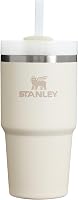
The STANLEY Quencher H2.0 Flow State Tumbler, 20 oz, Cream 2.0, lists dishwasher-safe care for the tumbler and lid. It is a stainless steel tumbler with a reusable straw and a rotating FlowState lid.
The 20 fluid ounce size suits desks, bedside tables, car cup holders, and other places where a smaller tumbler is easier to carry. Its narrow base is designed to fit just about any car cup holder, according to Stanley's product description.
Use the dishwasher when the instructions for your exact model allow it. If you hand-wash instead, pay close attention to the lid openings and straw, then rinse away all soap before drying.
Readers comparing Stanley shapes may also want to see the best Stanley insulated tumblers for different capacities and carrying needs.
Is the 30 oz Stanley Quencher dishwasher safe?
The STANLEY Quencher H2.0 Tumbler with Handle and Straw 30 oz lists dishwasher-safe care. Its parts include a stainless steel tumbler, lid, and straw, with a rotating 3-position FlowState lid.
The 30 fluid ounce capacity gives you more room between refills than the 20 oz model. The handle and narrow base suit people who want a larger tumbler that remains practical for travel and car cup holders.
The larger size also means more surface area inside the cup and lid to rinse. Remove the straw, wash each part according to the care instructions, and inspect the drinking opening before reassembly.
For a closer look at this style, read our Stanley Quencher H2.0 review. If the lid is worn or lost, compare the best Stanley water bottle replacement lids.
How should you clean a Stanley water bottle in a dishwasher?
Disassemble the bottle, rinse away residue, and place the dishwasher-safe parts where water can reach them. Follow the exact model instructions for rack placement and any parts that should be washed by hand.
A simple cleaning order is:
- Empty the bottle and rinse the body.
- Remove the lid and reusable straw.
- Separate removable lid parts if the instructions allow it.
- Place dishwasher-safe parts where they won't block the spray.
- Run the cycle recommended for the model.
- Dry every part before putting the bottle back together.
Don't force a seal, cover, or straw out of the lid. If a part doesn't release easily, clean around it as directed rather than using a sharp tool.
A dishwasher also can't replace a quick inspection. Check for leftover pulp, drink film, or debris around the lid opening after the cycle.
What if you prefer a tumbler with a different lid?
The YETI Rambler 30 oz Tumbler has a stainless steel body and a MagSlider Lid, and both tumbler and lid are dishwasher safe. Its magnetic slider is splash-resistant, not leakproof, so keep that lid limitation in mind when carrying a full drink.
The YETI's 30 oz capacity suits people who want a larger tumbler without choosing a Stanley handle model. Its 7.8 in height and 4 in width are useful measurements to check against your cup holder or storage space.
For another Stanley option with a handle, see the best Stanley bottles and tumblers with handles. If you want to compare brands, our guides to the best Hydro Flask water bottles and best plastic-free water bottles cover other bottle choices.
Does dishwasher cleaning damage a Stanley bottle?
Using a dishwasher does not automatically damage a Stanley bottle that is marked dishwasher safe, but the exact care instructions still control. Different models can use different lids, finishes, seals, and removable parts.
Avoid mixing loose small parts with heavy cookware where they could be knocked around. Keep the bottle body and lid from blocking spray, and check the finish and seals after cleaning.
The dishwasher question also applies to daily use. If you regularly carry the bottle in a bag, inspect the lid before filling it and keep the cover in the position intended for drinking or transport.
A bottle used on a water cooler should also be handled carefully. If you use a reusable bottle for filling, review Top Load Water Cooler Bottle Placement: The Quick Rundown before lifting or positioning it.
What is the easiest way to keep a Stanley bottle clean?
The easiest routine is to wash the body, lid, and straw after use and let every part dry before storage. Dishwasher-safe care makes regular cleaning simpler, but disassembly remains the key step.
Use a quick rinse soon after drinking flavored beverages, coffee, smoothies, or other drinks that can leave residue. Water-only use may need less frequent deep cleaning, but the lid and straw still deserve regular attention.
Keep the bottle open while it dries. Reassembling damp parts can trap moisture around the lid and straw connection.
The 20 oz Quencher suits readers who want a smaller daily tumbler, while the 30 oz Stanley suits those who want more capacity and a handle. Compare dishwasher-safe insulated bottles for more options.
The YETI Rambler offers another 30 oz dishwasher-safe tumbler with a magnetic slider lid.
For the question “stanley water bottle dishwasher safe,” the decision rule is simple: check the exact model, separate every removable part, and use the dishwasher only where its care instructions allow it.
Frequently asked questions
Are Stanley water bottles dishwasher safe?
Many Stanley water bottles and tumblers are dishwasher safe, but care instructions can vary by model and part. Separate the body, lid, and straw first, then check the instructions for your exact bottle before using a dishwasher.
Can you put a Stanley Quencher lid in the dishwasher?
Yes, the STANLEY Quencher H2.0 models covered here list the tumbler and lid as dishwasher safe. Remove the reusable straw and separate the parts so water and detergent can reach the lid openings and seals.
How should you clean a Stanley water bottle?
Separate the bottle body, lid, and straw. Wash the parts according to Stanley's care instructions, using a dishwasher when the model allows it, then check that every part is clean and fully dry before reassembly.
Is the Stanley straw dishwasher safe?
The Quencher H2.0 models below include a reusable straw and list dishwasher-safe care for the tumbler and lid. Remove the straw before washing, and confirm the instructions for your exact model before placing it in the dishwasher.