Do Primo Water Dispensers Need Filters?
A Primo water dispenser doesn't always need a filter. If you use sealed Primo bottles, the water is already bottled; a dispenser connected to a tap or refillable source may need filtration based on that water and the unit's design.
On this page (8 sections)
- Does a Primo water dispenser need a filter?
- How does the water source change filter needs?
- Does a Primo dispenser with an ice maker need a filter?
- How can you tell if your model uses a filter?
- What does a self-cleaning feature do?
- When is a separate water filter worth considering?
- How do you keep a Primo dispenser clean without a filter?
- What should you choose for a Primo water dispenser filter?
A Primo water dispenser doesn't always need a filter. If you use sealed Primo bottles, the water is already bottled; a dispenser connected to a tap or refillable source may need filtration based on that water and the unit's design.
The right answer starts with the water source, not the brand name on the cooler. See which water Primo dispensers can use for model-specific guidance.
Bottle-fed dispensers and plumbed dispensers move water through different setups, so check the instructions for your exact model before buying a filter.
Does a Primo water dispenser need a filter?
A bottle-fed Primo dispenser usually doesn't need an added filter for sealed bottled water. A tap-connected model may need a compatible filter, depending on its design and the quality of the incoming water.
A dispenser moves water from a bottle or supply to the spout. It doesn't automatically improve water quality just because it chills or heats water.
If you're choosing a unit, compare the best Primo water dispensers and look for the water-source requirements in the instructions. Don't assume that a filter sold for a pitcher or refrigerator will fit a water cooler.
How does the water source change filter needs?
The source determines whether filtration belongs upstream of the dispenser. Sealed bottled water arrives ready to pour, while tap or refillable water may need treatment suited to its source and the specific concern.
Do bottled Primo water dispensers need filters?
A dispenser using sealed bottles generally doesn't need a separate filter between the bottle and the spout. The bottle supplies the water, and the dispenser's job is to hold and dispense it.
Keep the bottle cap, probe, and connection area clean as the manufacturer directs. If water tastes or smells unusual, stop using it and check the bottle and dispenser rather than trying an unapproved filter attachment.
What about tap-connected or refillable models?
A plumbed dispenser may need a filter if its instructions call for one or your water source requires treatment. Compare water coolers with filters when choosing a filtered model.
Use only a filter type approved for that model and replace it on the schedule in the manual.
For private wells or water with a known concern, identify the issue first and select a filter certified for that specific reduction claim. A filter's appearance or brand alone doesn't show what it removes.
If you're comparing dispenser designs, our guide to what a water dispenser is called explains common types. The internal parts and materials can also help you understand the water path, as covered in what a water dispenser is made of.
Does a Primo dispenser with an ice maker need a filter?
An ice maker doesn't by itself mean a dispenser has a filter. Check whether the model takes bottled water or connects to a supply, then follow its manual for any required filtration.
Ice can make source-water taste more noticeable, but a filter only helps when it is made for the relevant issue and installed in the right place. See whether a Primo water dispenser can make ice for more on the feature and its water setup.
How can you tell if your model uses a filter?
Check the model number and manual for a filter part, replacement schedule, and water-source instructions. If the manual doesn't mention a filter, don't add one to the water line or bottle connection without confirming compatibility.
Look for these details:
- Whether the unit is bottle-fed, refillable, or plumbed
- A filter compartment or a specified filter model
- Replacement timing and installation steps
- Any limits on water pressure or source water
A bottle-fed cooler may have a probe, pump, or bottle support, none of which means it filters water. To understand the controls and water loading steps, see how to use a Primo water dispenser.
What does a self-cleaning feature do?
Self-cleaning is not the same as filtering water. A UV cycle or cleaning routine addresses the dispenser's internal surfaces, while a water filter treats water as it passes through a filter media.
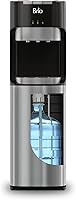
For example, the Brio 520 has a UV self-cleaning feature, but that feature doesn't mean it filters incoming water. The Avalon A4BLWTRCLR and Brio bottom-loading dispenser are bottle-fed coolers with hot, cold, and room-temperature dispensing; their listed features don't include a water filter.
For safe upkeep, follow the unit's cleaning steps rather than treating a self-cleaning cycle as a substitute for routine care. Our guide to how to clean a Primo water dispenser covers the cleaning process.
When is a separate water filter worth considering?
Consider filtration when your source water has a specific issue and the selected filter is certified to address it. If you use sealed bottled water and have no reason to treat it further, an extra filter may add cost and maintenance without solving a need.
A filter should match the water source and the substance you want reduced. For example, if you're comparing pitcher filters, read whether Brita water filters remove lead and check the exact model's certification claims.
Filters also need timely replacement. A clogged or overdue filter can slow water flow, and a filter that targets one contaminant may not address another.
How do you keep a Primo dispenser clean without a filter?
Follow the Primo manual's cleaning and sanitizing schedule for the bottle area, reservoir, spouts, and drip tray. For general steps, see our water dispenser cleaning guide.
Cleaning helps keep the dispenser maintained, but it doesn't change the quality of the source water.
Wash your hands before changing a bottle and avoid touching the probe or bottle opening. If your model has a filter, follow its replacement instructions as well as its cleaning steps.
A filter indicator on a separate pitcher is also not the same as a dispenser filter. Learn how a Brita water filter light indicator works if you use a Brita pitcher alongside your cooler.
What should you choose for a Primo water dispenser filter?
For a bottle-fed dispenser using sealed water, skip an added filter unless the model's instructions specifically require one. For a tap-connected unit or a water source with a known concern, identify the issue and use only a compatible filter certified for that purpose.
If you can't find the model's filter instructions, check the manual or ask Primo support before adding anything to the water path. The key decision is simple: match filtration to the water source and dispenser design, then keep up with both filter replacement and dispenser cleaning.
Frequently asked questions
Do Primo water dispensers have built-in filters?
It depends on the model. A dispenser that holds a sealed water bottle may not need an onboard filter, while a point-of-use model connected to a tap may include or require compatible filtration.
Check your exact model's manual for its water-source and filter instructions.
Do you need to filter Primo bottled water?
A sealed bottle doesn't usually need an extra filter before it goes into a dispenser. Keep the bottle and dispenser clean, follow the bottle's storage guidance, and check your dispenser manual for any handling steps.
Can I put a water filter on a Primo dispenser?
Only use a filter if your dispenser is designed to work with it. A filter won't fit every bottle-fed model, and adding parts to a water path that wasn't designed for them can cause leaks or poor flow; check the manual or contact the manufacturer.
Does a self-cleaning dispenser filter water?
No, self-cleaning and filtration are different functions. A cleaning cycle may help sanitize parts inside a dispenser, but it doesn't remove dissolved substances from incoming water or replace a filter that's required for a tap-connected model.