PUR vs Brita vs ZeroWater: Which Filter Should You Choose? (November 2026)
Choose PUR for faucet filtration, Brita for simple pitcher use, or ZeroWater when reducing dissolved solids is your main goal. The best choice depends on your water concerns, refill habits and available refrigerator space.
On this page (10 sections)
- PUR vs Brita vs ZeroWater: which should you choose?
- Which filter is best for chlorine taste and odor?
- Which option is best for a large household?
- Which filter is best for a dorm or mini-fridge?
- Is a faucet filter better than a pitcher?
- How often do PUR, Brita and ZeroWater filters need changing?
- What should you check before buying a water filter?
- How should you set up and care for these filters?
- Can you use a different brand's filter in the pitcher?
- Which PUR, Brita or ZeroWater option should you choose?
Choose PUR for faucet filtration, Brita for simple pitcher use, or ZeroWater when reducing dissolved solids is your main goal. The right choice in this PUR vs Brita vs ZeroWater comparison depends on your water concerns, refill habits and available space.
PUR has the strongest fit when you want filtered water directly from the kitchen faucet. Brita offers compact and large pitcher options, while ZeroWater may appeal to shoppers who care most about dissolved solids rather than only taste and selected chemical reductions.
That split matters in daily use. A faucet system gives you filtered water on demand for drinking, cooking and filling a kettle or bottle.
A pitcher gives you cold water from the refrigerator and can be moved between a counter, table and fridge.
We compared the product details, filter life, capacity and intended use. The choice also comes down to who will use the filter and how they prefer to refill it.
A large household may prefer a bigger pitcher, while a dorm room or small kitchen may suit a compact model.
Setup and care differ too. Pitcher filters need regular replacement and cleaning of the container, and a faucet replacement needs a compatible faucet system already in place.
Replacement timing affects cost over time, so the stated gallon limit and months of use are worth checking before you decide.
For a broader overview, see our drinking water filter guide.
 Best for faucet filtration
Kaz PUR PLUS Faucet Mount Replacement Filter
PUR vs Brita vs ZeroWater: which should you choose?
Pick PUR for on-demand faucet water, Brita for a familiar pitcher routine, and ZeroWater for a dissolved-solids-focused approach. Your water report and daily usage should decide the final choice.
PUR's faucet option connects to a compatible PUR Plus or Beautiful by PUR filtration system. It avoids filling and chilling a pitcher each time, but it only makes sense if your faucet setup supports the replacement filter.
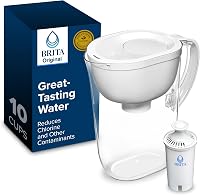
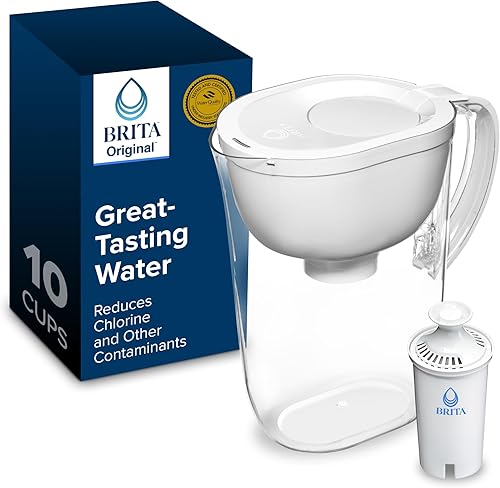
Brita's pitchers suit households that want a manual, freestanding container. The 10-cup model fits a shared kitchen, while the 6-cup model takes less refrigerator space.
ZeroWater is not represented by one of the products in this comparison. If you are comparing it with Brita specifically, our ZeroWater vs Brita comparison explains that choice in more detail.
How PUR, Brita and ZeroWater differ
PUR and Brita offer the clearest fit for ordinary pitcher or faucet routines in this product set. ZeroWater deserves consideration when your priority is different from chlorine taste and the listed chemical reductions these products target.
The Kaz PUR PLUS Faucet Mount Replacement Filter uses a 14-layer design and is intended for compatible PUR systems. Each filter is designed for up to 100 gallons or 3 months of regular use.
Brita's pitcher filters are manual and portable. The Brita Large 10 Cup Water Filter Pitcher works with Longlast and Standard filters, while the Brita Small 6-Cup Water Filter Pitcher works with Standard and Elite filters.
The PUR 11-Cup Water Pitcher uses a Genuine PUR filter designed for up to 40 gallons or about 2 months. Its dishwasher-safe components make routine cleaning simpler.
Which filter is best for chlorine taste and odor?
Brita is a strong fit when chlorine taste and odor are your main concern. The 10-cup and 6-cup Brita pitchers are certified to reduce chlorine taste and odor, along with copper, mercury and cadmium.
The Brita Large 10 Cup Water Filter Pitcher gives you enough filtered water to fill 3 24-ounce reusable bottles. Its easy-fill locking lid and refrigerator-friendly shape suit a household that refills throughout the day.
The Brita Small 6-Cup Water Filter Pitcher targets a different need. Its compact design fits most mini-fridges, and the SmartLight indicator helps you track when the Standard filter needs changing.
PUR also targets chlorine and other chemical and physical substances. The PUR 11-Cup Water Pitcher uses a Genuine PUR filter certified to reduce chlorine, mercury, copper, zinc and other listed substances.
If you are choosing between the two pitcher brands, our Brita vs PUR comparison covers the main differences. You can also compare the Brita vs PUR water filter pitchers when the pitcher format is your priority.
Which option is best for a large household?
Choose the PUR 11-Cup Water Pitcher or Brita Large 10 Cup Water Filter Pitcher for a busy kitchen. Their larger capacities reduce how often you need to refill compared with the 6-cup Brita.
The PUR pitcher has an 11-cup capacity and a stay-tight lid that supports filtering and pouring. Its components are dishwasher-safe, which helps if several people use the pitcher each day.
The Brita pitcher holds 10 cups and measures 10.7 x 5.4 x 10.1 inches. It uses a manual design with an easy-fill locking lid and fits on refrigerator shelves.
Capacity is only useful if the pitcher fits where you plan to keep it. Measure the refrigerator shelf and the space needed to lift, pour and refill before choosing the larger container.
Which filter is best for a dorm or mini-fridge?
Choose the Brita Small 6-Cup Water Filter Pitcher for a dorm, office or mini-fridge. Its 6-cup capacity and compact 9.1 x 4.6 x 9.7-inch size take less space than the larger pitchers.
The Metro pitcher includes 1 filter and has a SmartLight change indicator. Its Standard filter is intended for replacement after 40 gallons or about 2 months, while Elite filters are intended for up to 120 gallons or about 6 months.
A smaller pitcher may need more frequent refills in a shared home. That trade-off is useful in a dorm because the container is easier to fit in a mini-fridge and easier to move when cleaning.
For more space guidance, see our best water filter pitcher guide.
Is a faucet filter better than a pitcher?
A faucet filter is better when you want filtered tap water without filling a container. A pitcher is better when you want portability, refrigerator storage or filtration that does not depend on a compatible faucet mount.
The Kaz PUR PLUS Faucet Mount Replacement Filter comes as a 2-pack. Each filter is designed for up to 100 gallons or 3 months of regular use, so the pack can cover up to 6 months when changed on that schedule.
It is compatible with PUR Plus Home Water Filtration Systems and Beautiful by PUR Faucet Mount Water Filtration Systems. The filter also lists compatibility with specific PUR faucet models, including FM-2000B, FM-2100B and FM-4000B.
PUR says its 3-in-1 filtration uses a 14-layer faucet filter design and reduces 70 chemical and physical substances, including total PFAS, lead, VOCs and microplastics. Those claims apply to the compatible filtration system and its stated certifications.
A faucet filter does not replace every pitcher use. You cannot chill the filtered water inside the filter, and you need the correct faucet system before buying replacement cartridges.
How often do PUR, Brita and ZeroWater filters need changing?
The products here range from about 2 months to 3 months of regular use, depending on the filter and water volume. Follow the filter indicator or the brand's stated gallon limit instead of using one schedule for every brand.
The Kaz PUR PLUS Faucet Mount Replacement Filter is designed for up to 100 gallons or 3 months per filter. Heavy use can reach the gallon limit sooner.
The Brita Standard filters used with the large and small pitchers are intended for 40 gallons or about 2 months. Brita Longlast and Elite filters have longer stated lives, up to 120 gallons or about 6 months.
The PUR 11-Cup Water Pitcher filter is certified to last up to 40 gallons or about 2 months. Its change filter indicator helps you keep the replacement date visible.
ZeroWater filters may need a different replacement pattern because dissolved solids and water conditions affect use. Check the exact filter instructions and keep a replacement budget in mind before choosing that system.
What should you check before buying a water filter?
Check the contaminant you want to reduce, the filter format, the replacement schedule and the space available. A higher capacity does not help if the pitcher cannot fit your refrigerator or the filter does not address your main concern.
Start with your water source. If you use treated municipal tap water and mainly dislike chlorine taste, a Brita or PUR pitcher may fit your routine.
If you want direct faucet access, confirm that your faucet can use a compatible PUR filtration system. Replacement filters are not a complete faucet system by themselves.
If dissolved solids are your main concern, compare ZeroWater with the exact PUR or Brita filter you are considering. A water test can help you understand what is present before you choose a reduction claim.
Hard water may need a more focused solution than a general pitcher filter. Our guide to faucet water filters for hard water explains which filter types to compare.
How should you set up and care for these filters?
Prepare each filter according to its brand instructions, keep the pitcher clean and replace cartridges on schedule. Correct setup matters because a filter that is not seated or prepared properly may not work as intended.
For a pitcher, wash the container and lid as the manual allows. Install the filter firmly, follow any required preparation steps and discard any water the instructions tell you to discard.
Keep the pitcher covered and cold if that is how you plan to use it. Do not assume every component is dishwasher-safe.
The PUR 11-Cup Water Pitcher specifically lists dishwasher-safe components, while the Brita products here are plastic pitchers.
For a faucet system, confirm that the replacement filter matches the compatible PUR system. Replace the cartridge after its stated gallon limit or time period, whichever comes first.
A filter does not make unsafe water safe by default. Use potable water and follow the manufacturer's instructions for the exact model.
Can you use a different brand's filter in the pitcher?
Do not assume filters from PUR, Brita and ZeroWater are interchangeable. Each brand designs its cartridges for specific pitcher, dispenser or faucet systems.
The Brita Large 10 Cup Water Filter Pitcher is compatible with Longlast and Standard filters. The Brita Small 6-Cup Water Filter Pitcher works with Standard and Elite filters, while Standard filters work with Brita pitchers and dispensers except Stream.
The PUR 11-Cup Water Pitcher is designed around a Genuine PUR filter. The Kaz PUR PLUS Faucet Mount Replacement Filter is for compatible PUR Plus and Beautiful by PUR faucet systems.
Using the wrong cartridge can affect fit, flow and the filtration claims tied to the system. Match the filter family and model before ordering.
Which PUR, Brita or ZeroWater option should you choose?
Choose the Kaz PUR PLUS Faucet Mount Replacement Filter for compatible faucet filtration, the Brita Large 10 Cup for shared kitchens, the PUR 11-Cup for a large PUR pitcher, or the Brita Small 6-Cup for limited space. Consider ZeroWater when dissolved-solids reduction is your main reason for filtering.
Our score weighs specifications, features and buyer feedback against the needs of this search. It does not mean one brand is best for every water source.
Choose by decision rule:
- Pick PUR faucet replacements when you want on-demand water from a compatible system.
- Pick the Brita Large 10 Cup when several people share the pitcher.
- Pick the PUR 11-Cup when you want the largest stated pitcher capacity here and dishwasher-safe components.
- Pick the Brita Small 6-Cup when a dorm or mini-fridge limits your storage space.
- Compare ZeroWater carefully when dissolved solids matter more than a general taste improvement.
The best PUR vs Brita vs Zero Water choice is the one that matches your water concern, filter budget, refill routine and available space.
Frequently asked questions
Is PUR better than Brita or ZeroWater?
PUR is better when you want faucet filtration or a PUR pitcher with certified reductions for listed chemical and physical substances. Brita suits simple pitcher filtration and chlorine taste reduction.
ZeroWater may suit shoppers focused on dissolved solids, but choose by the exact contaminants in your water and the filter cost you can maintain.
What is the main difference between PUR, Brita and ZeroWater?
PUR offers faucet and pitcher systems, Brita focuses on pitcher and dispenser filtration, and ZeroWater is known for reducing dissolved solids with its own filtration approach. The brands do not solve exactly the same problem, so check the contaminants, filter life and daily water volume before choosing.
Which is best for hard water, PUR, Brita or ZeroWater?
None should be chosen for hard water by brand name alone. Hardness comes from dissolved minerals, so check the exact certification and reduction claims for the filter you plan to use.
A faucet filter can be convenient, while a pitcher is easier to move and replace.
Is Brita or PUR better for a refrigerator pitcher?
Brita and PUR both offer refrigerator pitchers in this comparison. Choose the Brita Large 10 Cup for more shared-household capacity, the Brita Small 6-Cup for a mini-fridge, or the PUR 11-Cup for the largest stated capacity and dishwasher-safe components.