Can You Use a PUR Water Filter on a Bathroom Sink?
You may use a PUR water filter on a bathroom sink if the faucet has compatible threads and enough clearance. Check the faucet shape, aerator, adapter, and space before fitting a kitchen-style filter.
On this page (7 sections)
- Can you use a PUR water filter on a bathroom sink?
- Why might a PUR filter fail to fit a bathroom faucet?
- How do you check bathroom faucet compatibility?
- What if you want filtered water without changing the faucet?
- Can a bathroom use a tankless reverse osmosis filter?
- How should you install and care for a bathroom faucet filter?
- Is a PUR water filter for a bathroom sink worth using?
You may use a PUR water filter for a bathroom sink when the faucet has compatible threads, removable hardware, and enough clearance for the filter body. Bathroom faucets often differ from kitchen faucets, so check the connection before assuming a PUR attachment will fit.
The main question is not the room. It is whether the faucet can accept the filter and deliver cold water through it.
A small vanity faucet, pull-out design, spray head, or unusual aerator can make installation difficult even when the sink has running water.
Can you use a PUR water filter on a bathroom sink?
Yes, but only if the bathroom faucet is compatible with the filter attachment. The faucet should have a removable aerator or another connection that matches the filter's adapter, with enough space around the spout and handle.
Start by looking underneath the faucet tip. The aerator is usually the small piece where water exits, but some faucets have recessed parts, permanent screens, or decorative shapes that are not easy to remove.
Check these points before ordering:
- Can you remove the aerator without damaging the faucet?
- Are the faucet threads exposed or recessed?
- Does the filter include an adapter for that thread style?
- Will the filter body clear the sink, backsplash, and faucet handle?
- Does the filter require cold water only?
For broader filter types, see our drinking water filter guide. It explains how faucet filters, pitchers, and under-sink systems differ.
Why might a PUR filter fail to fit a bathroom faucet?
A PUR filter may fail to fit because bathroom faucets often use different shapes, recessed aerators, or limited space. A filter made for a typical kitchen faucet can be awkward on a short vanity spout.
A faucet with a pull-out or pull-down spray head is usually a poor match for a screw-on filter attachment. The moving head may not provide a stable connection, and the filter could add weight where the faucet was not designed to carry it.
Clearance matters too. Measure from the faucet outlet to the sink basin and check the space around the handle.
A filter that fits the threads can still interfere with hand washing or prevent the faucet from moving normally.
The filter also needs a steady flow of cold water. Do not run hot water through a filter unless its instructions specifically permit it.
Heat can affect filter materials and may reduce useful filter life.
How do you check bathroom faucet compatibility?
Remove the aerator and identify the faucet connection before buying a PUR filter. Use a cloth for grip, turn gently, and keep the aerator parts together so you can reinstall them if the filter does not fit.
Inspect the end of the faucet for internal or external threads. A recessed aerator may need a special key, while a decorative faucet tip may not accept a standard adapter.
Measure the opening if the thread size is unclear. Take a clear photo of the faucet end and compare it with the filter's current compatibility instructions.
If the faucet has no removable aerator, choose another filter style.
Also check the sink layout. A narrow basin may splash when filtered water exits at a different angle, while a high backsplash may leave little room for turning or removing the attachment.
Our guide to the best faucet water filter for a kitchen sink can help you compare the usual faucet-filter setup, but bathroom faucets still need their own clearance check.
Is an under-sink system better for a bathroom?
An under-sink system can be a better choice when the faucet will not accept a screw-on filter. It uses cabinet space and plumbing connections instead of relying on the bathroom faucet's aerator.
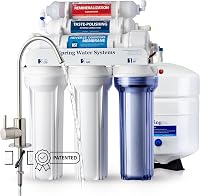
The iSpring RCC7AK-BN NSF Certified is a 75 GPD, alkaline 6-stage reverse osmosis system with an under-sink installation and a patented top-mounted faucet design. Its included components are the RO system, brushed nickel faucet, storage tank, and extra tool set.
This system has a 15.5 x 16 x 18 in footprint and a 6-month filter life cycle. It operates without electricity and includes quick-fitting connections, but you still need suitable plumbing access and room for the storage tank.
Choose it only after measuring the cabinet and confirming that a separate faucet can be installed. It is a larger plumbing project than attaching a filter to an aerator.
For another explanation of this layout, read what an under-sink water dispenser is.
What if you want filtered water without changing the faucet?
A pitcher is the simplest alternative when the bathroom faucet is incompatible. You fill it from the tap, let the water pass through the filter, and store the pitcher in a suitable place.
The Brita Large 10 Cup Water Filter Pitcher holds 10 cups, includes 1 filter, and has a bright white plastic body. It is freestanding, manual, and sized at 10.7 x 5.4 x 10.1 in.
This pitcher uses granular activated carbon and is compatible with Longlast and Standard water filters. The Standard filter should be replaced after 40 gallons or about 2 months, while the Longlast filter should be replaced after 120 gallons or about 6 months.
Measure the storage spot before choosing this route. A bathroom counter may be convenient for filling, but the pitcher still needs a stable place away from splashes and cleaning products.
A pitcher also means filling a separate container instead of getting filtered water directly from the faucet. Compare that trade-off in our faucet water filter vs pitcher guide.
Can a bathroom use a tankless reverse osmosis filter?
A bathroom can use a tankless reverse osmosis system when it has cabinet space, plumbing access, and the required electricity. This option suits a bathroom renovation or a dedicated filtered-water faucet more than a quick faucet attachment.
The Waterdrop G3P600 Tankless Reverse Osmosis Water Filter has an 8-stage filtration system, a 600 GPD capacity, and a silver smart display faucet. It measures 18.12 x 5.67 x 17.72 in and requires under-sink electricity.
Its included components are the RO system with 3 pre-installed filters, silver smart display faucet, and user manual. The system has a 2:1 pure-to-drain ratio, a 0.42 GPM maximum flow rate, and a tankless design.
Measure the cabinet carefully before choosing it. The installation also requires 2 holes, one for the RO faucet and one for the drain pipe connection, so it is not a simple attachment for a finished vanity.
If you are deciding between brands at the faucet, compare a Brita vs PUR faucet filter before buying. The brand name matters less than the actual faucet connection in your bathroom.
How should you install and care for a bathroom faucet filter?
Install the filter only after checking the faucet connection, then run cold water and follow the filter's setup instructions. Do not force an adapter, cross-thread the fitting, or use the filter if water leaks around the connection.
Clean the faucet outlet before installation. Tighten parts by hand first, then use only the amount of tool pressure recommended by the instructions.
Excess force can damage threads or the faucet finish.
Flush a new filter for the time stated in its instructions. Watch the connection during the first uses, and remove the filter if the faucet becomes loose, the flow changes sharply, or water escapes near the attachment.
Replace cartridges on schedule. A filter's change interval depends on its design and water use, so use the filter indicator or the manufacturer's stated interval rather than waiting for taste to change.
Keep the bathroom sink clean around the faucet connection. Soap residue and mineral buildup can make removal harder and may prevent an adapter from sealing properly.
Is a PUR water filter for a bathroom sink worth using?
A PUR water filter for a bathroom sink is worth considering only when the faucet connection and clearance check out. If the aerator is recessed, permanent, unusually shaped, or too close to the basin, a pitcher or under-sink system is usually a simpler match.
Choose a faucet attachment for quick access to filtered cold water when the faucet has compatible threads. Choose the Brita pitcher when you want no installation, the iSpring system when you have room for an under-sink tank, or the Waterdrop system when you can provide electricity and install a separate faucet.
For more bathroom-specific options, see the best faucet water filter for a bathroom sink. If you are comparing pitchers instead, review the Brita vs PUR water filter pitcher guide and best ZeroWater pitcher options.
Frequently asked questions
Can a PUR faucet filter fit any bathroom sink?
No. A PUR faucet filter needs a compatible faucet connection, and many bathroom faucets have shapes or thread sizes that do not suit kitchen-style filter attachments.
Check whether the aerator can be removed, compare the thread type, and leave enough room for the filter body before buying.
Is a bathroom sink faucet suitable for filtered drinking water?
It can be suitable when the faucet supplies cold tap water and the filter is compatible with the connection. Clean the faucet, follow the filter instructions, and avoid connecting a faucet filter to hot water unless the instructions specifically allow it.
What can you use if a PUR filter will not fit?
Use a pitcher, an under-sink reverse osmosis system, or a faucet filter designed for your bathroom faucet. A pitcher needs no faucet connection, while an under-sink system needs cabinet space, plumbing access, and, for some models, electricity.