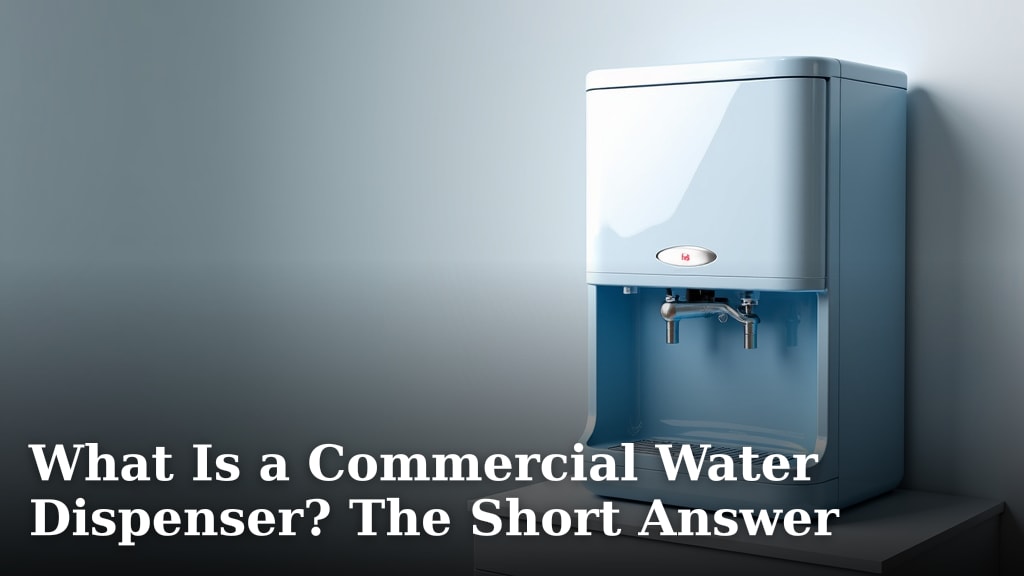
What Is a Commercial Water Dispenser? The Short Answer
Defining a Commercial Water Dispenser
A commercial water dispenser is a free-standing appliance designed to provide large quantities of drinking water to many people in a shared space. Think of it as a durable, high-capacity water cooler built for heavy use. Unlike a home model, these machines are engineered to handle constant demand in places like offices, schools, gyms, and waiting rooms.
At its core, the machine serves one simple, vital purpose: to offer easy access to clean, temperature-controlled water. It does this by connecting to a large water source—either a big bottle or a direct plumbing line. This setup ensures a continuous supply without constant refilling.
You’ll usually find them in two main forms. The first is a bottle-fed dispenser that holds a 3- or 5-gallon bottle on top or inside a cabinet. The second is a point-of-use model plumbed directly into a building’s water line. Both types typically offer at least two temperature options: cool and hot.
Why Your Business Needs a Water Station
Providing water isn’t just a nice perk; it’s a basic necessity for a healthy workplace. When you offer a reliable water source, you support employee and customer well-being. Staying hydrated is linked to better concentration, energy levels, and overall performance (Cleveland Clinic). It’s a simple way to show you care.
Beyond health benefits, a dispenser creates a natural gathering spot. Water cooler chats are real and can help build team camaraderie. For customer-facing businesses, it’s a small hospitality touch that makes visitors feel welcome and comfortable.
The financial upside is also clear. Buying bottled water for the office adds up. A dispenser system, especially a plumbed-in model, provides water at a fraction of the cost per ounce compared to buying individual bottles. It also cuts down on plastic waste, which is good for the environment and your company’s image.
Key Users and Settings
These machines are workhorses for any high-traffic environment. Common places you’ll see them include:
- Corporate Offices: Kept in break rooms or hallways for staff access.
- Retail Stores & Showrooms: Offered as a courtesy for customers and employees.
- Healthcare Facilities: Provide hydration for patients, visitors, and medical staff.
- Schools & Universities: Hydrating students and faculty throughout the day.
- Gyms & Fitness Centers: Essential for workout recovery.
- Industrial Settings: Keeping workers hydrated in warehouses and on shop floors.
The Main Types You’ll Encounter
Not all dispensers are the same. The right choice depends on your location, budget, and water usage. Understanding the primary categories helps you pick the best fit for your needs.
Bottle-Fed (Non-Plumbed) Dispensers
This is the classic water cooler you picture. A large, sealed bottle of water is placed either on top or inside a cabinet. The machine uses a probe or pump to draw water from the bottle. When the bottle is empty, you replace it with a new one from a water delivery service.
The biggest advantage is simplicity. You don’t need any plumbing installation. This makes them perfect for temporary spaces, events, or areas far from a water line. The downside is managing empty bottles and scheduling regular deliveries, which can be logistically demanding.
Point-of-Use (POU) Dispensers
A point-of-use system connects directly to your building’s existing water supply. Water flows from the pipes into the dispenser, where it’s filtered and chilled or heated on demand. There are no bottles to lift, store, or replace.
This option often provides better-tasting water since it’s freshly filtered. It eliminates bottle delivery costs and storage issues. However, it requires professional installation and a nearby water line. It’s a more permanent, high-capacity solution.
Filtered vs. Non-Filtered
A key decision within the POU category is whether to add a filtration system. Many models come with built-in filters. These can remove chlorine taste, sediment, and some contaminants. The CDC recommends using water filters that are certified to reduce specific contaminants if your tap water quality is a concern. A filter adds an extra layer of assurance about water quality.
Comparison Table: Bottle-Fed vs. Point-of-Use
Here’s a simple breakdown to help you compare the two main types at a glance.
| Feature | Bottle-Fed Dispenser | Point-of-Use (POU) Dispenser |
|---|---|---|
| Water Source | Pre-filled 3 or 5-gallon bottles | Directly from plumbing line |
| Installation | Plug-and-play, no plumbing needed | Requires professional plumbing hookup |
| Upfront Cost | Lower initial machine cost | Higher initial machine + installation cost |
| Ongoing Cost | Monthly delivery fees for water bottles | Electricity and periodic filter replacements |
| Maintenance | Regular bottle changes, cleaning | Regular filter changes, plumbing checks |
| Best For | Flexibility, no renovation, low immediate budget | Long-term savings, aesthetics, high volume |
How It Actually Works: The Simple Mechanics
You don’t need to be an engineer to understand the basics. The process is straightforward, whether it’s bottle-fed or plumbed in. It all starts with getting water to the right place at the right temperature.
For a bottle-fed model, gravity or an electric pump moves water from the bottle into an internal reservoir. A refrigerant system cools the water in that tank. For hot water, a small tank or heating element warms the water when you press the hot lever. A safety feature, like a child-lock, is standard on hot taps to prevent burns.
For a POU model, water flows from the pipe through a filter and then into separate cooling and heating chambers. The filtration step is crucial here. It improves taste and odor right before the water is chilled or heated.
The Role of Filtration
Filtration isn’t just about taste; it’s about safety and clarity. Common filter types include carbon filters, which reduce chlorine and organic compounds, and sediment filters, which catch particles like rust and sand. The National Sanitation Foundation (NSF) certifies filters for specific contaminant reduction. Choosing a certified filter ensures it does what it claims.
Filter replacement schedules vary. Some models have indicator lights to remind you. Ignoring filter changes can reduce water flow and quality, and might even allow bacteria to grow inside the filter itself.
Essential Features to Look For
When shopping for a dispenser, certain features make a big difference in daily use. A good machine should be reliable, safe, and easy to live with.
The temperature options are fundamental. Most offer cold and room-temperature water. Hot water dispensers are incredibly convenient for making instant coffee, tea, or oatmeal. Look for a hot water tank that heats quickly and maintains temperature efficiently.
Energy efficiency is another important factor. Many modern dispensers are ENERGY STAR certified, meaning they use less electricity. Since the machine runs 24/7, an efficient model can save you a noticeable amount on your electric bill over time.
Don’t overlook the design and footprint. Measure your space carefully. Some models are slim and designed for tight spaces. Others are wider with bottle storage inside. The style should fit your office aesthetic, whether that’s modern and sleek or simple and functional.
A Quick Checklist for Your Search
Use this list when evaluating options to ensure you cover all bases.
- Check the capacity: Is the cooling/heating tank size right for your number of users?
- Verify certifications: Look for NSF certification for sanitation and filter performance.
- Consider the noise level: A compressor or fan noise might be disruptive in a quiet office.
- Ask about the warranty: A good commercial machine should have at least a 1-2 year warranty.
- Inquire about service: For plumbed models, who handles maintenance and filter changes?
- Test the taps: Is the water flow strong? Are the levers easy to press?
Keeping It Clean and Safe
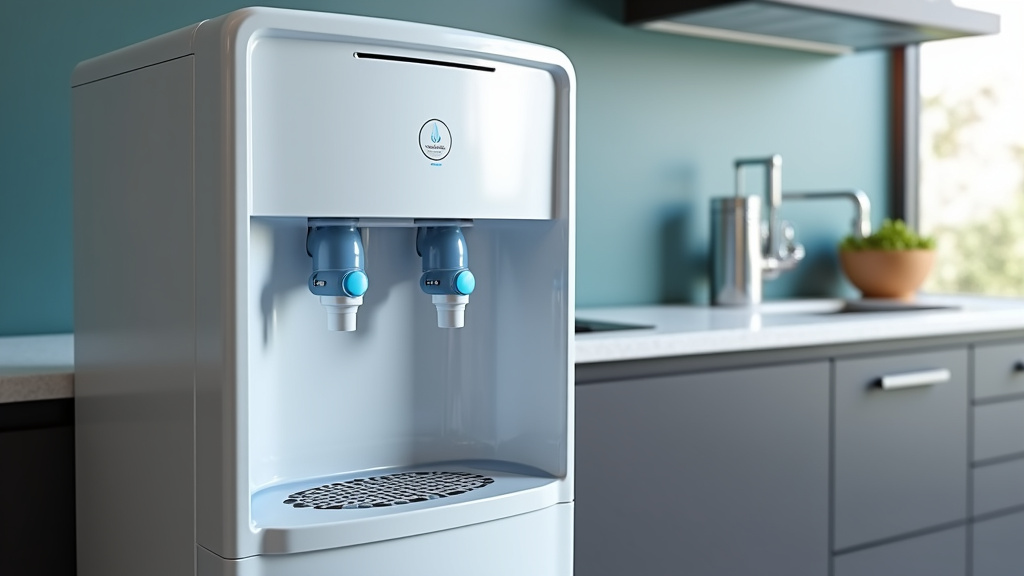
A water dispenser is a shared appliance, and like any shared item, it needs regular cleaning. The FDA notes that water dispensers can be a source of microbial contamination if not properly maintained. A simple cleaning routine prevents slimy buildup and bacterial growth. For those looking to minimize manual cleaning, self-cleaning water dispensers offer automated maintenance features.
For bottle-fed units, you should clean the bottle seat and exterior weekly. A deep cleaning of the internal reservoir is recommended every 6 to 12 months. For POU models, the external parts need weekly wiping, and the filters must be changed on schedule.
Always use manufacturer-recommended cleaning solutions or a mild bleach-water solution. Never use abrasive chemicals. Pay special attention to the drip tray and the nozzles where water comes out. This small effort ensures the water you drink is not only cool but also clean.
The Bottom Line on Value
A commercial water dispenser is a practical investment in your people and your space. It provides essential hydration in a convenient, cost-effective way. The right model, chosen and maintained properly, can serve your team or customers for years.
You’re not just buying a machine. You’re creating a resource that supports health, encourages interaction, and adds a touch of hospitality. By understanding the types, features, and maintenance needs, you can make a choice that fits your environment perfectly. The goal is simple: provide great-tasting water to everyone who walks through your door.
Conclusion
A commercial water dispenser is a durable, high-capacity appliance that provides easy access to temperature-controlled water in shared spaces. You’ve learned the main types—bottle-fed and point-of-use—and how they differ in setup, cost, and convenience. Key features like filtration, energy efficiency, and safety locks matter for daily use. Remember, regular cleaning and filter changes are essential for keeping water safe and the machine running well.
Your next step is simple: assess your specific needs. Consider your water usage, available plumbing, and budget. Use the checklist from this article when you start looking at models. A little planning ensures you choose a dispenser that truly serves your space for years to come.
Frequently Asked Questions
How often do I need to replace the water bottle in a bottle-fed dispenser?
This depends entirely on how many people use the dispenser daily. A 5-gallon bottle typically lasts 2-4 weeks in a small office. For a busy gym or large workplace, you might need a delivery every few days. Most water delivery services can help you set up a regular schedule based on your usage.
Is a point-of-use dispenser really cheaper in the long run?
Generally, yes. While the upfront cost is higher due to installation, you eliminate ongoing bottle delivery fees. The main recurring costs are electricity and periodic filter replacements. We found that for consistent, high-volume use, a POU system often pays for itself within a couple of years compared to bottled water costs.
How do I clean my water dispenser properly?
For weekly maintenance, unplug the unit and wipe down the exterior, taps, and drip tray with a mild soap solution. For a deep clean, use a manufacturer-recommended sanitizer or a diluted bleach solution (about one tablespoon of bleach per gallon of water) to flush the internal reservoir. Always rinse thoroughly afterward. Check the manual for model-specific instructions.
Can I install a point-of-use dispenser myself?
It is not recommended. These models require a connection to your building’s cold water line, which often involves cutting pipes and ensuring a leak-proof, code-compliant installation. Professional installation is safer and protects your warranty. The cost is usually minimal compared to potential water damage from a faulty hookup.
What does an NSF certification on a dispenser mean?
NSF International is an independent organization that tests and certifies products for safety and performance. An NSF-certified dispenser or filter has been verified to meet strict standards for material safety, structural integrity, and (for filters) contaminant reduction. It’s a trusted indicator of quality and safety you can look for.