Can a Brita Water Filter Help With Hard Water?
A Brita water filter can reduce some limescale and improve taste, but it does not fully soften hard water. For mineral-rich water, choose a filter based on the hardness level and the minerals you need to reduce.
On this page (9 sections)
- What does hard water mean for a Brita filter?
- Can a Brita water filter remove calcium and magnesium?
- What is the best Brita filter for hard water?
- Do standard Brita filters help with limescale?
- How is a water softener different from a Brita filter?
- Can a Brita filter protect a kettle or coffee maker?
- When should you choose a whole-house filter?
- How should you choose a Brita filter for hard water?
- So, can a Brita water filter help with hard water?
A Brita water filter can reduce some limescale and improve taste, but it does not fully soften hard water. Hard water contains dissolved minerals, mainly calcium and magnesium, so the right choice depends on the hardness level and whether you need treatment at one tap or throughout the home.
A pitcher filter can make drinking water more pleasant and may help with minor scale. It won't turn very hard water into soft water or protect every pipe and appliance in the house.
For a broad overview of filter types, start with our guide to drinking water filters. It explains why a pitcher, under-sink filter, reverse osmosis system, and whole-house filter serve different needs.
What does hard water mean for a Brita filter?
Hard water has more dissolved calcium and magnesium than soft water. These minerals can leave white scale on kettles, faucets, shower doors, and other surfaces.
Brita filters use different combinations of filter media. Many reduce chlorine taste and odor, while some cartridges also reduce limescale or selected metals.
For the brand’s microplastics claims, see Brita filters and microplastics.
That does not mean every Brita cartridge performs the same job.
Hardness is usually measured in milligrams per liter as calcium carbonate, or in grains per gallon. Check a local water report or use a water hardness test before choosing a treatment system.
A Brita filter is used at the point of drinking. It treats the water that passes through the pitcher or jug, not the water running through the home's plumbing.
Can a Brita water filter remove calcium and magnesium?
A Brita filter may reduce some scale-forming minerals, but it does not provide full water softening. The result depends on the cartridge, the starting water, and how quickly the filter becomes loaded.
The BRITA MAXTRA+ replacement water filter cartridges specifically describe reducing limescale. They also use ion exchange pearls to permanently absorb lead and copper, while micro carbon pearls reduce chlorine and impurities.
MAXTRA+ cartridges are compatible with all BRITA jugs, including models with the PerfectFit feature. They last about 4 weeks, so households with hard water should pay attention to the replacement schedule.
Limescale reduction is useful for taste and some appliance buildup, but it is not the same as removing all calcium and magnesium. If scale returns quickly or affects several fixtures, a dedicated softening system may be a better fit.
What is the best Brita filter for hard water?
The best Brita filter for hard water is the cartridge that clearly states it reduces limescale and fits your jug. A standard pitcher filter may still suit you when taste, chlorine, and drinking water are the main concerns.
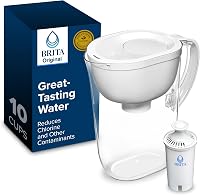
The Brita Large 10 Cup Water Filter Pitcher includes 1 filter and holds 10 cups. It has a BPA-free plastic pitcher, a manual power source, and compatibility with Longlast and Standard water filters.
The pitcher measures about 10.47 in high, 5.59 in wide, and 10.94 in deep in the product title information. Its easy-fill locking lid and refrigerator-friendly shape suit a kitchen where you want a freestanding drinking-water filter.
The included filter is intended to last 40 gallons or about 2 months. That schedule is a general replacement point, not a guarantee that the filter will handle every hardness level equally well.
See more options in our guide to the best Brita water filters. Match the replacement cartridge to your pitcher before ordering.
Do standard Brita filters help with limescale?
Standard Brita filters can help with taste and some impurities, but their hardness reduction is limited. They are better suited to drinking-water improvement than to treating a home's complete hard-water problem.
The Amazon Basics Enhanced Water Filter is a Brita-compatible pitcher replacement in a 6-pack. It fits Amazon Basics and many Brita pitchers and dispensers, excluding Brita Stream.
Each filter lasts about 40 gallons or 2 months. The filter uses carbon, charcoal, and fine mesh, and it is WQA certified against NSF/ANSI 42, 53, 401, and 372 standards for reducing 9 stated contaminants.
This filter can be useful when you want improved taste and regular replacement filters for a compatible pitcher. The data does not describe it as a whole-home softener, so don't choose it as the only answer to heavy calcium scale.
For bottle-based filtration, see our guide to best Brita water bottle replacement filters. A bottle filter serves personal drinking water, not showers, laundry, or appliances.
How is a water softener different from a Brita filter?
A Brita filter treats a limited amount of water for drinking, while a softener is designed to address hardness more broadly. The better choice depends on where you notice the problem.
Choose a Brita pitcher when your main goals are better-tasting water, less chlorine taste and odor, and convenient filtration at the refrigerator. It is a practical point-of-use option for drinking and cooking.
Choose a softener when scale appears on several fixtures, soap does not lather well, laundry feels stiff, or appliances collect mineral buildup. A softener is intended for the home's incoming water rather than one pitcher.
Our comparison of water softener vs water filter explains which system fits common household problems. You may need a softener for the house and a separate drinking-water filter for taste or additional contaminant reduction.
Can a Brita filter protect a kettle or coffee maker?
A limescale-reducing cartridge may slow mineral buildup in a kettle or coffee maker, but it cannot guarantee complete protection. The result depends on the hardness of the water and how much filtered water the appliance uses.
The MAXTRA+ cartridge is the closest match among these options when limescale is the concern because its product information specifically describes limescale reduction. Replace it on schedule and watch for scale inside the appliance.
A standard cartridge may still improve drinks by reducing chlorine and impurities. It should not be treated as a substitute for descaling, especially in very hard water.
Follow the appliance instructions for cleaning and descaling. Filtering the water and maintaining the appliance are separate steps.
When should you choose a whole-house filter?
Choose a whole-house system when hard water affects multiple points of use or you need treatment before water reaches appliances. A refrigerator pitcher cannot filter shower water, washing-machine water, or every faucet.
A whole-house carbon filter may help with chlorine, taste, and some impurities, but carbon filtration is not automatically the same as water softening. Check the system's stated hardness-reduction method before buying.
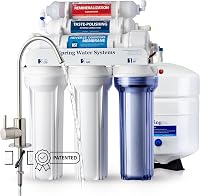
Our guide to the best whole house carbon water filters can help you compare whole-home filtration goals. For broader contaminant reduction at one kitchen tap, an RO system may be more suitable, such as the options in best APEC ROES-50 replacement filters.
How should you choose a Brita filter for hard water?
Start with a water test, then choose a cartridge that matches your hardness problem and pitcher. Don't assume that every Brita-compatible filter reduces limescale just because it improves taste.
Use this decision guide:
- Choose a Brita pitcher for drinking water at one location.
- Choose a cartridge that specifically mentions limescale when scale reduction matters.
- Confirm that the cartridge fits your exact jug or pitcher.
- Replace the filter by its stated gallons or time period.
- Use a softener when hardness affects the whole home.
- Descale kettles and coffee makers according to their instructions.
A compatible replacement filter can be convenient, but compatibility alone does not prove equal hardness reduction. Keep the filter clean, store the pitcher as directed, and avoid stretching the replacement interval.
See how to use a Brita pitcher for setup and everyday use.
So, can a Brita water filter help with hard water?
Yes, a Brita water filter can help with taste and some limescale, but it is not a full water-softening solution. Pick the BRITA MAXTRA+ cartridge when limescale reduction is your main pitcher-level goal, choose a standard compatible filter for routine drinking-water filtration, and consider a softener for whole-home hardness.
If you're unsure, test the water first. The hardness result will tell you whether a pitcher is enough or whether you need equipment designed to treat mineral-rich water before it reaches the rest of the home.
Frequently asked questions
Can a Brita water filter remove hard water?
A Brita water filter can reduce some limescale and certain dissolved metals, depending on the filter type, but it does not remove all hardness minerals. Hard water mainly contains calcium and magnesium.
If you need water softening throughout the home, compare a dedicated softener or a treatment system designed for hardness reduction.
What is the best Brita filter for hard water?
The best Brita filter for hard water is one that specifically states it reduces limescale, such as the BRITA MAXTRA+ cartridge. A standard Brita pitcher can still improve taste and reduce selected impurities, but it should not be treated as a complete solution for high hardness or scale throughout your plumbing.
Does Brita remove calcium from water?
Brita filters may reduce some calcium-related limescale, but the amount depends on the cartridge and the water passing through it. They are not the same as a water softener.
Check your water hardness and choose a system with a stated hardness-reduction purpose if calcium scale is your main concern.
Should you use a water softener or Brita for hard water?
Use Brita for drinking water taste and limited contaminant or limescale reduction at one tap. Use a water softener when hard water affects showers, laundry, fixtures, or appliances across the home.
A softener and a drinking-water filter can serve different jobs, so some homes may need both.