Can the Waterdrop G3P800 Dispense Hot Water?
No, don't choose the Waterdrop G3P800 as a hot-water dispenser. Treat it as a reverse osmosis water filter and use a separate hot-water appliance if you need heated water.
On this page (9 sections)
- Does the Waterdrop G3P800 dispense hot water?
- Why doesn't reverse osmosis automatically mean hot water?
- Can you use filtered G3P800 water for tea or coffee?
- Which reverse osmosis system suits a cold-water setup?
- Is a tankless Waterdrop system a hot-water dispenser?
- What should you check before connecting a hot-water appliance?
- Does filter replacement affect hot-water performance?
- Should you buy a hot-water RO system instead?
- Final answer: can the Waterdrop G3P800 dispense hot water?
No, the Waterdrop G3P800 should not be treated as a hot-water dispenser. It is a reverse osmosis system for filtering water, so choose a separate heating appliance when you need water for tea, coffee, cooking, or other hot drinks.
The key difference is simple: filtration removes or reduces substances from water, while heating raises its temperature. A filter can supply cleaner water without having a heater, temperature control, or hot-water outlet.
Does the Waterdrop G3P800 dispense hot water?
The Waterdrop G3P800 is not the right choice if your main goal is direct hot-water dispensing. Its role is reverse osmosis filtration, so plan on receiving filtered water and heating it separately.
Don't assume that a filtered-water faucet can safely deliver hot water. The faucet, tubing, filter stages, membrane, and housing all need to be suitable for the water temperature and pressure involved.
The safest approach is to check the exact G3P800 instructions before installation. If the documentation does not clearly describe hot-water dispensing or hot-water input, keep the system on a cold-water line.
A separate guide to What Is a Hot Water Dispenser? A Helpful Guide explains how a true hot-water appliance differs from a water filter.
Why doesn't reverse osmosis automatically mean hot water?
Reverse osmosis and hot-water dispensing are separate functions. Reverse osmosis pushes water through a membrane and other filter stages, while a hot-water appliance uses a heating element, controls, and a heat-rated water path.
That distinction matters during setup. A cold-water filtration system may not be designed for hot water entering the system, and a filtered-water faucet may not be designed to dispense heated water.
Each part of the water path has a limit. Tubing, seals, filter media, the membrane, and the faucet all need to suit the temperature and pressure they will face in use.
Heat also changes how a system is set up day to day. A heating appliance usually needs power, a place to sit safely, and care steps that a plain filter does not require.
The phrase “hot water” can also mean two different things:
- Water that enters the filter already hot.
- Filtered water that is heated after filtration.
Those are different setups with different plumbing and safety needs. Neither should be assumed to work with the G3P800 unless Waterdrop's instructions specifically support it.
Check the exact model guidance before you connect anything. If hot input or hot output is not clearly stated, keep the system on cold water and heat the filtered water separately.
Can you use filtered G3P800 water for tea or coffee?
Yes, you can heat the filtered water separately for tea or coffee. Fill a kettle or another suitable heating appliance with the filtered water, then heat it according to that appliance's instructions.
This setup keeps the jobs separate. The reverse osmosis system handles filtration, while the kettle or hot-water dispenser handles heating.
It also lets you choose the heating method that fits your kitchen. A kettle may suit occasional use, while a dedicated hot-water dispenser may make more sense if you need hot water often.
Keep the filtered-water faucet and the heating appliance in an easy-to-clean area. Wipe spills promptly, and follow both appliances' care instructions.
Which reverse osmosis system suits a cold-water setup?
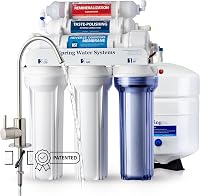
The iSpring RCC7AK-BN NSF Certified is an under-sink reverse osmosis system with a 75 GPD capacity, alkaline 6-stage filtration, and a storage tank. Its included components are the RO system, brushed nickel faucet, storage tank, and extra tool set.
It uses a top-mounted fastener intended to make countertop installation easier from above. The system also has a transparent first-stage filter housing, which lets you look at sediment buildup, and iSpring identifies the system as NSF/ANSI 58 certified.
The iSpring system operates without electricity, according to its product information. That can suit a kitchen where you want filtered water without adding an electrical connection under the sink.
Its stated operating pressure range is 70 psi, and its stated lower temperature range is 40 °F. Those details reinforce the need to follow the installation instructions and avoid assuming that hot-water use is supported.
If you're comparing filtration types before choosing, see our guide to Drinking Water Filters: The Complete Buying Guide.
Is a tankless Waterdrop system a hot-water dispenser?
No, a tankless design does not automatically add heating. Tankless describes how filtered water is stored and supplied, not whether the system can heat water.
The Waterdrop G3P600 Tankless Reverse Osmosis Water Filter has a tankless under-sink design, an 8-stage filtration system, and a silver smart display faucet. Its product information identifies a 600-gallon-per-day capacity, a 2:1 pure-to-drain ratio, and corded electric power.
The G3P600's smart faucet tracks TDS and filter life. Those functions help you monitor filtration, but they are not heating controls.
Waterdrop also identifies separate instant hot models in the same product family, including the WD-K6 Instant Hot RO and WD-M6H Instant Hot RO. That separation is useful: a model described as instant hot is different from a tankless RO model that is described only by filtration and water flow.
For a broader comparison, review our best tankless reverse osmosis system guide and our best waterdrop tankless reverse osmosis system roundup.
What should you check before connecting a hot-water appliance?
Check the exact model instructions, water temperature limits, power needs, and connection method before combining filtration with heating. Compatibility depends on the appliances, not just on the fact that both use water.
Use this checklist:
- Confirm whether the RO system is intended for cold-water input.
- Confirm whether the hot-water appliance accepts filtered water.
- Check whether the faucet and tubing are rated for the intended temperature.
- Keep electrical connections away from leaks and standing water.
- Follow the required drain, pressure, and installation steps.
- Replace filters on the schedule specified for the exact model.
Don't route hot water backward through an RO system unless the instructions clearly permit it. Heat can affect components that were designed for cold-water filtration.
If you need filtered water for an ice maker or refrigerator, evaluate that connection separately from any hot-water setup. Cold-water filtration, ice making, and hot-water dispensing are different installation tasks.
Does filter replacement affect hot-water performance?
No, replacing an RO filter does not turn the system into a hot-water dispenser. Filter replacement restores filtration performance, but it does not add a heater or temperature control.
For the G3P800, use the correct replacement procedure and model-specific filter. Our guide to waterdrop g3p800 filter replacement covers the maintenance topic separately.
The Waterdrop G3P600 uses 3 pre-installed filters and a twist-style replacement process. Its product information describes removing a used filter by rotating it counterclockwise, inserting the new filter, and rotating it clockwise into place.
Filter care still matters for taste, flow, and the intended filtration process. Follow the exact replacement schedule and flushing steps for your system.
Should you buy a hot-water RO system instead?
Choose a hot-water RO system only when the exact model is designed to filter and heat water together. A regular tankless or storage-tank RO system is the better match when you want filtered cold water and already have a kettle or dispenser.
Pick a separate setup if you want flexibility. The RO system can serve drinking water, while the kettle or dispenser heats only the amount you need.
Pick an instant-hot RO model if you specifically want filtration and heating in one appliance and the installation requirements fit your kitchen. Confirm the model name carefully because similar Waterdrop products can have different functions.
Our guide to best water drop reverse osmosis system can help you compare Waterdrop filtration options before deciding.
Final answer: can the Waterdrop G3P800 dispense hot water?
No, the Waterdrop G3P800 should not be selected as a direct hot-water dispenser. Use it for reverse osmosis filtration, then heat the filtered water separately unless Waterdrop's exact instructions identify the model as a hot-water system.
Choose the iSpring RCC7AK-BN NSF Certified if you want an under-sink system with alkaline 6-stage filtration and a storage tank. Choose the Waterdrop G3P600 Tankless Reverse Osmosis Water Filter if you want a tankless, 8-stage system with a smart display faucet and corded electric operation.
For the keyword question, the decision rule is simple: waterdrop g3p800 hot water requires a model-specific heating feature, not just reverse osmosis filtration. Check the exact model instructions before connecting any hot-water appliance.
Frequently asked questions
Can the Waterdrop G3P800 dispense hot water?
No. The Waterdrop G3P800 should not be treated as a hot-water dispenser.
It belongs in the reverse osmosis filter category, while hot-water dispensing requires a separate heating system designed for that job.
Can you connect hot water to a Waterdrop G3P800?
Don't connect hot water to the G3P800 unless Waterdrop's current instructions specifically allow it. Reverse osmosis systems use filters, tubing, and membranes intended for their stated water conditions, so use the installation and temperature guidance for the exact model.
Does a Waterdrop reverse osmosis system make hot water?
A reverse osmosis system filters water, but that does not automatically make it a hot-water dispenser. Waterdrop's separate instant hot models show why filtration and heating should be treated as different functions.
What should you use if you need filtered and hot water?
Use a compatible reverse osmosis system for filtration and a separate hot-water dispenser, kettle, or approved instant-hot RO model for heating. Check the appliance instructions for connection, temperature, power, and installation requirements before combining systems.