Can APEC Tankless Reverse Osmosis Fit Under Your Sink?
An APEC tankless reverse osmosis system can fit under your sink if the cabinet has enough clearance, a nearby outlet, suitable water pressure, and room for the drain and faucet connections. Measure the cabinet and check the exact APEC model requirements before installation.
On this page (9 sections)
- What does an APEC tankless reverse osmosis system need?
- How much clearance should you leave under the sink?
- Does tankless reverse osmosis need an electrical outlet?
- What plumbing connections are required?
- Can you install tankless reverse osmosis without drilling?
- How do you plan filter access?
- Is tankless reverse osmosis better for a small cabinet?
- What should you check before installing?
- Can an APEC tankless reverse osmosis system fit under your sink?
An APEC tankless reverse osmosis system can fit under your sink if the cabinet has enough clearance, a nearby electrical outlet, suitable water pressure, and accessible water and drain connections. The exact dimensions and requirements vary by APEC model, so measure first and follow that model's installation guide.
Tankless systems are compact compared with units that use a storage tank, but compact does not mean connection-free. You still need space for tubing, filter changes, the drain line, and a dedicated drinking-water faucet.
What does an APEC tankless reverse osmosis system need?
An APEC tankless reverse osmosis system needs cabinet clearance, a cold-water connection, a drain connection, faucet space, and any required power supply. The cabinet must also leave enough working room for installation and future filter changes.
Start by measuring the usable space, not just the cabinet's outside dimensions. Record the width, depth, and height around the sink plumbing, disposal, shelves, and existing water lines.
Check the system's required water pressure and temperature range. If your home's pressure is too low, the system may not work as intended, even when the cabinet has plenty of room.
For general buying advice, see our guide to drinking water filters. It explains how filtration type, installation style, maintenance, and household needs affect your choice.
How much clearance should you leave under the sink?
You should leave extra room around the system for tubing, filter access, and shutoff valves, rather than placing the unit tightly against the cabinet walls. The exact clearance should come from the APEC manual for your model.
Measure from the cabinet floor to the underside of the sink. Then measure around the garbage disposal, drain trap, water shutoff, and any shelf supports that could block the system.
Depth matters too. A unit may fit from front to back but still prevent the cabinet door from closing or make filter replacement difficult.
Keep the front of the system reachable without removing stored items.
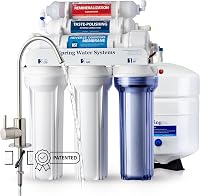
The iSpring RCC7AK-BN NSF Certified measures 15.5 in L x 16 in W x 18 in H and includes a storage tank, so it shows why tank-style systems need a different cabinet plan.
Its top-mounted faucet fastener can help when access beneath the sink is limited. The system also has a transparent first-stage housing for checking sediment buildup and an alkaline stage for mineral remineralization.
Does tankless reverse osmosis need an electrical outlet?
Many tankless reverse osmosis systems need under-sink electricity, so confirm that an outlet is close enough for the cord to reach without an extension cord. The outlet should stay accessible and protected from water.
The Waterdrop G3P600 Tankless Reverse Osmosis Water Filter System Silver Faucet uses a corded electric power source. Its stated dimensions are 18.12 in L x 5.67 in W x 17.72 in H, so measure both cabinet height and depth before deciding where it will sit.
The G3P600 has an 8-stage filtration system, a smart faucet with TDS monitoring and filter-life tracking, and a 2:1 pure-to-drain ratio. Its filter cartridges are designed to rotate out and in without tools, so front access matters.
Do not assume every APEC tankless system uses the same power setup. Check whether the model needs a powered pump, display, control board, or another electrical connection before planning the cabinet layout.
What plumbing connections are required?
A tankless reverse osmosis system normally needs a cold-water feed, a filtered-water faucet connection, and a drain connection. Some installations also include a line to a refrigerator or ice maker when the system supports that use.
The cold-water adapter connects the system to the household supply. Shut off the water before disconnecting the existing line, and confirm that the adapter size matches your plumbing.
The drain line carries reject water away from the membrane. It needs a secure connection and a route that does not kink, sag, or interfere with the sink drain trap.
The drinking-water faucet usually needs its own hole. If your sink or countertop has no spare opening, check the faucet size and the material before drilling.
The G3P600 installation requires 2 holes according to its product information: one 1 in hole for the RO faucet and another for the drain-pipe connection. That is a useful reminder to inspect the countertop before buying any tankless model.
Can you install tankless reverse osmosis without drilling?
You may avoid drilling only if your sink or countertop already has suitable openings for the faucet and drain connection. Otherwise, a tankless installation may require drilling, depending on the model and your existing setup.
Do not drill through stone, quartz, porcelain, or another hard surface without the correct bit and method. If you are unsure about the countertop material or the location of hidden plumbing, use a qualified installer.
A faucet hole also needs enough clearance below the surface for the mounting hardware. Check that the new faucet will not hit the backsplash, sink rim, or cabinet frame.
For a broader comparison of compact systems, read our guide to the best tankless reverse osmosis system. If you are deciding between storage and no storage, compare tank vs tankless reverse osmosis before measuring the cabinet.
How do you plan filter access?
Plan filter access before installation because a unit that fits on day one can still be frustrating if the cartridges cannot be removed. Leave front or top clearance based on the model's filter design.
A traditional under-sink system may need room around several vertical housings. A tankless design may use compact cartridges, but the filter door or cartridge ends still need an unobstructed path.
Mark the system footprint with cardboard before connecting water. Place the template on the cabinet floor, close the door, and test whether you can reach the filters and shutoff valves.
Keep replacement filters dry and easy to find. Follow the model's maintenance instructions for replacement timing, flushing, and sanitation.
Is tankless reverse osmosis better for a small cabinet?
Tankless reverse osmosis is often better for a small cabinet when the cabinet has power and enough clearance for the system body and filter access. It removes the separate storage tank, which can free useful space for other supplies.
The trade-off is that the system may need electricity and more careful planning for its drain, faucet, and control connections. A tank model can suit a cabinet without an outlet, but it needs room for the tank.
The G3P600 is designed to save under-sink space with its tankless layout, while the iSpring RCC7AK-BN includes a storage tank and operates without electricity. Those differences make them useful examples of the two installation paths.
Readers comparing Waterdrop models can see our guide to the best Waterdrop tankless reverse osmosis system. For systems with storage tanks and other layouts, review the best water drop reverse osmosis system.
What should you check before installing?
Before installing an APEC tankless reverse osmosis system, check the cabinet measurements, outlet location, water pressure, cold-water connection, drain route, faucet opening, and filter-access path. Compare other under-sink reverse osmosis systems once you know what your cabinet can accommodate.
These checks prevent most fit problems.
Use this short checklist:
- Measure usable cabinet width, depth, and height.
- Mark the sink plumbing and disposal clearance.
- Confirm the model's electrical requirement and cord reach.
- Check household water pressure and supply temperature.
- Plan the cold-water, faucet, and drain connections.
- Confirm whether countertop drilling is needed.
- Leave access for filter replacement and shutoff valves.
- Inspect for leaks after installation and flushing.
A refrigerator connection may also need planning. The iSpring system is compatible with most refrigerators, and an ice maker kit is available separately, but confirm the route and pressure needs for your appliance.
For more system comparisons, see our guide to the best reverse osmosis systems. If your main goal is fitting filtration beneath a crowded sink, choose the APEC model only after its exact dimensions and installation requirements match your cabinet.
Can an APEC tankless reverse osmosis system fit under your sink?
Yes, an APEC tankless reverse osmosis system can fit under your sink when the cabinet clears the model's dimensions and provides power, pressure, drain access, faucet space, and filter access. Measure around the existing plumbing, not just the empty cabinet walls.
Choose tankless if saving space matters and a nearby outlet is available. Choose a tank system if you need a setup that does not rely on electricity and have room for the storage tank.
Frequently asked questions
Does an APEC tankless reverse osmosis system need electricity?
Check the exact APEC model before installation. Tankless systems commonly use a powered pump, display, or control system, so plan for an accessible under-sink outlet unless the model documentation says otherwise.
Keep the outlet and cord away from leaks, valves, and drain discharge.
How much cabinet space does tankless reverse osmosis need?
The required space depends on the model, but you need more than the system's length, width, and height. Leave room to connect tubing, remove filters, reach shutoff valves, and inspect the drain line.
Measure around plumbing and the cabinet opening before ordering.
Can reverse osmosis connect to a refrigerator?
Some reverse osmosis systems can feed a refrigerator or ice maker, but the connection method and pressure requirements vary. Confirm that the system supports the appliance, then plan the tubing route and any required kit.
Do not connect it until the system's instructions allow that use.
Is tankless reverse osmosis better than a tank system?
Tankless reverse osmosis saves cabinet space and can provide filtered water on demand, but it usually needs electricity and careful clearance for filter access. A tank system can suit a sink without a nearby outlet.
Compare cabinet space, power, water use, flow, and maintenance before choosing.