Tank vs Tankless Reverse Osmosis: Which Should You Choose? (November 2026)
Choose a tank system if you want stored water without under-sink electricity; choose tankless for a smaller footprint and faster dispensing. Your cabinet space, water use, and access to an outlet decide which reverse osmosis design fits.
On this page (6 sections)
Choose a tank system if you want stored water without under-sink electricity; choose tankless if you want to save cabinet space and have an outlet available. In a tank vs tankless reverse osmosis comparison, the main tradeoffs are storage, dispensing, space, and power.
A tank system filters water into a pressurized reservoir, then dispenses from that reserve. A tankless design filters water on demand and may use an electric pump, so check the specific system’s flow details and power needs.
Your choice also depends on what else sits under the sink. If you are comparing treatment approaches, see reverse osmosis vs water softener.
Measure the cabinet and think about how you use filtered water before comparing models.

Tank vs tankless reverse osmosis: how do the designs differ?
Tank systems store filtered water in a pressurized reservoir; tankless systems filter water as you dispense it. That difference affects cabinet layout and how the system meets your household’s water use.
A tank can provide a reserve for filling a glass or pitcher. The reservoir takes up space, and the system needs to refill it after water is drawn.
A tankless unit removes the storage tank from the setup. The system itself still needs room, and some designs require electricity under the sink.
The drinking water filter buying guide covers broader filter types and the questions to ask before choosing a system. For this comparison, focus on the design that works with your cabinet, outlet, and daily routine.
What does a tank do in an RO system?
A pressurized tank holds filtered water until you open the faucet. The iSpring T32M has up to 3.2 gallons of holding capacity and can discharge in either a vertical or horizontal position.
Its listed operating pressure is 7–10 psi, and it comes with a 1/4-inch tank valve. Check the dimensions and system instructions to confirm that the tank will fit and connect properly.
How does a tankless RO system deliver water?
A tankless RO system produces filtered water when you turn on the faucet. The Waterdrop G3P600 is described as filling an 8 oz cup in 8 seconds, and it has a smart display faucet for TDS and filter-life information.
That system requires under-sink electricity. The Frizzlife PD600-TAM3 also has a tankless design and a smart display, with stated output of 600 gallons per day.
Which design fits under your sink?
Choose tankless when cabinet space is tight, and choose a tank system when you can dedicate space to stored water. Measure the available area before you settle on either style.
The iSpring T32M tank measures 11 x 11 x 14 inches. That is the tank alone, so remember to include the RO unit, tubing, shutoff valve, and access needed for filter changes.
The Waterdrop G3P600 measures 18.12 x 5.67 x 17.72 inches. Waterdrop describes its tankless design as saving 70% of under-sink space, but your actual fit depends on the whole cabinet layout.
The Frizzlife PD600-TAM3 measures 14.7 x 5.3 x 15.5 inches. Compare those dimensions with shelves, garbage disposals, plumbing, and any items you keep in the cabinet.
If you are comparing compact designs, see our guide to the best tankless reverse osmosis system. For a specific cabinet check, our APEC tankless reverse osmosis fit guide explains what to measure before installation.
How does water flow compare?
Tank systems draw from stored water, while tankless systems make water on demand. The best fit depends on whether you value having a reserve or prefer a compact system with a stated flow rate.
A tank’s reserve can be useful when you want to fill several glasses in succession. It is finite, however, and the tank needs time to refill after a large draw.
Tankless systems have no reservoir to empty, but that does not mean every model produces water at the same rate. The Waterdrop G3P600 has a stated 600 GPD capacity and a 0.42 GPM maximum flow rate.
The Frizzlife PD600-TAM3 also has a stated 600 GPD capacity, with a maximum flow rate of 0.41 GPM. These figures describe different kinds of output, so use cup-fill claims and system details to estimate everyday use.
When is a storage reserve useful?
A tank can suit a household that fills pitchers or uses filtered water throughout the day. The stored reserve means the faucet draws from water already filtered, though a heavy draw uses up that reserve.
A tank can also make sense where under-sink power is not available. The iSpring RCC7AK-BN system is described as operating without electricity and includes a storage tank.
When does on-demand flow make sense?
Tankless can suit a household that wants a smaller cabinet footprint and does not want a storage reservoir. Check the stated flow and power needs because these systems can rely on an electric pump.
The Waterdrop G3P600 and Frizzlife PD600-TAM3 both state 600 GPD output and have under-sink electrical requirements. Their stated cup-fill times can help you compare everyday dispensing.
What power and installation needs should you check?
Check the exact system’s power source, faucet requirements, and installation steps before choosing a design. Tankless systems may need an outlet, and either type may need cabinet modifications.
The Waterdrop G3P600 requires under-sink electricity and calls for 2 drilled holes, one for its RO faucet and another for a drain connection. Confirm whether your sink and counter can accommodate those openings.
The Frizzlife PD600-TAM3 also uses corded electricity. The iSpring RCC7AK-BN is described as working without electricity, and its top-mounted fastener is designed to simplify faucet installation from above the counter.
For a tank system, account for the storage tank as well as the filter stages and tubing. The iSpring RCC7AK-BN includes a storage tank, brushed nickel faucet, and extra tool set.
Measure before you buy, and follow the chosen system’s installation instructions. If drilling or plumbing changes are outside your comfort level, use a qualified installer.
Which maintenance differences matter?
Both styles need filter changes, while tankless models may make cartridge access quicker. Compare the replacement schedule and filter cost for the exact system you are considering.
The Waterdrop G3P600 is described as allowing tool-free filter replacement by rotating cartridges into place. Its faucet display tracks filter life, which can help you know when to plan a change.
For ongoing ownership, check replacement availability before you commit. Our Waterdrop G3P800 filter replacement guide walks through a related model’s cartridge changes, and the best Waterdrop tankless reverse osmosis systems page compares more options from the brand.
A tank-based setup adds a reservoir that occupies space and may need attention if water flow changes. Follow the system manual for maintenance and troubleshooting rather than assuming every tank has the same service needs.
Which system should you choose?
Pick a tank system if you want a water reserve and can spare cabinet room; pick tankless if your cabinet is tight and you have power for the system. Then compare flow, filtration stages, and maintenance for the exact model.
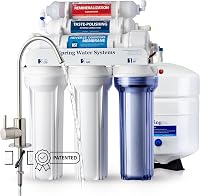
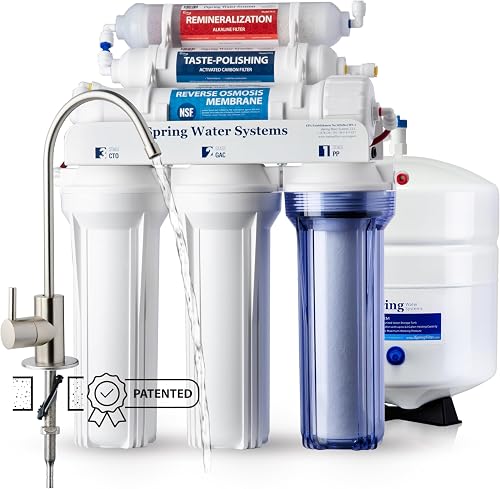
The iSpring RCC7AK-BN is a tank-based option with a 6-stage design, a storage tank, and an alkaline mineral stage. Its NSF/ANSI 58 certification applies to the full system.
The Waterdrop G3P600 is a tankless choice with a stated 600 GPD capacity, smart faucet display, and under-sink electrical requirement. The Frizzlife PD600-TAM3 is another tankless option, with an alkaline remineralization stage and stated 600 GPD capacity.
For more options, browse our best Waterdrop reverse osmosis system guide. If you are weighing other kitchen filtration choices, our PUR water filter lead guide and refrigerator water filter vs Brita comparison cover different setups.
Frequently asked questions
Is tankless reverse osmosis better than a tank system?
Tankless reverse osmosis suits a tight cabinet and can provide a fast stream of filtered water, while a tank system stores water for dispensing. Compare the exact system's output, dimensions, power needs, and required faucet before deciding; the design label alone doesn't guarantee better performance.
Does a tankless reverse osmosis system need electricity?
Some tankless systems need an under-sink outlet, including the Waterdrop G3P600 and Frizzlife PD600-TAM3 described here. Check the exact system's power requirements and confirm an outlet is available before installation, since tank-based systems can operate using water pressure.
How much space does a reverse osmosis tank take?
The iSpring T32M tank measures 11 x 11 x 14 inches and holds up to 3.2 gallons. Allow room for its valve, tubing, and service access, then compare that working space with the complete RO system and your other under-sink items.
Does a tankless RO system provide water faster?
The Waterdrop G3P600 is described as filling an 8 oz cup in 8 seconds, while the Frizzlife PD600-TAM3 is described as filling a 330 ml cup in about 10 seconds. Actual output depends on the system and installation, so compare exact flow details instead of assuming every tankless model is faster.
Can you add a tank to any reverse osmosis system?
No. Check whether the RO system is designed to work with a pressurized storage tank and whether its fittings, pressure, and installation instructions match.
A tank such as the iSpring T32M has a 1/4-inch valve, but that alone doesn't confirm compatibility with a particular system.