Reverse Osmosis vs Water Softener: Which Do You Need? (November 2026)
Choose reverse osmosis for cleaner drinking water and a water softener for hard-water control throughout the home. Many households need both because they solve different water problems.
On this page (10 sections)
- Reverse osmosis vs water softener: what is the main difference?
- Which system treats more of the house?
- What does a water softener remove?
- Which is better for drinking water?
- Can you use reverse osmosis and a water softener together?
- How do installation and upkeep compare?
- Reverse osmosis system vs water softener: which costs more to maintain?
- What should you choose for well water?
- Can a water dispenser work with either system?
- Final choice: reverse osmosis or a water softener?
Choose reverse osmosis for drinking-water filtration and a water softener for hard-water treatment throughout the home. The decision depends on whether your main concern is dissolved contaminants, scale from calcium and magnesium, or both.
Reverse osmosis usually serves one drinking-water line, often under the kitchen sink. A water softener connects to the home supply so treated water reaches showers, laundry, appliances and faucets.
The systems are not direct substitutes. Reverse osmosis focuses on filtration, while a softener uses ion exchange to reduce hardness minerals.
That distinction shapes daily use. RO at the sink can improve water for glasses, kettles and bottles, but it will not soften the shower.
A softener changes the feel of water in the bathroom and laundry, but it does not provide focused drinking-water filtration.
Many households have more than one problem at once. Hard water can leave scale in pipes and appliances while drinking water raises separate questions about dissolved contaminants, so the systems can work side by side.
Before choosing, think about where the problem appears most clearly. If it is mainly in the kitchen glass, start with drinking-water filtration.
If it is mainly on fixtures, in appliances and in how water feels, start with hardness treatment.
Test the water or review recent local results before you spend money. A test shows whether hardness is high, whether dissolved contaminants are a concern, or whether both need attention.
Also consider space and routine care from the start. RO needs room under the sink and regular filter changes.
A softener needs a suitable installation area, power for its control head where required, and ongoing salt and brine tank care.
Household size matters too. A larger family with several bathrooms may feel hardness problems more often and across more outlets.
The right answer treats the water you actually use, where you use it.
Reverse osmosis vs water softener: what is the main difference?
Reverse osmosis reduces dissolved contaminants in a selected water line, while a water softener reduces calcium and magnesium hardness across the home. That difference matters more than the names of the systems.
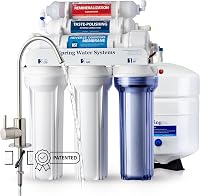
An RO system pushes water through several filtration stages and a reverse osmosis membrane. The iSpring RCC7-BN uses 5-stage filtration with reverse osmosis, activated carbon and carbon block methods.
A softener uses resin and a regeneration cycle to treat hard water. The Aquasure Harmony Series has a 48,000-grain capacity, a 12 GPM maximum flow rate and a programmable digital metered control head.
Hard water often shows up as scale, soap scum or spots on fixtures. Dissolved contaminants may not be visible, so water testing helps you decide whether filtration, softening or both make sense.
For a wider look at filtration types, read our drinking water filter guide. It explains how under-sink filters, RO systems and other options differ.
Which system treats more of the house?
A water softener treats more household outlets, while an under-sink RO system concentrates on one drinking-water location. Choose based on where you notice the problem.
A whole-house softener can help reduce hardness-related scale in plumbing and appliances. It also changes the water used for bathing, washing dishes and laundry.
An under-sink RO system is better suited to drinking water, cooking water, tea, coffee and other kitchen uses. It does not automatically treat every shower or bathroom faucet.
The iSpring RCC7AK-BN is an under-sink system with a 75 GPD capacity. Its top-mounted fastener is designed to make faucet installation easier from above the counter.
The iSpring RCC7-BN also has a 75 GPD capacity and an under-sink installation type. It includes a brushed nickel faucet, housings, filters, parts and tubing, a faucet and a mounting bracket.
For more RO options, compare our best reverse osmosis systems. Homes using private wells may also need the best reverse osmosis systems for well water.
What does a water softener remove?
A water softener targets hardness minerals, especially calcium and magnesium, rather than acting as a complete drinking-water filter. It is the better match for scale and hard-water problems across the home.
The Aquasure Harmony Series uses ion exchange and has a 48,000-grain capacity. Aquasure describes it for homes with 3–4 bathrooms and includes a resin tank and brine tank.
Its 12 GPM maximum flow rate is aimed at whole-house use, but actual household flow depends on the plumbing system and other conditions. The freestanding installation also means you need a suitable area for the equipment.
The programmable digital control head lets you set automatic flush intervals based on incoming water quality and water use. Follow the manual for installation, bypass operation and maintenance.
A salt-based softener needs salt for its brine tank. Morton Clean and Protect Water Softener Salt comes as a pack of 2 with two 40 lb bags, or 80 lb total.
Which is better for drinking water?
Reverse osmosis is the better choice when your goal is cleaner drinking water from a kitchen faucet. A softener can reduce hardness, but it is not a replacement for RO filtration.
The iSpring RCC7AK-BN has 6 stages and an alkaline AK stage that adds minerals after RO filtration. Its transparent first-stage housing lets you check sediment buildup before changing that filter.
The RCC7-BN has 5 stages and a fine GAC final filter for final polishing. Its system is NSF/ANSI 58 certified, has a 75 GPD capacity and requires no power source.
The choice between these 2 systems is mainly about the extra alkaline stage and the filtration layout. Choose the RCC7AK-BN if remineralization matters to you, or the RCC7-BN if you want a simpler 5-stage design.
Read what reverse osmosis water is before choosing an RO system. If you need a smaller setup, our best countertop reverse osmosis systems guide covers that format.
Can you use reverse osmosis and a water softener together?
Yes, many homes can use a water softener for whole-house hardness and reverse osmosis for kitchen drinking water. The softener handles the broad household problem, while RO adds focused filtration where you drink and cook.
A softener can reduce hardness before water reaches the kitchen. The RO system then treats the selected drinking-water line through its pre-filters and membrane.
This combination may make sense when scale affects water heaters, dishwashers or fixtures and you also want reverse osmosis filtration for drinking water. It adds more equipment, so confirm that you have room, suitable plumbing connections and a maintenance plan.
Do not assume that either system solves every water concern. Water testing can show whether hardness, dissolved contaminants or another issue deserves attention.
How do installation and upkeep compare?
A softener needs a dedicated installation area and brine tank care, while an under-sink RO system needs cabinet space and scheduled filter changes. The easier system is the one that fits your home and routine.
The RCC7AK-BN measures 15.5 x 16 x 18 inches and has an under-sink installation type. It includes an RO system, brushed nickel faucet, storage tank and extra tool set.
The RCC7-BN measures 23.62 x 15.75 x 11.81 inches. It also installs under the sink and includes housings, filters, parts and tubing, a faucet and mounting bracket.
Measure the cabinet before ordering either RO system. Plan space for the filters, tubing, faucet connections and any storage tank, then follow the installation manual.
The Aquasure Harmony Series measures 10 x 10 x 62 inches and weighs 120 lb. It is freestanding and includes a water softener resin tank and brine tank.
Keep the softener accessible for salt refills, control-head checks and service. Morton’s 40 lb bags are designed for lifting and pouring directly into a softener brine tank, but use safe handling for each refill.
Reverse osmosis system vs water softener: which costs more to maintain?
Maintenance depends on the equipment and your water, but RO upkeep centers on filters while a salt softener needs salt and regeneration care. Compare the routine tasks before choosing.
The RCC7AK-BN has a 6-month filter life cycle listed in its specifications, with replacement sets identified for 6 months, 1 year, 2 years and 3 years. Actual replacement timing depends on water use and source conditions.
The RCC7-BN also needs filter changes and inspection of its transparent first-stage housing. A rising taste, slower flow or higher TDS can signal that the system needs attention, but use the manual's instructions for diagnosis.
A softener needs monitoring of the brine tank and control settings. Salt pellets help support regeneration, but they do not turn a softener into a reverse osmosis filter.
What should you choose for well water?
Well-water households should test for hardness and dissolved contaminants before choosing between RO and a softener. A well may need one system, both systems or additional treatment based on the results.
Hardness throughout the house points toward a whole-house softener. A concern about drinking-water contaminants points toward an RO system at the kitchen sink.
The Aquasure Harmony Series is a whole-house softener, while the iSpring systems are under-sink RO systems. Their roles remain different even when both are installed in the same home.
A well-water setup may also need pre-treatment for problems these products do not address. Match every treatment stage to a measured water condition.
Well water can vary by location, season and depth, so a general guess is rarely enough. Testing gives a clearer picture of hardness and the dissolved substances RO is meant to reduce at the kitchen tap.
That result helps you avoid buying more equipment than you need. If hardness is the main issue, a softener may be the first step.
If drinking-water filtration is the main issue, an RO system may belong at the sink.
Pre-treatment matters because some well-water conditions affect how any system performs. Sediment, iron and other issues may need attention before water reaches a softener or RO unit, depending on your test results.
Once testing is done, plan the order of treatment and the care routine. A softener needs salt and regeneration checks, while RO needs filter changes and inspection of the first-stage housing.
Keeping the two jobs separate makes upkeep easier to follow. The softener protects the household supply from hardness, and the RO system focuses on the drinking-water line.
Can a water dispenser work with either system?
A water dispenser can provide convenient access to treated water, but its connection depends on the dispenser and plumbing setup. The treatment system still determines what the water is designed to address.
A softener treats water before it reaches connected outlets. An RO system usually feeds a dedicated faucet, and some homes may connect that treated line to compatible kitchen equipment.
Read what a water dispenser system is if you are deciding how treated water will be delivered. Check the exact connection requirements before adding a dispenser to an RO or softener setup.
In daily use, a dispenser is mainly about convenience rather than treatment. It can make chilled or ready-to-pour water easier to reach, but the softener or RO system upstream decides what the water has been treated for.
That matters when you compare the two options. Water from a softener may be softer for general household use, while water from an RO line is typically chosen for drinking and cooking at the kitchen sink.
With RO, the connection point matters because the system usually serves a dedicated faucet. Your plumbing plan may need to account for the RO faucet, tubing, storage and any extra line to a dispenser or compatible fridge equipment.
With a softener, the dispenser receives water that has already passed through whole-house treatment. Confirm pressure, flow and fitting compatibility before you connect it.
Check set-up against the manuals for both pieces of equipment. A dispenser that works well with one supply line may need an adapter, different tubing or a separate feed with RO.
Routine care also changes with the setup. An RO-fed dispenser depends on filter changes and inspection of the first-stage housing, while a softener-fed dispenser depends on salt levels, regeneration and control-head settings.
Decide where you want the dispenser to sit before you buy tubing or fittings. Countertop space, under-sink access and distance from the treated line affect whether the layout works.
Do not assume every dispenser is compatible with every treatment system. Start with the water problem, pick the treatment system for that problem, and add a dispenser only when the plumbing and care plan support it.
Final choice: reverse osmosis or a water softener?
Pick reverse osmosis for kitchen drinking-water filtration, pick a water softener for whole-house hardness control, and consider both when you have both problems. The best reverse osmosis vs water softener choice follows your water test and the outlets you want to treat.
Choose the iSpring RCC7AK-BN for 75 GPD, 6-stage filtration and alkaline remineralization. Choose the iSpring RCC7-BN for 75 GPD, 5-stage filtration with no power source.
Choose the Aquasure Harmony Series for a 48,000-grain whole-house softener with a programmable digital control head. Choose Morton Clean and Protect pellets only when you need salt for a compatible softener.
For a commercial setting, compare the best reverse osmosis system for commercial use. If appearance matters in the kitchen, see the best black reverse osmosis system guide.
Frequently asked questions
Is reverse osmosis the same as a water softener?
No. Reverse osmosis filters dissolved contaminants from a treated water line, usually for drinking water, while a water softener uses ion exchange to reduce calcium and magnesium hardness throughout the home.
Reverse osmosis does not replace whole-house hardness treatment, and a softener does not replace drinking-water filtration.
Do I need a reverse osmosis system and a water softener?
You may need both if your home has hard water plus concerns about dissolved contaminants in drinking water. A softener treats hardness at household outlets, while an under-sink reverse osmosis system focuses on kitchen drinking water.
Test your water first so you match the system to the actual problem.
Can reverse osmosis remove hard water?
Reverse osmosis can reduce some dissolved minerals in the water it treats, but an under-sink RO system does not soften every household outlet. If scale appears on faucets, plumbing or appliances throughout the home, a whole-house water softener is the more direct solution for hardness control.
Does a water softener make drinking water pure?
A water softener is designed to reduce hardness minerals through ion exchange, not to provide broad reverse osmosis filtration. It can improve the feel of water and reduce scale, but choose a drinking-water filter when your goal is to reduce dissolved contaminants in the kitchen supply.