What Is Reverse Osmosis Water?
Reverse osmosis water is water filtered through a semipermeable membrane that reduces many dissolved contaminants. The process usually combines sediment and carbon filters with the RO membrane and may add a final polishing stage.
On this page (9 sections)
- What does reverse osmosis water do?
- How does reverse osmosis work?
- What does reverse osmosis water remove?
- Does reverse osmosis water waste water?
- How is reverse osmosis water different from distilled water?
- Is reverse osmosis water alkaline?
- Does reverse osmosis remove minerals?
- Is reverse osmosis water bad for you?
- Which reverse osmosis water option fits you?
Reverse osmosis water is water filtered through a semipermeable membrane that reduces many dissolved contaminants. A home system normally combines prefilters, an RO membrane, and sometimes a final carbon stage before the water reaches a dedicated faucet.
The process is common in under-sink drinking systems and in some bottled waters. If you are comparing options, start with the difference between a home drinking water filter and a reverse osmosis system.
What does reverse osmosis water do?
Reverse osmosis water reduces dissolved solids and many contaminants from the source water. The membrane has very small openings, while the earlier filters protect it from sediment, chlorine, and other substances that can affect performance.
An RO system does not simply make water “clean” in one step. The result depends on the source water, the membrane, the prefilters, the storage tank, and how well the filters are maintained.
The US Environmental Protection Agency explains that treatment performance depends on the specific technology and contaminant. Use its consumer information about drinking water treatment alongside the system’s certification and instructions.
How does reverse osmosis work?
Reverse osmosis uses pressure to move water through a semipermeable membrane while leaving many dissolved substances behind. The filtered water travels to a storage tank or faucet, while some concentrated water leaves as wastewater.
Most home systems use several stages:
- A sediment filter catches larger particles.
- Activated carbon reduces substances such as chlorine that can affect taste or the RO membrane.
- The RO membrane reduces many dissolved contaminants.
- A final carbon filter can polish the water before use.
The exact stage count does not tell you everything about performance. Look for the membrane type, certification, contaminant claims, supported source-water conditions, and filter replacement instructions.
For a closer explanation, read how reverse osmosis works.
What is a reverse osmosis water system?
A reverse osmosis water system is a connected group of filters, tubing, a membrane, and a faucet or dispenser point. Under-sink systems often use a tank so treated water is ready when you open the dedicated faucet.
The system may need a drain connection and enough cabinet room for its housings and tubing. Measure the space before choosing one, and follow the installation instructions for connections, flushing, and filter changes.
A system can improve drinking water quality without treating every faucet in the home. If you want filtered water at a refrigerator or dispenser, confirm that the system supports that setup before ordering.
For a short overview of the other side of the setup, see What Is a Water Dispenser System? The Quick Version.
What does reverse osmosis water remove?
Reverse osmosis can reduce many dissolved contaminants, but removal varies by system and source water. A membrane may reduce substances such as some salts, metals, fluoride, and nitrates, while prefilters handle sediment and certain chemicals.
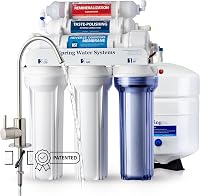
The iSpring RCC7-BN is a 5-stage under-sink system with reverse osmosis, activated carbon, and carbon block filtration. Its specifications include a 75-gallon capacity, a tank, a 3.4 L per minute maximum flow rate, and no power requirement.
iSpring says the RCC7-BN reduces up to 99% of more than 1,000 contaminants, including fluoride, lead, arsenic, calcium, and sodium. The system is NSF/ANSI 58 certified, has a 100% lead-free faucet, and includes housings, filters, tubing, a faucet, and a mounting bracket.
It has a transparent first-stage housing for visual inspection and push-to-connect fittings. The unit measures 23.62 x 15.75 x 11.81 inches and weighs 27.5 lb, so cabinet space matters.
Read more about do reverse osmosis systems remove fluoride and do reverse osmosis systems remove nitrates. If bacteria is your main concern, see does reverse osmosis remove bacteria, because membrane filtration and disinfection are not the same thing.
Does reverse osmosis water waste water?
Many reverse osmosis systems send some water to the drain while separating treated water from concentrated contaminants. The amount depends on the system design, water pressure, membrane condition, temperature, and source-water quality.
A tank-based system may also take time to refill after repeated use. That trade-off can be reasonable when your priority is reducing dissolved contaminants at one drinking-water faucet.
Check the system instructions for drain routing and operating limits. For a more detailed explanation, read do reverse osmosis systems waste water.
How is reverse osmosis water different from distilled water?
Reverse osmosis and distillation both reduce many dissolved substances, but they use different processes. RO uses pressure and a membrane, while distillation heats water and condenses the vapor.
Taste, energy use, maintenance, and the contaminants reduced can differ. The right choice depends on your source water, available space, desired output, and willingness to maintain the equipment.
Compare the two approaches in reverse osmosis vs distilled water.
Is reverse osmosis water alkaline?
Standard reverse osmosis water is not automatically alkaline. Its pH depends on the source water, membrane performance, storage, and any minerals or treatment added afterward.
Bottled alkaline water may use reverse osmosis as one step, then add electrolytes or use ionization to change the taste and pH. That is different from a basic under-sink RO system that sends water through a membrane and final carbon filter.
The Essentia Ionized Alkaline Water 24-pack contains twenty-four 20 oz bottles. Essentia describes it as 99.9% pure, with a pH of 9.5 or higher, microfiltration and reverse osmosis purification, added electrolytes, and an ionization process.
Choose this format if you want portable bottles instead of installing an under-sink system. The package contains 480 fluid ounces, so it suits planned storage and daily carry more than a fixed kitchen faucet.
The Essentia Ionized Alkaline Water 12 x 1L uses the same stated 9.5 or higher pH and 99.9% purity, with microfiltration, reverse osmosis, and added electrolytes. Its larger bottles provide 405.6 fluid ounces in the pack.
Both Essentia products describe a clean, smooth taste after ionization. The 20 oz format is easier to carry, while the 1 L format means fewer bottles for a larger serving.
For the pH question in more detail, read what is the pH of reverse osmosis water. You can also compare alkaline vs reverse osmosis water before choosing between treated water types.
Does reverse osmosis remove minerals?
Reverse osmosis can reduce dissolved minerals, including minerals that contribute to total dissolved solids. That can change the taste of water, especially if your source water has a high mineral content.
The iSpring RCC7-BN is described as reducing TDS by 80% to 90% and reducing hard-water minerals that can cause scale buildup. Actual results depend on source-water conditions and filter maintenance.
Read does reverse osmosis remove minerals if mineral reduction is central to your decision. If you prefer a different taste, compare systems with a post-treatment stage or consider bottled water that adds electrolytes.
Is reverse osmosis water bad for you?
Reverse osmosis water is not automatically bad for you, but the system must match the source water and be maintained. Replace filters on schedule, flush new filters as instructed, and keep the faucet and storage components clean.
Do not treat a general contaminant-reduction claim as proof that every contaminant has been removed. Check the system’s certification and performance information for the substances you care about.
Read is reverse osmosis water bad for you for the main trade-offs, including taste, mineral reduction, maintenance, and wastewater.
Which reverse osmosis water option fits you?
Choose an under-sink RO system if you want treated water from a dedicated kitchen faucet. The iSpring RCC7-BN suits readers who have cabinet space, want a 5-stage system, and do not want a power connection.
Choose Essentia 20 oz bottles if portability matters most. Choose the Essentia 1 L pack if you prefer larger bottles for home, work, or shared use.
The key decision is not just what reverse osmosis water is. Match the treatment method to your source water, the contaminants you want to reduce, the space you have, and how much maintenance you are willing to handle.
Frequently asked questions
What is reverse osmosis water?
Reverse osmosis water has passed through a semipermeable membrane that reduces many dissolved contaminants. Most home systems use several stages, such as sediment filtration, activated carbon, the RO membrane, and a final carbon filter.
The result is water with fewer dissolved solids than the original supply.
Is reverse osmosis water safe to drink?
Reverse osmosis water can be suitable for drinking when the system is appropriate for the source water and maintained as directed. Check the system's certification, replace filters on schedule, and follow local water guidance.
RO filtration does not remove every possible contaminant in every installation.
Does reverse osmosis remove minerals?
Yes, reverse osmosis can reduce dissolved minerals along with other dissolved solids. The amount removed depends on the source water, membrane, system condition, and operating conditions.
If mineral content matters to you, check the system specifications and consider whether a post-treatment stage suits your taste.
What is the pH of reverse osmosis water?
The pH of reverse osmosis water varies with the source water, membrane performance, storage, and any post-treatment. It is not fixed at one number.
Water that passes through an alkaline treatment stage can have a different pH from water served directly after standard RO filtration.