Do Reverse Osmosis Systems Waste Water?
Yes, most standard reverse osmosis systems send some water to the drain as reject water. The amount varies by design, pressure, and temperature, so the waste ratio matters more than the general idea.
On this page (11 sections)
- How does a reverse osmosis membrane make reject water?
- Why do waste ratios differ so much between systems?
- Do reverse osmosis systems waste water on every tank fill?
- Can you reuse reject water instead of sending it to drain?
- Which design features lower reverse osmosis water waste?
- How does source water quality change the waste amount?
- How do you compare efficiency when you shop?
- Which products fit homes that care about waste?
- What should you check on contaminants before you buy?
- How can you lower waste after installation?
- Should you worry about reverse osmosis water waste or choose another filter?
Yes, most standard reverse osmosis systems send some water to the drain as reject water. The waste is part of how the membrane works, and the amount depends on pressure, temperature, and design.
If you are comparing a drinking water filter for your kitchen, compare efficiency the same way you compare capacity or stages. Waste alone does not make reverse osmosis a poor choice.
How does a reverse osmosis membrane make reject water?
A reverse osmosis membrane makes reject water because it needs constant flow across its surface. Clean water passes through in one direction, while concentrated water flows away in another.
That second stream is often called reject, concentrate, or wastewater. Pressure pushes source water against the membrane, and the part that does not pass through goes to drain.
This differs from a carbon filter, which traps material in media and needs no drain line. For background, see what is reverse osmosis water.
The reject stream is not sewage. It is source water with more minerals and dissolved solids held back by the membrane.
Why do waste ratios differ so much between systems?
Waste ratios differ because brands use different membranes, restrictors, pumps, and tank setups. A tighter flow restrictor sends less water to drain, but can foul the membrane faster.
Input pressure changes the ratio at home. Low pressure can mean less purified water and more reject water than stated.
Cold water passes through the membrane more slowly. In winter, the same system can produce less clean water and send a larger share to drain.
Filter condition also matters. Loaded pre-filters reduce flow, and regular changes keep the ratio closer to what was intended.
What does a 3 to 1 ratio actually mean?
A 3 to 1 ratio usually means 3 parts of water go to drain for every 1 part of purified water produced. A 1 to 1 ratio aims for equal parts.
Those numbers are often stated under lab conditions your home may not match. If a seller gives a ratio without pressure and temperature, treat it as a rough guide.
You can test it at home with two containers and a timer. Fill a measured clean container at the faucet while collecting the drain stream in another measured container for the same time.
Do reverse osmosis systems waste water on every tank fill?
Most tank systems waste water each fill cycle. Reject water flows to drain until the tank is full and the shutoff valve stops flow.
That feels wasteful if you drink only a glass or two a day. A large tank tops up after small uses, and each top-up sends fresh reject water to drain.
Tankless designs make water on demand and avoid all-day topping up. They still produce reject water while running, but may waste less between uses.
A permeate pump can improve tank efficiency by reducing back pressure. If you use a lot for cooking or ice, a tank is convenient.
Can you reuse reject water instead of sending it to drain?
You can reuse reject water for some tasks, but you should think about what it contains. Reject water holds concentrated minerals and dissolved solids from your source water.
Common options include watering tough plants, flushing toilets, mopping floors, or rinsing tools. Start with tough plants and watch for leaf burn or white crust on soil.
Do not use it for drinking, cooking, baby formula, or a fish tank. Salt concentration can be high.
Local rules may restrict reuse. A quick check with your water utility can save trouble.
How do you store reject water safely?
Store reject water in a clean, covered container away from drinking water. Label it clearly so no one drinks it by mistake.
Use it within a day or two, and never in a container that held chemicals. Keep it off the floor and away from pets.
For plants, pour at the base rather than on leaves to reduce salt buildup on foliage. A simple bucket under the sink works for many households.
Which design features lower reverse osmosis water waste?
Higher recovery designs lower waste by changing the balance of flows. A permeate pump, a booster pump, and a smarter restrictor can all help.
A booster pump helps homes with low pressure by raising pressure to the membrane. It can increase clean water output and improve the ratio.
A permeate pump helps tank systems by reducing back pressure from the tank. The membrane produces water more evenly and less goes to drain.
A high recovery setup can shorten membrane life if pre-filtration is poor. For most homes, a permeate pump or well-matched restrictor is simpler.
How does source water quality change the waste amount?
Source water quality changes waste because the membrane must hold back more material. Hard water, high dissolved solids, and high chlorine all make the membrane work harder.
Hard water can build calcium and magnesium on the membrane if the system is not designed for them. Without softening or different pre-filters, you may see more waste and more frequent membrane changes.
High dissolved solids also matter. The iSpring system below is listed for up to 750 ppm TDS.
Chlorine and chloramine can damage the membrane over time, so spent pre-filters let it age faster. A basic test for hardness and dissolved solids tells you more than any general waste claim.
How do you compare efficiency when you shop?
Compare efficiency by the ratio, recovery rate, and conditions behind the numbers. Ask for the waste ratio, recovery percentage, and pressure and temperature used for testing.
Recovery is another way to state the same idea. At 25 percent recovery, 1 part stays as purified water out of 4 total parts.
Look at the full system, not just the membrane. Tank size, pump type, faucet design, and stages affect daily use.
Our guide to What Is a Water Dispenser System? The Quick Version can help place an under-sink system among wider options.
Which products fit homes that care about waste?
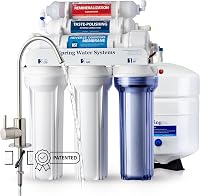
An under-sink system is the common way to get reverse osmosis water at a kitchen faucet. The iSpring RCC7-BN is a 5-stage under-sink system with a 75 gallon per day rating and a brushed nickel faucet.
The system uses 3 pre-filters, an RO membrane, and a fine GAC final filter. The pre-filters are a PP sediment filter, a GAC carbon filter, and a carbon block filter.
iSpring says the membrane reduces contaminants down to 0.0001 microns and removes up to 99 percent of over 1,000 contaminants, including PFAS, chlorine, fluoride, lead, and arsenic. It also says TDS is reduced by 80 to 90 percent.
It needs no power and fits under most kitchen sinks. It measures 23.62 by 15.75 by 11.81 inches and weighs 27.5 pounds.
For waste, this tank style design sends reject water to drain each fill cycle. Some buyers prefer bottled water, but the Essentia options below are not home filtration systems.
Essentia says this water is purified with microfiltration and reverse osmosis and is 99.9 percent pure. It is then infused with electrolytes and ionized to a pH of 9.5 or higher, in a case of 24 bottles at 20 fluid ounces each.
That format suits travel, gyms, and offices where a home system cannot follow. It avoids drain waste at home, since purification happens at the source, with packaging and ongoing cost as the trade-off.
This pack holds 12 bottles at 1 litre each, for 405.6 fluid ounces total. Essentia says it is purified with microfiltration and reverse osmosis to 99.9 percent purity, then ionized to a pH of 9.5 or higher.
The larger bottle suits desk use, long drives, and sharing. Choose the size that matches how you drink.
Neither bottled option solves under-sink waste, since neither is installed at home. Home systems trade drain water for tap convenience, while bottled water trades packaging for portability.
What should you check on contaminants before you buy?
Waste is only one part of the decision. You should also check what the system removes and how that fits your water.
If bacteria concern you, read does reverse osmosis remove bacteria before you choose. Reverse osmosis can reduce many microorganisms, but safety depends on the full system and its condition.
If fluoride is your main concern, see do reverse osmosis systems remove fluoride. The iSpring system lists fluoride among contaminants it reduces, up to 99 percent by maker claim.
If nitrates concern you, check do reverse osmosis systems remove nitrates. The iSpring RCC7-BN is NSF/ANSI 58 certified, and iSpring says TDS reduction is 80 to 90 percent.
How can you lower waste after installation?
You can lower waste after installation with simple habits. Keep pressure in range, change pre-filters on schedule, and fix leaks fast.
Check pressure with a gauge if you can. A regulating valve can help if pressure runs high.
Change sediment and carbon pre-filters on time. A clogged pre-filter forces the system to work harder, and the iSpring transparent housing makes buildup easier to see.
Keep the drain line clear and connections tight. A blocked drain line can raise back pressure and change the ratio.
If you reuse reject water, keep the container clean and labeled. For refrigerator use, check our guide to the best reverse osmosis system for refrigerator.
For a specific brand, see the best apec reverse osmosis system guide.
Should you worry about reverse osmosis water waste or choose another filter?
Weigh waste against what you need from filtration. Reverse osmosis wastes water, but it also removes a wide range of dissolved contaminants that carbon filters do not.
Choose reverse osmosis if your test shows dissolved solids, fluoride, nitrates, or metals you want to reduce. Choose a carbon filter if taste and chlorine are your main concerns and water is otherwise sound.
For most homes, a standard tank system is a sound start. The iSpring RCC7-BN fits with 5 stages, 75 GPD, and NSF/ANSI 58 certification.
If waste is your top concern, compare recovery rates before you buy.
Frequently asked questions
Do reverse osmosis systems waste water?
Most do, because the membrane needs a flow of concentrate to carry away dissolved solids and keep working. The exact amount depends on the restrictor, input pressure, water temperature, and how often filters are changed.
Compare the stated waste ratio and recovery rate before you buy.
How much water does a reverse osmosis system waste?
Traditional systems may send several litres to drain for each litre of purified water, while higher recovery designs send less. The ratio changes with pressure and temperature, so a single number from a box may not match your home.
Check the manual for the stated ratio at normal household conditions.
Can you reuse reverse osmosis reject water?
Many households reuse reject water for plants or flushing, after checking what was in the source water. It is not drinking water, and it can carry concentrated salts or contaminants.
Use it only where local rules allow and avoid it on sensitive plants.
Does a storage tank change reverse osmosis waste?
A tank does not stop reject water, but it affects how the system cycles and fills. Higher recovery and permeate pump designs can reduce waste, while low pressure can push more water to drain.
Tank size and membrane condition also affect how often the system runs.