Does Reverse Osmosis Remove Bacteria?
Yes, a properly maintained reverse osmosis membrane can reduce bacteria by physical size exclusion. It is not a disinfectant, so filter condition, seal integrity, and clean storage matter as much as the membrane itself.
On this page (11 sections)
- Does reverse osmosis remove bacteria through the membrane pores?
- How does a 5-stage RO system reduce bacteria before the membrane?
- Can reverse osmosis remove bacteria from well water?
- Why doesn't RO kill bacteria like UV or boiling?
- What limits bacterial reduction in a home RO system?
- How do you maintain an RO system to keep reducing bacteria?
- Does RO remove bacteria, or only reduce them?
- How does RO compare with other filters for bacteria?
- What should you do if you suspect bacteria in your water?
- Can bottled RO water help if you do not want a home system?
- Does reverse osmosis remove bacteria in the end?
Yes, a properly maintained reverse osmosis membrane can reduce bacteria by physical size exclusion. It does not kill bacteria, so an intact membrane, timely filter changes, and clean storage are essential.
That distinction matters for your home. If you want a drinking water filter for taste and dissolved contaminants, RO is a strong option.
If your main concern is microbiological safety, you need to think about disinfection too.
Does reverse osmosis remove bacteria through the membrane pores?
Yes, the membrane is the main barrier. Reverse osmosis pushes water under pressure against a semipermeable membrane that allows water through while holding back larger particles.
Bacteria are typically about 0.2 to 2 microns in size. Many RO membranes are rated to reduce contaminants down to 0.0001 microns, which is far smaller than a bacterium.
That size gap is why the membrane can block bacteria in principle.
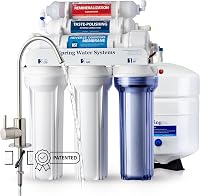
The iSpring RCC7-BN is a good example of the hardware behind that claim. It is a 5-stage under sink system with a 75 GPD membrane stage, and the maker says it reduces contaminants down to 0.0001 microns.
The claim describes the membrane barrier, not a guarantee for every installed system.
Can reverse osmosis remove bacteria if the membrane is damaged?
No, a damaged membrane cannot be trusted for bacterial reduction. Even a small tear, crack, or seal failure can let unfiltered water bypass the barrier.
That is why TDS readings matter as a warning sign. If permeate TDS rises suddenly, it can suggest membrane damage, a bad seal, or exhausted filters.
A rising TDS reading does not prove bacteria are present, but it is a reason to stop and inspect.
You should also check the O-rings, housings, and tubing for leaks. A system that looks fine on the outside can still have a failed internal seal.
How does a 5-stage RO system reduce bacteria before the membrane?
Prefiltration protects the membrane so it can keep reducing bacteria. Sediment, chlorine, and carbon fines can foul the membrane or create a layer where bacteria grow.
The iSpring RCC7-BN uses a PP sediment filter, a GAC carbon filter, and a carbon block filter before the RO stage. These remove large contaminants and protect the membrane from chlorine and chloramines, which is part of bacterial control, not just taste.
If you are learning what is reverse osmosis water, think of it as a team. Prefilters guard the membrane, the membrane does the finest separation, and the final GAC filter polishes taste.
Can reverse osmosis remove bacteria from well water?
It can reduce bacteria, but well water needs extra care. Private wells can carry bacteria, sediment, iron, and hardness that challenge a home RO system from day one.
Sediment can clog prefilters and iron can foul parts. Hardness can scale the membrane, so performance may fall before bacteria reduction is tested.
For well water, many buyers look at systems described for that use, such as the best reverse osmosis systems for well water. Such a system may need heavier prefiltration, a softener, or UV disinfection before or after RO.
Do not rely on RO alone if a well test shows coliform or E. coli. Microbiological safety usually calls for testing and a dedicated disinfection method.
Why doesn't RO kill bacteria like UV or boiling?
RO removes; it does not disinfect. That means bacteria stopped by the membrane are still alive on the reject side until they are flushed away.
UV light, by contrast, inactivates bacteria and viruses by damaging their DNA. Boiling kills many bacteria and viruses with heat.
RO does neither. It separates contaminants by size and pressure.
This difference matters after the membrane. If the storage tank, faucet, or tubing is dirty, bacteria can grow in the treated water.
The membrane can reduce what enters, but it cannot sterilize what sits downstream.
That is why clean storage and regular sanitization of the system parts matter. A good drinking water filter setup still needs maintenance.
What limits bacterial reduction in a home RO system?
The main limits are membrane condition, seals, pressure, and downstream cleanliness. A system can fail at any of those points even if the membrane is new.
Low pressure can reduce rejection, and high source TDS can make low permeate TDS harder to achieve. The iSpring RCC7-BN lists a supported maximum of 750 ppm, and prolonged use without changing filters can raise TDS.
Storage is another limit. A warm tank, a rarely flushed faucet, or damp tubing can allow regrowth.
Fresh water that passes a good membrane can still pick up bacteria after treatment.
How do you maintain an RO system to keep reducing bacteria?
Maintenance is not optional if bacteria are your concern. Change filters on schedule, inspect housings, and keep the treated side clean.
Start with the prefilter schedule. The iSpring RCC7-BN has a transparent first-stage housing, which helps you check sediment buildup visually.
That visual check is useful because sediment loading varies by home.
Replace the RO membrane when flow drops, waste water rises, or TDS climbs. Do not wait for taste to turn flat.
Bacteria and other contaminants do not always change taste.
Sanitize the storage tank and tubing according to the maker instructions. Flush the system after a filter change or a long idle period.
Keep hands and tools clean when you open housings.
Who should choose the iSpring RCC7-BN for bacterial reduction?
Choose the iSpring RCC7-BN if you want a 5-stage under sink RO system with a 75 GPD membrane and a brushed nickel faucet. It fits under most kitchen sinks, needs no power, and includes housings, filters, parts, tubing, a faucet, and a mounting bracket.
The system uses reverse osmosis, activated carbon, and carbon block purification. The maker says it is NSF/ANSI 58 certified and reduces TDS by 80 to 90 percent.
RO can also reduce minerals.
Those details support consistent contaminant reduction when filters are maintained.
Skip it if your source water exceeds the supported TDS limit or if you need a countertop unit. Measure the cabinet space first, since the system measures 23.62 by 15.75 by 11.81 inches.
Does RO remove bacteria, or only reduce them?
It reduces them; it does not guarantee removal of every organism. A sound membrane can block bacteria by size, but home systems are not sterile devices.
That wording matters for health decisions. If you have a compromised immune system, a newborn, or a known contamination event, talk to a water professional and consider a validated disinfection step.
RO alone is not a medical device.
For general drinking water, an intact RO system is one layer of protection. Prefiltration, membrane integrity, clean storage, and timely changes form the rest of that layer.
Compare that with dissolved chemicals. Many buyers also ask do reverse osmosis systems remove nitrates or do reverse osmosis systems remove fluoride.
Those questions involve dissolved ions, not living organisms.
How does RO compare with other filters for bacteria?
RO gives finer separation than most carbon filters, but it still needs maintenance. A basic carbon pitcher or faucet filter mainly improves taste and reduces chlorine and some chemicals.
Do not assume it reduces bacteria unless the maker validates that claim for the exact model. Certification and test data matter more than marketing language.
UV takes a different approach. It inactivates organisms without chemicals, but needs clear water and power.
RO needs pressure and produces reject water, so some homes combine both.
If form factor matters, some buyers also check a best reverse osmosis system for refrigerator. The same membrane limits apply there.
What should you do if you suspect bacteria in your water?
Stop drinking from the suspect source and test or disinfect it. Do not taste the water to judge safety, and do not boil water you suspect has chemical contamination without guidance.
If your RO system has a leak, a cracked housing, or a sudden TDS jump, shut it down. Replace the failed part and sanitize the treated side before returning to use.
For municipal water, contact your utility or health department. For a private well, get a lab test for coliform and E. coli.
That test tells you more than any product claim.
You can also reduce reliance on a single barrier. A system made in the USA, such as one described in reverse osmosis system made in usa, may suit buyers who want domestic support, though it does not remove the need for maintenance.
Can bottled RO water help if you do not want a home system?
Bottled water purified with RO can be a practical backup, but it is not a home filtration option. Essentia says its water is purified with microfiltration and reverse osmosis technology and is 99.9 percent pure.
That case suits travel, emergency backup, or households that want bottled water without installing a system. It does not sanitize your tap water or fix a well problem.
It simply supplies treated water in sealed bottles.
The 1 L bottles suit a desk, gym bag, or car better than small single-serve bottles. Both packs add plastic waste and ongoing cost, so they work best as a supplement or short-term option rather than a permanent replacement for a home system.
Does reverse osmosis remove bacteria in the end?
Yes, an intact RO membrane can reduce bacteria, but it does not make water sterile. The membrane pores are far smaller than bacteria, which is the core reason the barrier works.
Your results depend on the full system. Prefilters protect the membrane, seals stop bypass, and clean storage prevents regrowth.
Skip maintenance, and bacterial reduction can fall fast.
Pick a validated system, change filters on schedule, and add disinfection when your source water or health needs call for it. That is the safest way to answer whether reverse osmosis systems remove bacteria for your home.
Frequently asked questions
Does reverse osmosis remove bacteria?
A sound RO membrane can physically block bacteria because bacteria are far larger than the membrane pores. Performance depends on an intact membrane, good prefiltration, correct pressure, and clean downstream parts.
If any part fails, bacteria can pass or regrow.
Can reverse osmosis remove bacteria from well water?
RO can reduce bacteria in well water, but well water often needs prefiltration and a separate disinfection step for microbiological safety. Sediment, iron, and hardness can foul the membrane first.
Test the source water and follow local rules for private wells.
Does an RO system make water sterile?
No. Sterile means no living organisms at all, and a home RO system should not be sold as a sterilizer.
A membrane reduces many organisms, but leaks, bypass, and storage can reintroduce them.
Use disinfection when sterility is the goal.
How often should RO filters be changed to control bacteria?
Change prefiltration and postfiltration on the maker schedule, and replace the membrane when flow drops or TDS rises. A clogged prefilter lets sediment reach the membrane and can create a film where bacteria grow.
Keep the schedule even if taste still seems fine.