Does Reverse Osmosis Remove Minerals?
Yes, reverse osmosis removes most dissolved minerals, including calcium, magnesium, sodium, and potassium. That is why RO water often tastes flat and has very low TDS, and why some systems add minerals back after the membrane.
On this page (10 sections)
- What minerals does reverse osmosis remove?
- Does reverse osmosis remove minerals from tap water completely?
- Does reverse osmosis remove good minerals too?
- What happens to taste when minerals are removed?
- How does reverse osmosis compare with other filters for minerals?
- What is TDS and how does it relate to mineral removal?
- Who should choose an RO system if minerals are removed?
- Should you add minerals back after reverse osmosis?
- Does reverse osmosis remove minerals in a way that matters for cooking?
- Final choice: does reverse osmosis remove minerals, and should you care?
Yes, reverse osmosis removes most dissolved minerals from drinking water. Calcium, magnesium, sodium, and potassium are greatly reduced, so RO water is low in TDS and often tastes clean but flat.
The membrane blocks dissolved substances that are larger than water molecules. Minerals in tap water are dissolved as ions, and RO rejects them along with many other contaminants.
This guide explains what remains, what goes, and how that trade-off should shape your choice of drinking water filter. We compared product specs and maker claims for the systems below.
We do not test products hands on.
What minerals does reverse osmosis remove?
Reverse osmosis removes most calcium, magnesium, sodium, potassium, and other dissolved salts. It also reduces bicarbonate, sulfates, and chlorides that make up much of tap water TDS.
Minerals in tap water are dissolved, not solid flakes. A carbon filter improves taste and removes chlorine, but the RO membrane does most dissolved mineral removal.
The iSpring RCC7-BN reduces TDS by 80 to 90 percent and reduces hard water minerals that cause scale. Not every mineral is removed at the same rate.
Our guide to what is reverse osmosis water covers the full process in plain terms.
Does reverse osmosis remove minerals from tap water completely?
No, reverse osmosis does not remove every mineral completely. It removes a large share, but trace amounts can still pass through.
The final level depends on source water and system condition. High TDS water starts with more dissolved material, so it may finish higher than low TDS water after the same membrane.
Pressure, temperature, membrane age, and filter changes also matter.
Read brand claims with care. Up to 99 percent removal for certain contaminants does not mean every mineral falls by 99 percent.
A TDS meter shows if total dissolved solids are low, but it does not identify each mineral. A regular reverse osmosis filter change helps keep removal steady.
Does reverse osmosis remove good minerals too?
Yes, reverse osmosis removes minerals that many people consider beneficial, not only contaminants. Calcium and magnesium contribute to water hardness, taste, and mouthfeel.
Some people like the crisp taste of mineral water and find RO water thin or flat. Others prefer the clean taste of RO water for drinking, tea, coffee, and cooking.
Food provides most of the minerals people need, and water is rarely the only source. If you have a health condition or a specific diet plan, talk with a qualified professional about your total intake.
If you want RO purification with mineral taste, look for a remineralization stage. Essentia water is made with microfiltration and reverse osmosis, then electrolytes are added for taste.
What happens to taste when minerals are removed?
Water with fewer minerals often tastes smoother, cleaner, and less full. Some people miss the body that calcium and magnesium give tap water.
Hard water can taste chalky and leave scale in kettles. Very soft RO water can taste light and sometimes slightly acidic in flavor, even though the pH change is usually small.
Carbon filters shape taste by removing chlorine and odor compounds. The iSpring RCC7-BN uses a fine GAC final filter to polish water after the membrane.
Low mineral water can change coffee and tea extraction. Some flavors come through more clearly, while others may taste flat.
You can adjust with a remineralization cartridge.
How does reverse osmosis compare with other filters for minerals?
RO removes far more minerals than carbon filters, sediment filters, or most pitchers. Those filters improve taste but leave most dissolved minerals in place.
A sediment filter catches sand and rust. A carbon filter reduces chlorine and odor, but neither strips dissolved calcium or magnesium.
UV light targets bacteria and viruses. It does not remove minerals, lead, fluoride, or nitrates.
Water softeners swap calcium and magnesium for sodium or potassium to cut scale. They do not purify water like RO.
Our post on does reverse osmosis remove bacteria covers microbes. Separate posts cover do reverse osmosis systems remove fluoride and do reverse osmosis systems remove nitrates.
What is TDS and how does it relate to mineral removal?
TDS means total dissolved solids, and it is a rough measure of dissolved minerals and salts in water. Lower TDS after RO usually means more minerals have been removed.
TDS is not a safety test by itself. It does not tell you which substances are present, and a low reading does not replace a water test when you need specifics.
Source water TDS sets the starting point. A home with 800 ppm source water may end with a higher TDS after RO than a home with 200 ppm source water, even with a working system.
The iSpring RCC7-BN lists a supported water TDS level up to 750 ppm. Check your water report or test your tap water before you choose a system.
Who should choose an RO system if minerals are removed?
Choose RO if you want low TDS, low scale, and broad contaminant reduction at one tap. It suits hard water, high TDS, or concerns about lead, fluoride, nitrates, or PFAS.
It also suits people who dislike chlorine taste or hard water residue in kettles. RO water can make ice clearer and tea taste cleaner.
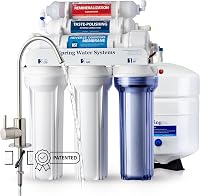
Most RO systems need under sink space, a water line, and a drain line. The iSpring RCC7-BN is a 5-stage under sink system with 75 GPD capacity, a tank, and no power needed.
Its brushed nickel faucet is top-mounted for easy installation. Measure your sink deck before you order.
iSpring RCC7-BN for homes that want strong mineral removal
The iSpring RCC7-BN fits readers who want RO to remove minerals and many other contaminants. Its 5 stages include PP sediment, GAC carbon, and carbon block pre-filters, the RO membrane, and a fine GAC final filter.
The pre-filters protect the membrane from large particles and chemicals like chlorine and chloramines.
iSpring says the RO membrane removes contaminants down to 0.0001 microns. It also says the system is NSF/ANSI 58 certified and reduces TDS by 80 to 90 percent.
Skip this system if you want minerals added back, lack under sink space, or prefer a countertop unit. Also check the 750 ppm supported TDS level against your source water.
Should you add minerals back after reverse osmosis?
Add minerals back only if you miss the taste or want a specific mineral profile. Many people are fine with plain RO water, while others prefer a light mineral taste for drinking and cooking.
Remineralization cartridges add calcium, magnesium, or a mineral blend after the membrane. They can improve taste and raise TDS a little, but they add a filter to replace, so check cost and interval.
Mineral drops offer more control in a pitcher or glass. Too much can make water taste salty or chalky, so add them with care.
Essentia starts with water purified by microfiltration and reverse osmosis to 99.9 percent purity, then adds electrolytes and ionizes it to pH 9.5 or higher.
Essentia 24-pack for a ready to drink bottled option
The Essentia 24 x 20 oz case suits people who want RO-purified water without installing a system. Each bottle is 20 fl oz for desks, gym bags, and cars, and the package weighs 31.37 lb, so storage space matters.
Essentia says microfiltration and reverse osmosis make the water 99.9 percent pure. It then adds a proprietary electrolyte blend for taste and uses ionization to reach pH 9.5 or higher.
Skip this case if you want low cost per gallon or want to reduce single-use plastic. Bottled water is convenient, but a home RO system spreads the cost over time.
Essentia 12-pack of 1L bottles for larger single servings
The Essentia 12 x 1L pack suits readers who prefer larger bottles. Each bottle holds 1 liter, which can cover a workout or a long work block with fewer refills.
The pack weighs 26.48 lb, so a shelf or counter spot should hold it safely.
The water is purified with microfiltration and reverse osmosis to 99.9 percent purity. Essentia adds electrolytes for taste and uses ionization to deliver pH 9.5 or higher.
The 1L size makes this pack a better fit for active use than for a small purse or cup holder.
Skip this pack if you want small bottles, low bulk weight, or a home system for daily drinking. Bottled water solves convenience.
It does not solve mineral removal at your tap.
Does reverse osmosis remove minerals in a way that matters for cooking?
Yes, low mineral water can change cooking, brewing, and ice. It can make flavors cleaner, but some foods and drinks may taste less full.
Tea and coffee show the effect well. Minerals help extract flavor, so very low mineral water can make tea bright and coffee thin or sour.
A remineralization step or a blend of RO and tap water can help tune the result.
Cooking rice, pasta, and vegetables can also shift. Hard water leaves deposits, while very soft water can make some foods taste flat.
Low TDS water often makes clearer ice. For baby formula, follow directions exactly and do not add minerals or drops unless the maker and your pediatrician advise it.
Final choice: does reverse osmosis remove minerals, and should you care?
Yes, reverse osmosis removes minerals, and that removal is often the point. It lowers TDS, reduces scale, and cuts many dissolved contaminants, but it also removes calcium and magnesium that affect taste.
Pick RO if your water is hard, high in TDS, or a concern for lead, fluoride, nitrates, or other dissolved contaminants. Pick a remineralizing RO system if you want purification with a more mineral taste.
Pick a carbon filter if you mainly want better taste and want to keep minerals.
For a home system, the iSpring RCC7-BN is the strongest fit in this guide. It is a 5-stage under sink RO system with 75 GPD capacity, a tank, and a brushed nickel faucet.
For bottled convenience, both Essentia packs start with reverse osmosis purification, then add electrolytes for taste. Start with your source water, test TDS, and read your local water report.
Frequently asked questions
Does reverse osmosis remove all minerals?
No, it removes most dissolved minerals but rarely every trace. The amount left depends on the source water, the membrane, pressure, and how often filters are changed.
A TDS reading after the system tells you more than a general claim.
Are the minerals removed by reverse osmosis harmful to lose?
For most people who eat a varied diet, drinking water is not the main source of minerals. If you prefer mineral taste or use RO water for formula, cooking, or coffee, a remineralization step or a different filter may suit you better.
How do I add minerals back after reverse osmosis?
You can use a remineralization cartridge, a post filter, or mineral drops made for drinking water. Check what the cartridge adds and how often it needs replacement, and follow the maker steps for installation and care.
What minerals does reverse osmosis remove?
It removes most calcium, magnesium, sodium, potassium, bicarbonate, sulfate, chloride, and fluoride from dissolved form. Carbon pre-filters and post-filters handle taste and chlorine, while the RO membrane does most of the dissolved mineral removal.