Do PUR Water Filters Remove Lead?
Some PUR filters may reduce lead, but you must check the exact cartridge model and certification. A PUR filter that reduces chlorine or other metals is not automatically certified for lead reduction.
On this page (6 sections)
- How do you check a PUR water filter lead claim?
- Which PUR cartridge should you use for lead?
- Can another pitcher replace a PUR filter for lead?
- What should you do if your water may contain lead?
- How does lead reduction compare with other PUR filter claims?
- How should you choose a PUR water filter for lead?
A PUR water filter may reduce lead only when the exact cartridge is certified for lead reduction. The PUR name alone does not prove that every pitcher, dispenser, or replacement filter removes lead.
Lead can enter drinking water through service lines, plumbing, faucets, or solder. Clear water can still contain it, so taste and appearance cannot confirm that your water is safe.
The US Environmental Protection Agency explains more in its guidance on lead in drinking water.
How do you check a PUR water filter lead claim?
Check the cartridge model and its contaminant list first. Then confirm that the claim is tied to a recognized certification for that specific cartridge and system.
Use this process:
- Find the model number printed on the cartridge package or filter.
- Confirm that the cartridge fits your exact PUR pitcher or dispenser.
- Read the contaminant reduction list for the cartridge.
- Look specifically for lead, not only mercury, copper, zinc, or chlorine.
- Check whether the certification applies to the complete filter system.
- Replace the cartridge on schedule and follow the setup instructions.
The difference between contaminants matters. A filter can reduce several metals without having a lead-reduction claim.
The words “2-in-1 filtration” or “better-tasting water” also do not guarantee lead removal.
For broader filter choices, start with this drinking water filter buying guide. It explains the differences between pitchers, dispensers, under-sink systems, and other point-of-use options.
Does a PUR water filter remove lead if it reduces mercury?
No, mercury reduction does not prove lead reduction. Both are metals, but certification claims are contaminant-specific.
The PUR 30-Cup Countertop Water Filter Dispenser identifies reduction of chlorine, mercury, copper, zinc, and other chemical and physical substances. The supplied product information does not identify lead reduction for this dispenser.
Its 7.09-liter capacity suits households that want filtered water stored in the refrigerator. The dispenser has a pull-down spout, a carrying handle, a countertop installation type, and a dishwasher-safe design.
Its included Genuine PUR filter is certified for up to 40 gallons or 2 months of regular use.
Choose it for capacity and refrigerator storage when taste and general contaminant reduction are your main goals. If lead is the reason you're shopping, confirm the replacement cartridge's exact certification before ordering.
Which PUR cartridge should you use for lead?
Use only a cartridge whose own documentation names lead reduction for your system. A replacement filter can fit physically while still lacking the specific claim you need.
The PUR Water Filters for Pitcher & Dispenser 4-Pack is made for PUR pitcher and dispenser systems. Its compatible models include PUR CR-1100C and PUR DS-1800Z, and its cartridge is designed for up to 40 gallons or 2 months of typical use.
The 4-pack helps plan filter changes across 8 months when each cartridge lasts 2 months. PUR identifies chlorine, mercury, copper, and zinc reduction for this filter, along with reduction of other chemical and physical substances.
The information does not identify lead reduction.
That distinction is the key buying point. If your water test shows lead, do not select this cartridge based only on its fit, pack size, or other metal-reduction claims.
Match the cartridge model to a current certification and lead-performance statement.
Can another pitcher replace a PUR filter for lead?
A different pitcher is not automatically a lead filter either. Compare its exact cartridge claim, certification, and replacement instructions instead of choosing by brand or container style.
The Waterdrop PT-07B Water Filter Pitcher is a 2.4-liter countertop pitcher with a 200-gallon or 3-month filter life. Its stated filtration claims include PFOA/PFOS, odor, iron, mercury, copper, and other metal ions, but the information does not identify lead reduction.
This pitcher has a 10 x 5 x 10.1-inch body, a hands-free lid, an LED filter indicator, and a maximum flow rate of 0.5 gpm. It uses genuine Waterdrop replacement filters for the PT-07 model, and its materials are described as lead-free and food-grade.
The phrase “lead-free material” describes the pitcher materials. It does not mean the filter removes lead from tap water.
Waterdrop also states that this system does not lower TDS, which is a separate issue from lead reduction.
What should you do if your water may contain lead?
Test the water and reduce exposure while you verify the filter. A filter is one part of the response, especially in an older home or a property with unknown plumbing.
Use cold tap water for drinking and cooking. Let the faucet run until the water feels cold after it has been sitting, but follow local guidance if your water provider gives different instructions.
Do not use hot tap water to prepare drinks or food. Heating water can increase concentration when water evaporates, and boiling does not remove lead.
If a test finds lead, contact your water utility or local health department for advice. They can help identify whether the source is household plumbing, a service line, or another part of the water system.
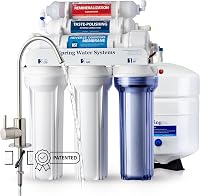
For a permanent treatment choice, compare a certified under-sink system with a pitcher. An APEC tankless reverse osmosis system may suit readers who want a dedicated under-sink setup, but you still need to check its exact certification and maintenance requirements.
How does lead reduction compare with other PUR filter claims?
Lead reduction is separate from chlorine, microplastic, and PFAS reduction. Each claim needs its own evidence for the exact filter model.
PUR's data for the products above names chlorine, mercury, copper, zinc, and other chemical and physical substances. It does not give a general promise that every PUR cartridge removes lead, microbes, microplastics, or PFAS.
Read our guide to do PUR water filters remove chlorine if taste and odor are your main concern. You can also compare do PUR water filters remove microplastics and do PUR water filters remove PFAS for those separate questions.
A refrigerator water filter vs Brita comparison can help if your refrigerator already has filtered water. If bacteria is your concern, read about a water filter pitcher that removes bacteria, because lead reduction and microbial treatment are different tasks.
How should you choose a PUR water filter for lead?
Choose a specific cartridge with a current lead-reduction certification, then use it in the system it was tested with. Replace it on schedule, keep the filter seated correctly, and do not assume a compatible off-brand cartridge has the same performance.
The PUR 30-Cup Countertop Water Filter Dispenser fits readers who want 7.09 liters of refrigerator-stored water. The Waterdrop PT-07B fits readers who prefer a 2.4-liter pitcher with a 3-month filter indicator.
The PUR 4-Pack fits compatible PUR systems when regular replacement is the priority.
For lead concerns, the decision rule is simple: choose the cartridge with the clearest model-specific lead claim, not the largest capacity or longest filter life. If the claim is missing, test the water and choose a certified alternative.
Frequently asked questions
Do PUR water filters remove lead?
Some PUR cartridges are made for lead reduction, but not every PUR filter has the same certified claims. Check the exact cartridge model, its certification, and the contaminant list before relying on it for lead.
A filter that reduces chlorine, mercury, copper, or zinc does not automatically reduce lead.
Does the PUR 30-Cup dispenser remove lead?
The PUR 30-Cup Countertop Water Filter Dispenser data identifies chlorine, mercury, copper, zinc, and other chemical and physical substances, but it does not identify lead reduction. Check the current cartridge documentation for your exact model before choosing it for a known lead concern.
How do I know if a PUR filter is certified for lead?
Find the exact cartridge model and look for lead reduction in its performance claims or certification record. Match the cartridge to the pitcher or dispenser, then confirm the certification applies to that cartridge and not only to another PUR model or filter family.
Can a water filter remove lead from old pipes?
A certified point-of-use filter may reduce lead at the tap, but the result depends on the cartridge, installation, water flow, and replacement schedule. Test your water when lead is a concern, use cold water for drinking and cooking, and follow local health guidance.