Berkey Water Filters vs RO: Which Fits Your Home? (November 2026)
Choose reverse osmosis for under-sink filtration and choose Berkey for simple countertop use without plumbing. Your space, water source and maintenance preference decide which system fits better.
On this page (9 sections)
- Berkey water filter vs reverse osmosis: which setup is easier?
- Which system fits a small kitchen?
- How do their filtration methods differ?
- Which one is better for daily drinking water?
- What maintenance does each system need?
- Which reverse osmosis system should you choose?
- Which Berkey system should you choose?
- Is reverse osmosis water better than Berkey water?
- Final choice: Berkey water filter vs reverse osmosis
Choose reverse osmosis for under-sink filtration and choose Berkey for simple countertop use without plumbing. The right choice depends on your space, setup preference and filtration goals.
Reverse osmosis systems use several stages beneath the sink. Gravity systems sit on the counter and move water through filter elements without a plumbing connection.
This comparison covers setup, daily capacity, maintenance, contaminant information and the type of home each system suits. For broader background, start with our drinking water filter guide.
First, decide where the system will live. An under-sink unit keeps equipment out of sight, while a countertop unit needs a clear, stable place at working height.
Next, consider how water reaches the system. Reverse osmosis connects to the supply beneath the sink, while gravity filtration uses water you pour into an upper chamber by hand.
That difference shapes daily habits. A dedicated faucet suits quick glasses and cooking, while a countertop chamber suits batches that are filled, filtered and drawn as needed.
It also affects who each setup suits. Homeowners who plan to stay often accept permanent installation, while renters and office users often prefer a freestanding option with no plumbing work.
Space must be checked either way. Cabinet clearance matters for an under-sink system, and counter height and depth matter for a tall gravity system.
Maintenance should be part of the decision from the start. Reverse osmosis uses scheduled filter changes, while gravity elements need priming, cleaning and care to keep flow moving well.
Filtration claims need a closer look too. One format may list specific contaminant reductions and certification, while the other may describe broad reduction across many contaminants in different terms.
Daily capacity affects convenience for small and larger households alike. A ready supply in a chamber feels different from water dispensed on demand at a faucet through several stages.
Setup time matters as well. A countertop system can usually be placed and filled without tools, while an under-sink system needs planning, connections and checks for leaks after installation.
The right fit is rarely about one headline feature alone. It is about matching the system to the room, the water you start with and the routine you will actually follow.
 Best for certified under-sink filtration
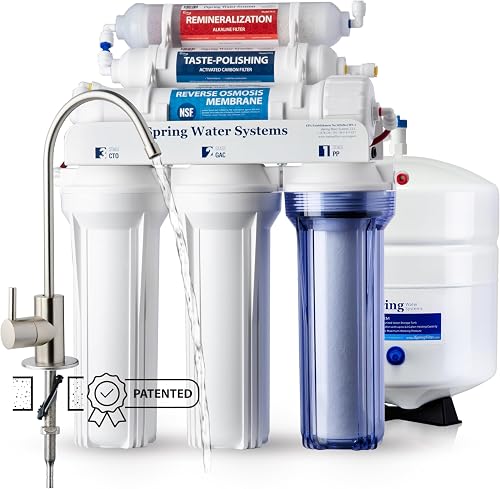
iSpring RCC7AK-BN NSF Certified
 Best for simple countertop use
Big Berkey 2.25 Gal Gravity Water Filter
Berkey water filter vs reverse osmosis: which setup is easier?
Berkey is easier to place and start, while reverse osmosis gives you a built-in under-sink water source. A Berkey needs a stable counter and room above it for filling.
Reverse osmosis needs cabinet space, a faucet connection and a more involved installation.
The Big Berkey systems use gravity-fed filtration. They don't require electricity, plumbing, tools or water pressure.
Setup involves priming the filter elements, installing them in the upper chamber and filling the chamber with tap water.
The iSpring systems are under-sink reverse osmosis units. The RCC7AK-BN uses a top-mounted fastener designed to make countertop installation easier from above, while the RCC7AK-BLK includes quick-fitting connectors and installation parts.
Measure before choosing either format. The Big Berkey systems measure about 8.5 inches in diameter and 19.25 inches tall when assembled.
The iSpring systems measure 15.5 x 16 x 18 inches and need suitable under-sink clearance.
Which system fits a small kitchen?
Choose reverse osmosis when counter space is limited, and choose Berkey when you can spare a tall countertop area. Cabinet space and counter height create different kinds of limits.
A Big Berkey is freestanding, so it doesn't occupy the cabinet beneath the sink. That can help in a rental, an office or a kitchen where permanent plumbing work isn't practical.
The trade-off is visible counter space. A 19.25-inch-tall system may sit below cabinets, but you still need room to lift the upper chamber and fill it.
Reverse osmosis keeps the main system below the counter and dispenses through a dedicated faucet. Check the cabinet opening before installation, especially if shelves or a waste bin already fill the space.
If you want to compare gravity options by size and layout, see our guide to the best gravity water filters. For a shorter countertop setup, our best countertop gravity water filter system guide offers another useful comparison.
How do their filtration methods differ?
Reverse osmosis is the clearer fit when you want a documented multi-stage system with NSF/ANSI 58 certification. Berkey is the better fit when you want gravity-fed filtration in a countertop chamber.
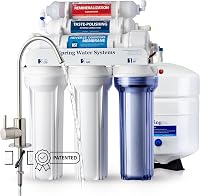
The iSpring RCC7AK-BN and RCC7AK-BLK each use 6-stage reverse osmosis filtration with an alkaline stage. The RCC7AK-BN lists NSF/ANSI 58 certification for the full system.
The RCC7AK-BLK also lists NSF/ANSI 58 certification.
The RCC7AK-BN lists reductions for TDS, PFAS, chlorine, asbestos, barium, cadmium, chromium, copper, fluoride, lead and selenium. The RCC7AK-BLK lists reductions for TDS, lead, fluoride, arsenic, PFAS, asbestos, calcium and sodium, among other contaminants.
The Big Berkey systems use Black Berkey proprietary filter media. Berkey describes the elements as designed to reduce a broad range of contaminants that can affect drinking water quality, taste and odor.
The claims are not presented in the same format, so compare the exact contaminant information that matters to you. If fluoride is your main concern, read our guide on Berkey water filter fluoride removal before deciding.
Which one is better for daily drinking water?
Choose a Big Berkey for a ready supply in a countertop chamber, or choose reverse osmosis when you prefer dispensing from a dedicated faucet. Your household drinking routine matters more than the headline filtration method.
The Big Berkey models hold 2.25 gallons. The B00CYW3EVO includes 2 Black Berkey BB9-2 elements, while the B0HHKRMJ1D includes 2 Black Berkey BB9-2 elements and a stainless steel spigot.
Both versions are designed for approximately 1-4 people. The B0HHKRMJ1D can also accommodate up to 4 Black Berkey elements to increase filtration flow rate.
The iSpring systems list a 75-gallon capacity, with a maximum flow rate of 284 liters per day for the RCC7AK-BN. Their dedicated faucets make filtered water easier to use for drinking and cooking without lifting a countertop chamber.
With a Big Berkey, daily use starts by filling the upper chamber. Water then moves by gravity through the elements into the lower chamber, where it waits for dispensing through the spigot.
That batch style suits coffee, tea, cooking and filling reusable bottles. You plan ahead a little and keep an eye on the level so filtered water is ready when you need it.
The 2.25 gallon chamber suits everyday drinking water for a small household. It is not designed as an all purpose supply for a large group or a busy shared kitchen.
Flow depends on the condition of the elements and the water level above them. Keeping elements clean and seated correctly helps water move at a steady pace.
For reverse osmosis, daily use is built around a dedicated faucet. Water passes through the stages under the sink and is dispensed when you turn the tap, without lifting a chamber.
That faucet format suits frequent small uses throughout the day. Glasses, kettles and cooking feel quicker when filtered water is available on demand at the sink.
The 75 gallon figure and daily flow rate describe system capacity, not a tank you watch fill on the counter. The dedicated faucet changes how that capacity feels in daily use.
Setup and care also shape convenience. An under-sink system needs scheduled filter changes, while a gravity system needs priming and routine attention to the elements.
Neither routine is better for everyone. The best daily fit is the one you will fill, clean and maintain without friction.
What maintenance does each system need?
Reverse osmosis needs scheduled filter changes, while Berkey needs element priming, cleaning and attention to flow. Neither system is maintenance-free.
The RCC7AK-BN lists a 6-month filter life cycle. Its transparent first-stage housing lets you see sediment buildup, which can help you plan replacement before the filter becomes heavily loaded.
The RCC7AK-BLK also uses a transparent first-stage housing. Its 3 pre-filters protect the reverse osmosis membrane, and its fine GAC filter provides a finishing stage before alkaline remineralization.
Berkey setup includes priming the Black Berkey elements. Each pair is described as providing up to 6,000 gallons before replacement is recommended, but actual life varies with influent water quality, use and maintenance.
Use the exact care instructions for the system you choose. Replacing filters late can affect water flow and filtration performance, while cleaning or installing elements incorrectly can create leaks or poor seating.
Which reverse osmosis system should you choose?
Pick the iSpring RCC7AK-BN for a brushed nickel faucet and top-mounted fastener, or pick the RCC7AK-BLK for a black faucet finish. Both are 75-gallon, 6-stage, under-sink reverse osmosis systems with alkaline remineralization.
The RCC7AK-BN includes a brushed nickel faucet, storage tank and extra tool set. Its top-mounted fastener is designed to make faucet installation easier from above the counter.
The RCC7AK-BLK includes a black RO faucet and an extra filter. Its design uses polypropylene material, and the system includes quick-fitting connectors for installation.
Both models measure 15.5 x 16 x 18 inches. Check your cabinet space, then choose the faucet finish that works with the rest of your kitchen.
If you need filtered water for a refrigerator or ice maker, review the connection requirements first. Our guide to the refrigerator water filter MIWF8200 covers a different refrigerator filter question, while the iSpring product data describes compatibility with most fridges and an optional ice maker kit.
Which Berkey system should you choose?
Pick the B00CYW3EVO for the standard countertop setup, or pick the B0HHKRMJ1D when you want the included stainless steel spigot. Both hold 2.25 gallons and include 2 Black Berkey BB9-2 elements.
The B00CYW3EVO uses stainless steel chambers and includes the filters, priming button, blocking plugs, washers and assembly instructions. Its assembled dimensions are about 8.5 inches in diameter and 19.25 inches tall.
The B0HHKRMJ1D includes the system, 2 Black Berkey elements and a stainless steel spigot. It also includes the hardware needed to install the spigot and can accommodate up to 4 Black Berkey elements.
The two systems share the same general gravity-fed format. The included spigot and the exact package contents are the practical differences to weigh.
For more product-specific context, see our Berkey water filter reviews. You can also compare a separate whole-home approach in our guide to whole house water filter cartridges.
Is reverse osmosis water better than Berkey water?
Neither system is automatically better for every home. Reverse osmosis offers a certified, multi-stage under-sink format in these iSpring models, while Berkey offers freestanding gravity filtration with no plumbing or electricity.
Reverse osmosis can suit a kitchen where you want a dedicated faucet and don't mind installing filters beneath the sink. It also makes sense when the contaminant reductions and NSF/ANSI 58 certification match your priorities.
Berkey can suit a rental, office, RV or kitchen where you want to avoid plumbing work. The countertop chambers can also serve homes that want a larger batch of filtered water ready for drinking, coffee, tea or cooking.
Water taste is personal, and filtration claims should be matched to your water source. If you are comparing different purification methods, read our guide to reverse osmosis vs distilled water.
Final choice: Berkey water filter vs reverse osmosis
Choose a Berkey water filter if you want countertop gravity filtration without plumbing. Choose reverse osmosis if you want a 6-stage under-sink system with NSF/ANSI 58 certification and a dedicated faucet.
Choose the B00CYW3EVO for a straightforward 2.25-gallon countertop setup. Choose the B0HHKRMJ1D if its included stainless steel spigot matters.
For reverse osmosis, pick the RCC7AK-BN for the brushed nickel top-mounted faucet design or the RCC7AK-BLK for the black faucet.
The best berkey water filter vs reverse osmosis decision is the one that fits your room, water concerns and maintenance routine. Measure first, then match the system to how you actually collect and use drinking water.
Start with the space you have available. If counter height is tight, a 19.25 inch tall gravity system may be hard to fill, and an under sink system may suit the kitchen better.
If cabinet space is tight, the reverse osmosis route may be hard to install well. Check shelves, waste bins and pipes before you commit to either format.
Consider who the system is for in daily life. A small household of 1 to 4 people fits the Big Berkey format described here, while a faucet based system suits frequent use at the sink.
Think about setup you are willing to do. Gravity filtration needs priming and careful placement of elements, while reverse osmosis needs connections, tubing and a faucet installed under the counter.
Think about care you will keep up with. Reverse osmosis needs scheduled filter changes, and Berkey elements need cleaning and attention so gravity flow stays steady.
Match filtration information to your actual water concerns. Compare the specific contaminants, stages and certification details listed for each system rather than relying on a general claim.
The Berkey choice suits homes that want freestanding use in a kitchen, office or RV. It avoids permanent plumbing and electricity, and it keeps a visible supply at hand.
The reverse osmosis choice suits homes that want a built in faucet and multi stage filtration under the sink. It suits kitchens where cabinet space and installation planning are already sorted.
Finish by choosing the version that fits your room and routine. The right system is the one you will measure for, set up correctly and maintain over time.
Frequently asked questions
Is a Berkey water filter better than reverse osmosis?
A Berkey water filter is better for simple countertop use without plumbing, while reverse osmosis is better for an under-sink system with NSF/ANSI 58 certification in these iSpring models. Compare space, setup and maintenance before choosing.
Neither format is automatically better for every home.
What is the main difference between a Berkey water filter and reverse osmosis?
Berkey systems use gravity-fed filtration in countertop chambers, while reverse osmosis systems use multiple under-sink stages. The Big Berkey models hold 2.25 gallons, and the iSpring systems have a 75-gallon capacity figure.
Their installation and daily routines are different.
Does reverse osmosis remove more contaminants than Berkey?
The iSpring systems list reductions for TDS, PFAS, fluoride, lead and other contaminants, and both are NSF/ANSI 58 certified. Berkey describes its Black Berkey elements as reducing a broad range of contaminants.
Compare the exact contaminant and test information you care about before buying.
Which is easier to install, Berkey or reverse osmosis?
A Berkey is usually easier to set up because it needs no plumbing, electricity, water pressure or permanent installation. Reverse osmosis takes more planning because it installs under the sink with a faucet, tubing and filter stages.
Measure your cabinet and check the installation instructions first.
How often do Berkey and reverse osmosis filters need maintenance?
Reverse osmosis maintenance includes scheduled filter replacement, with the iSpring RCC7AK-BN listing a 6-month filter life cycle. Berkey maintenance includes priming and caring for the filter elements, whose life depends on water quality, use and maintenance.
Follow each system's instructions.