Do Water Filter Pitchers Remove Calcium?
Most water filter pitchers do not remove much calcium. Many are designed to reduce taste or specific contaminants, while calcium is a dissolved mineral that can remain in the filtered water.
On this page (7 sections)
- Do water filter pitchers remove calcium?
- Why does calcium stay in some filtered water?
- Can a water filter pitcher reduce hard-water scale?
- What kind of filter removes calcium from water?
- How can you choose a pitcher if calcium is not the main concern?
- How can you tell whether a pitcher removes calcium?
- Which water filter pitcher removes calcium?
Most water filter pitchers do not remove much calcium. Many are designed to reduce taste or specific contaminants, while calcium is a dissolved mineral that can remain in the filtered water.
If calcium is causing white scale in your kettle or spots on dishes, a standard pitcher may not solve that problem. First decide whether you want to reduce hardness or simply improve drinking water taste.
Do water filter pitchers remove calcium?
Most standard water filter pitchers leave much of the dissolved calcium in the water. Their filters often focus on chlorine taste and odor or particular contaminants, and the exact reductions depend on the filter model.
A filter can trap particles without removing minerals dissolved in water. Calcium ions pass through many common pitcher filters, so the water may taste different while still leaving scale behind.
Don't treat "filtered" as a promise that every substance has been removed. Check the filter's specific claims and certifications for the exact substance you want to reduce.
For a broader look at filter types and their uses, see our drinking water filter guide.
Why does calcium stay in some filtered water?
Calcium dissolved in water is different from a visible particle, so a basic pitcher cartridge may not capture it. Many pitcher filters use activated carbon to improve taste and odor, sometimes alongside other media for named contaminants.
The Aquagear pitcher is one example of a filter designed to keep minerals in the water. Aquagear says its filter targets contaminants while retaining healthy minerals such as calcium and magnesium.
That makes it a poor fit if your main goal is less calcium scale. It may suit you if you want a pitcher aimed at specific contaminants and prefer to keep minerals in the water.
Can a water filter pitcher reduce hard-water scale?
A standard pitcher usually won't make a dependable difference to calcium scale. ZeroWater uses a different filtration approach; compare ZeroWater filter pitchers when considering pitcher options.
If scale is the problem, look for a treatment method that specifically reduces water hardness rather than choosing a filter only for taste.
White deposits around a faucet, cloudy spots on dishes, or a chalky layer in a kettle can point to hard water. Those signs don't tell you the calcium level, but they can help identify why a pitcher is not addressing the issue.
The Brita Large 10 Cup Water Filter Pitcher is described as reducing chlorine taste and odor, copper, mercury, and cadmium. Its stated targets do not include calcium reduction.
Choose a pitcher based on the contaminants it is meant to reduce. Compare options in our guide to the best water filter pitcher.
What kind of filter removes calcium from water?
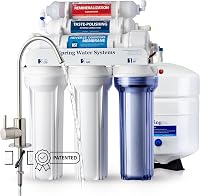
A water softener or reverse osmosis system is a more relevant choice when you need to reduce dissolved calcium. A softener can treat household water, while reverse osmosis is often installed at a drinking-water tap.
A water softener is usually considered when hardness affects several fixtures or appliances. Reverse osmosis can be a fit when you want treatment at one drinking-water location, but it needs under-sink space and filter changes.
A faucet-mounted filter may address specific contaminants without removing calcium. The PUR PLUS replacement filter is described as reducing substances such as lead and PFAS, but its stated targets do not include calcium.
If you're comparing system types, read tank vs tankless reverse osmosis and check whether an APEC tankless reverse osmosis system fits under your sink.
How can you choose a pitcher if calcium is not the main concern?
Choose a pitcher by matching its stated reductions to the issue you want to address. Calcium retention may even be a plus if your goal is to keep minerals while reducing other substances.
Aquagear says its pitcher targets lead, chlorine, microplastics, PFOA, and PFOS while keeping calcium and magnesium. You can read our Aquagear water filter pitcher reviews for more on that model.
If your concern is PFAS, compare filters with specific PFAS reduction claims in our guide to the best water filter pitcher for PFAS. For bacteria concerns, see what a water filter pitcher that removes bacteria needs to address.
A filter aimed at one issue does not automatically solve another. For example, PUR says its faucet filter reduces lead, but that does not mean it removes calcium; see our guide to PUR water filters and lead.
How can you tell whether a pitcher removes calcium?
Look for an explicit calcium or hardness reduction claim for the exact filter cartridge. General words such as "cleaner water" or "advanced filtration" do not tell you whether calcium is reduced.
Check the brand's published reduction claims and certifications, and make sure they apply to the cartridge you plan to use. Filter models from the same brand can have different targets.
If calcium reduction is not named, don't assume the pitcher will prevent scale. A hardness test can help you understand the water you are treating, but the filter still needs to be designed for that problem.
Which water filter pitcher removes calcium?
Most common water filter pitchers are not designed to remove much calcium. The Aquagear pitcher is specifically described as keeping calcium and magnesium in the water, while Brita and PUR's stated reductions focus on other substances.
Pick a pitcher when you want its stated contaminant reductions or taste changes. If you need less calcium scale, choose a hardness treatment such as a water softener or a suitable reverse osmosis system, based on the area you need to treat.
A calcium-removing filter should name calcium or hardness reduction directly. If it doesn't, plan on the calcium remaining in your water.
Frequently asked questions
Do water filter pitchers remove calcium from hard water?
Most standard water filter pitchers don't remove much dissolved calcium. They usually target taste, odor, or named contaminants, so check the specific filter's certified reduction claims if calcium is your concern.
If you want less scale in a kettle or around a faucet, consider a treatment method designed for hardness.
Does boiling water remove calcium?
Boiling can cause some hardness minerals to form scale and settle, but it doesn't reliably remove all dissolved calcium from water. It can also concentrate minerals as water evaporates.
Use a treatment designed for hardness if you need consistent calcium reduction.
Can a pitcher filter keep calcium in the water?
Yes. Some pitcher filters are designed to target certain contaminants while leaving minerals such as calcium and magnesium in the water.
Check the brand's specific claims and certifications, since filters vary in what they reduce.
What kind of filter removes calcium from water?
Water softeners and reverse osmosis systems are common options for reducing dissolved hardness minerals such as calcium. The right choice depends on whether you want to treat all household water or only drinking water, along with installation, maintenance, and wastewater needs.